Guest Feature - Lakshan Dharmapriya

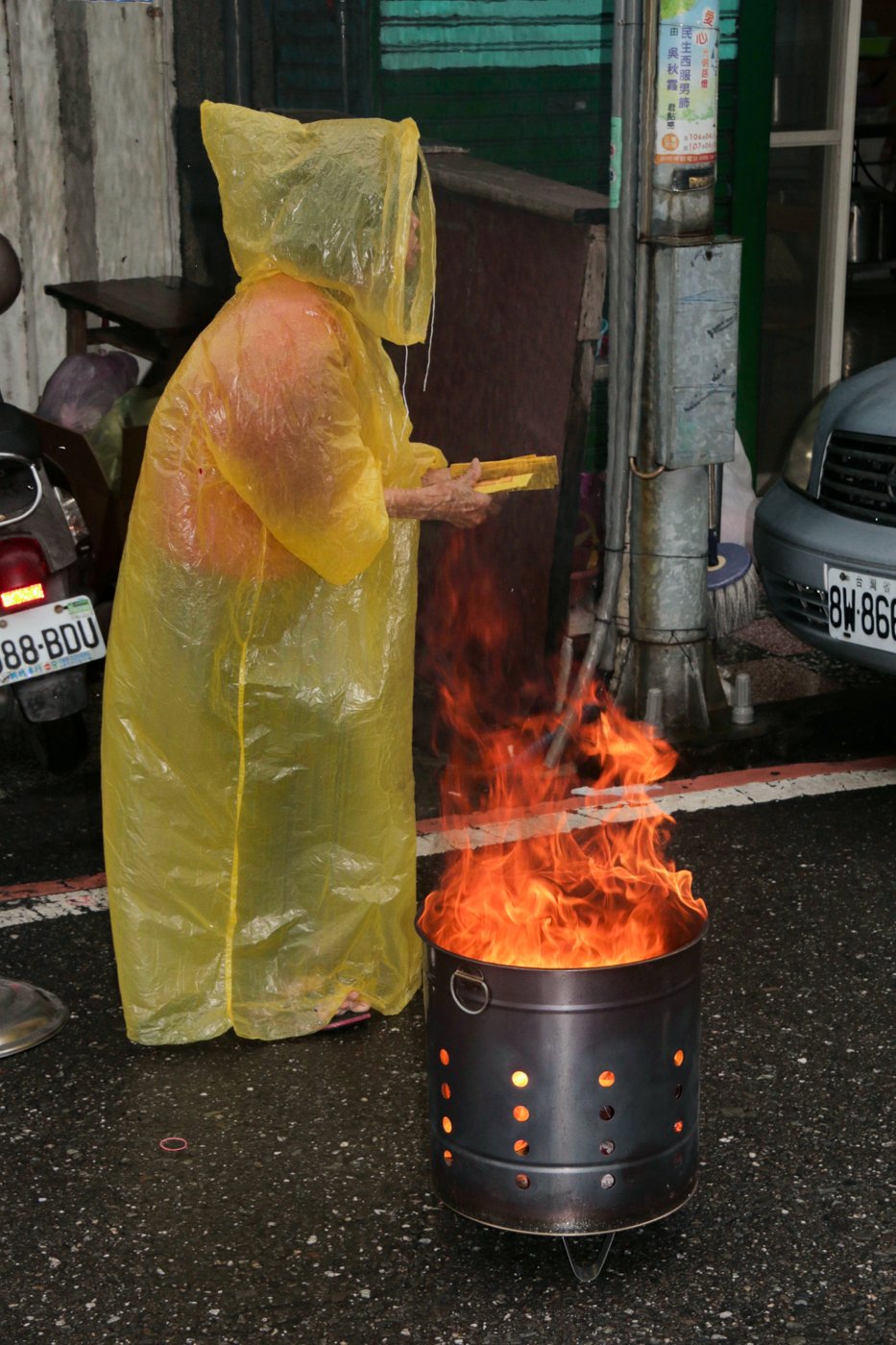
Ilha Formosa was produced in early 2020 whilst visiting a friend on the small island of Taiwan. Whilst the lush coastlines and rugged mountains are undoubtedly picturesque, there is just as much beauty to be found in the faces of the people, the grit of the facades and the gusto of the storefronts. The island hypnotised me. The way you moved seamlessly through cities to beaches, from beaches to mountains, mountains to gorges, gorges through fields. The people change with the scenery, whether they occupy the skyscrapers, hillside hideaways or coastal shacks; and serve as a reminder that we exist within our surroundings. Ilha Formosa aims to highlight this relationship between people and their environment. 

Lakshan Dharmapriya is currently completing an MA in Photojournalism and Documentary Photography at LCC. Over time his work has become an exploration of how humans situate themselves; how they interact and/or intervene with nature. 

lakshan.org

Guest Feature - Thom Corbishley

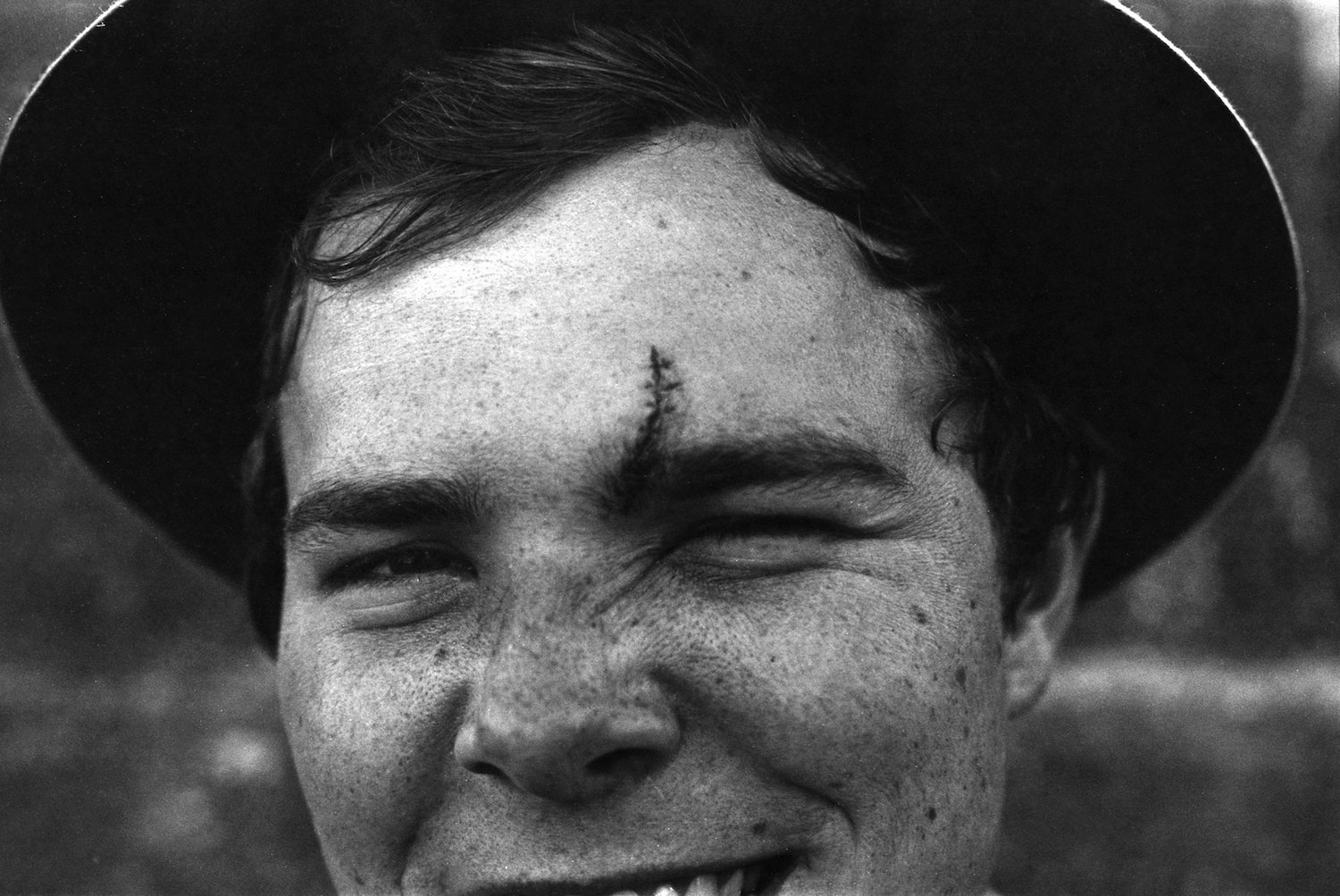
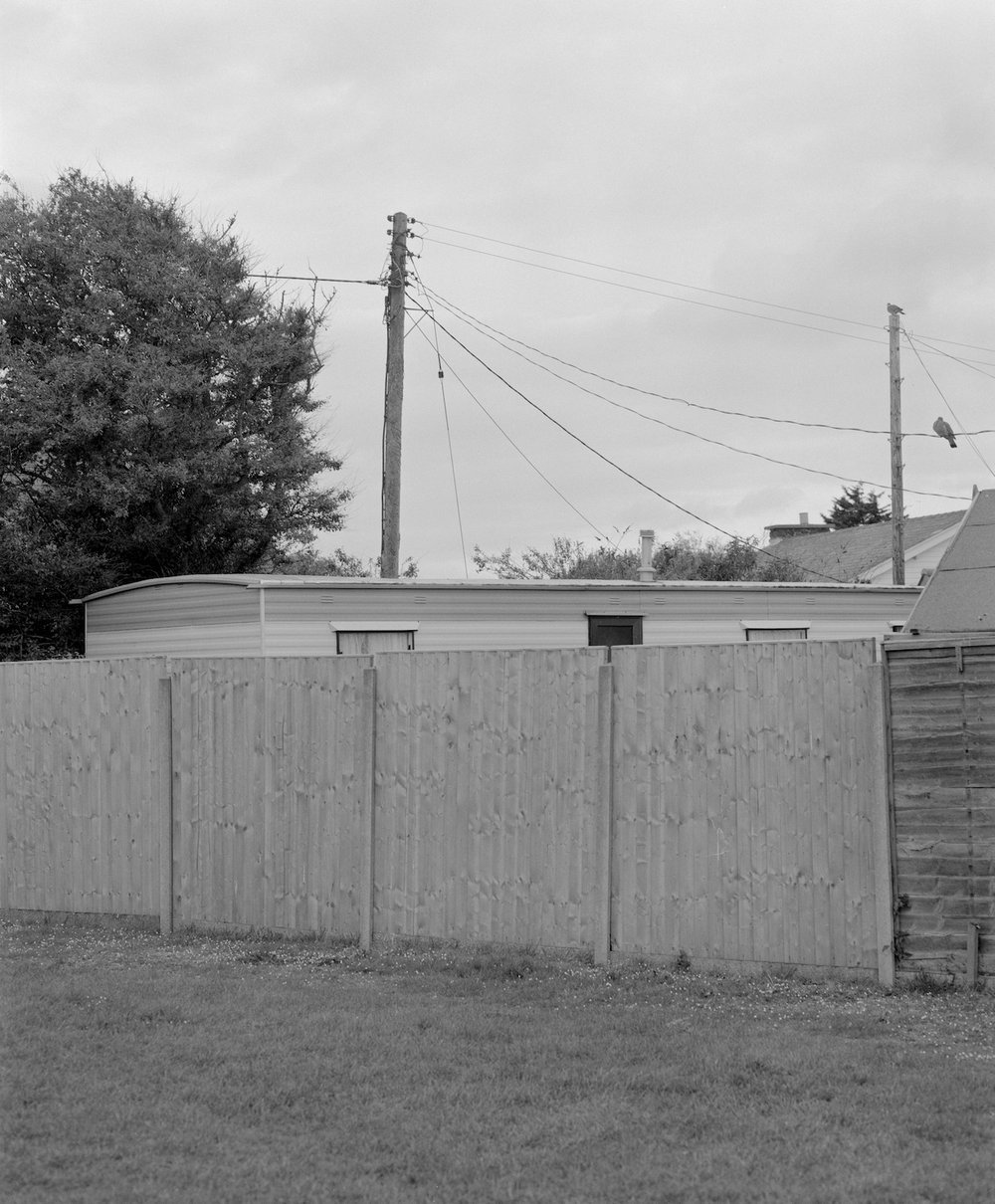
Spanning over a decade of photos, Normal for Norfolk begins at the photographer’s final visit to his family’s holiday home in the Norfolk village of Snettisham, aged thirteen. The series depicts subsequent visits to the surrounding towns and villages on the North Norfolk Coast that the photographer frequented as a child. The series takes its title from the derogatory phrase used to exemplify the historically perceived strangeness and backwardness of the county. The project began as an observation of English coastal communities, documenting the quirks, charms and contradictions of the seaside tourist destinations that once boomed in the nineteenth and twentieth centuries, now since in decline. 

This social documentary approach has been fused with a biographical narrative, presenting the photographer’s long and changing relationship with the region and the people he associates with the area. Family excursions, drunken teenage weekends and professional trips capture the nostalgic rush of returning to the stages on which childhood is played out. In 2021, the project took on greater salience when the photographer’s sister, Rachael, who is depicted frequently throughout the project, died aged 29. In Normal for Norfolk, pastel paints are sun-faded, neon signs don’t burn as bright, and the heater-skelter seems smaller than it used to.

Thom Corbishley is a photographer from Cambridge and based in London. A keen photographer since his early teens, Thom uses his background in history and politics to make photos that examine and investigate ideas of Britishness and the English landscape. In 2019, Thom completed a Masters in Photography at the London College of Communication (UAL), and was the winner of the British Journal of Photography’s Portrait of Britain Award. In 2020, Thom was the youngest photographer to feature in Facing Britain, a major touring retrospective of British social documentary photography from the 1960s until its departure from the European Union. Alongside his creative practices, Thom undertakes fashion and commercial projects, producing work for a number of graphic design studios and clothing brands.

thomcorbishley.com

Guest Feature - Hanne Van Assche

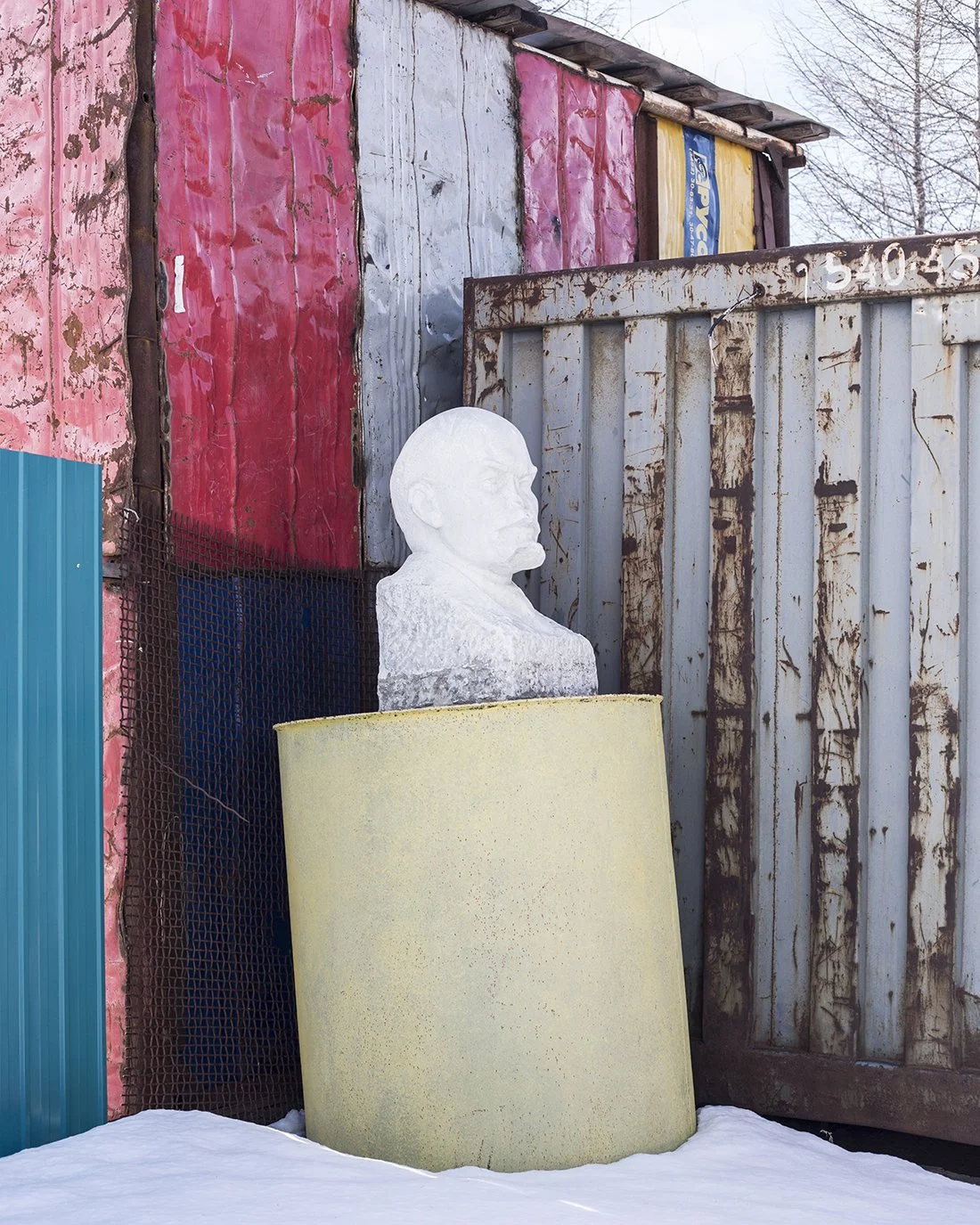
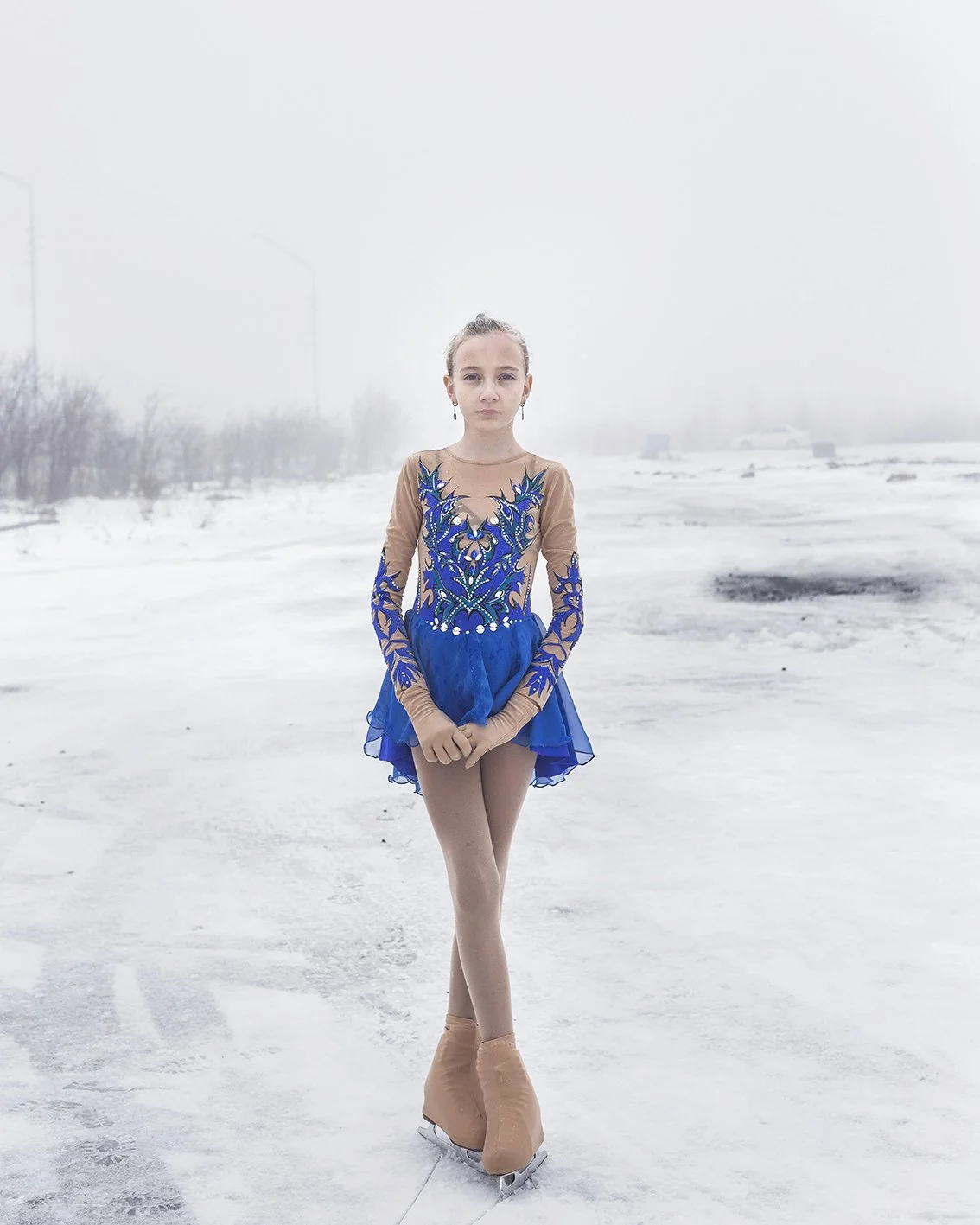
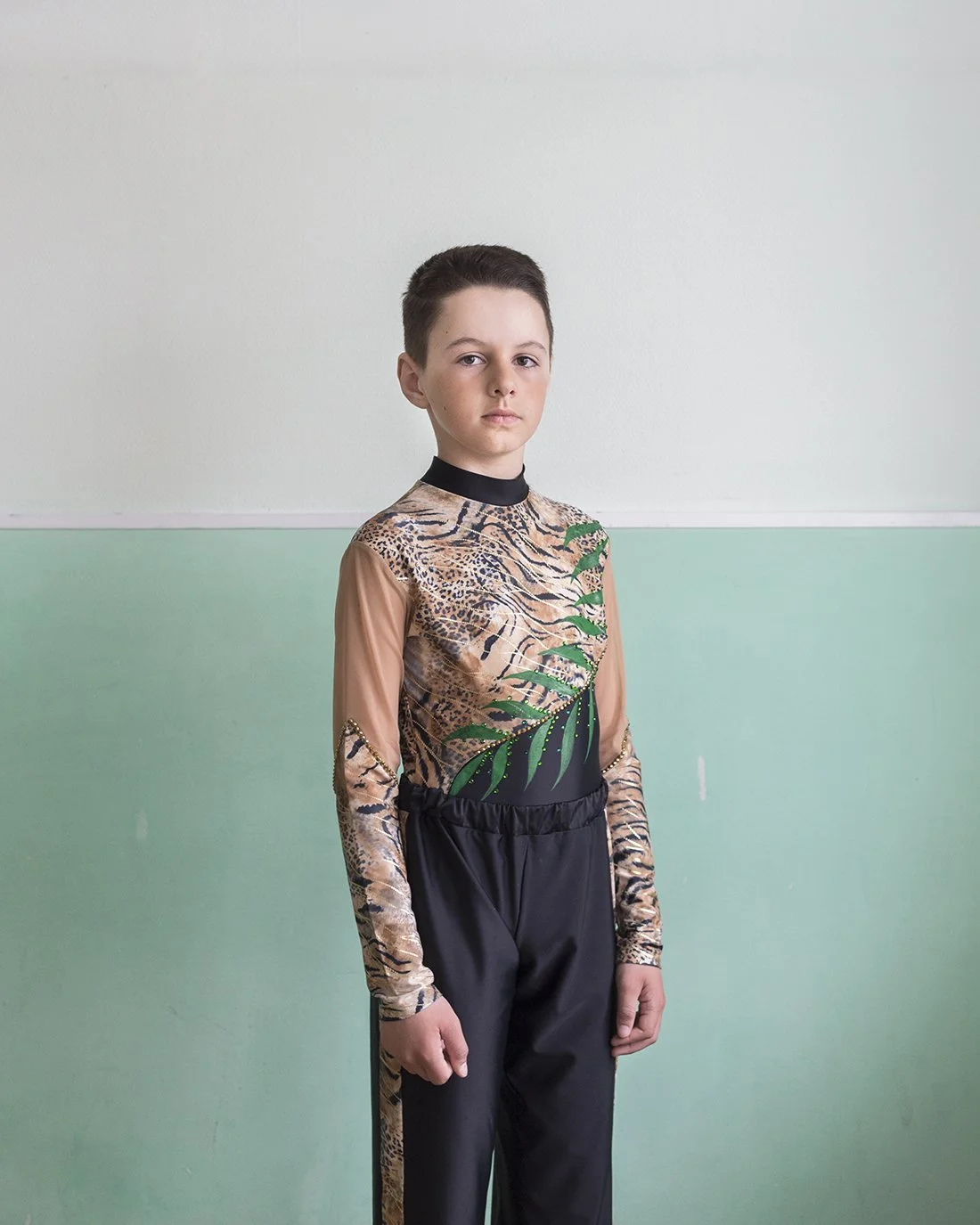
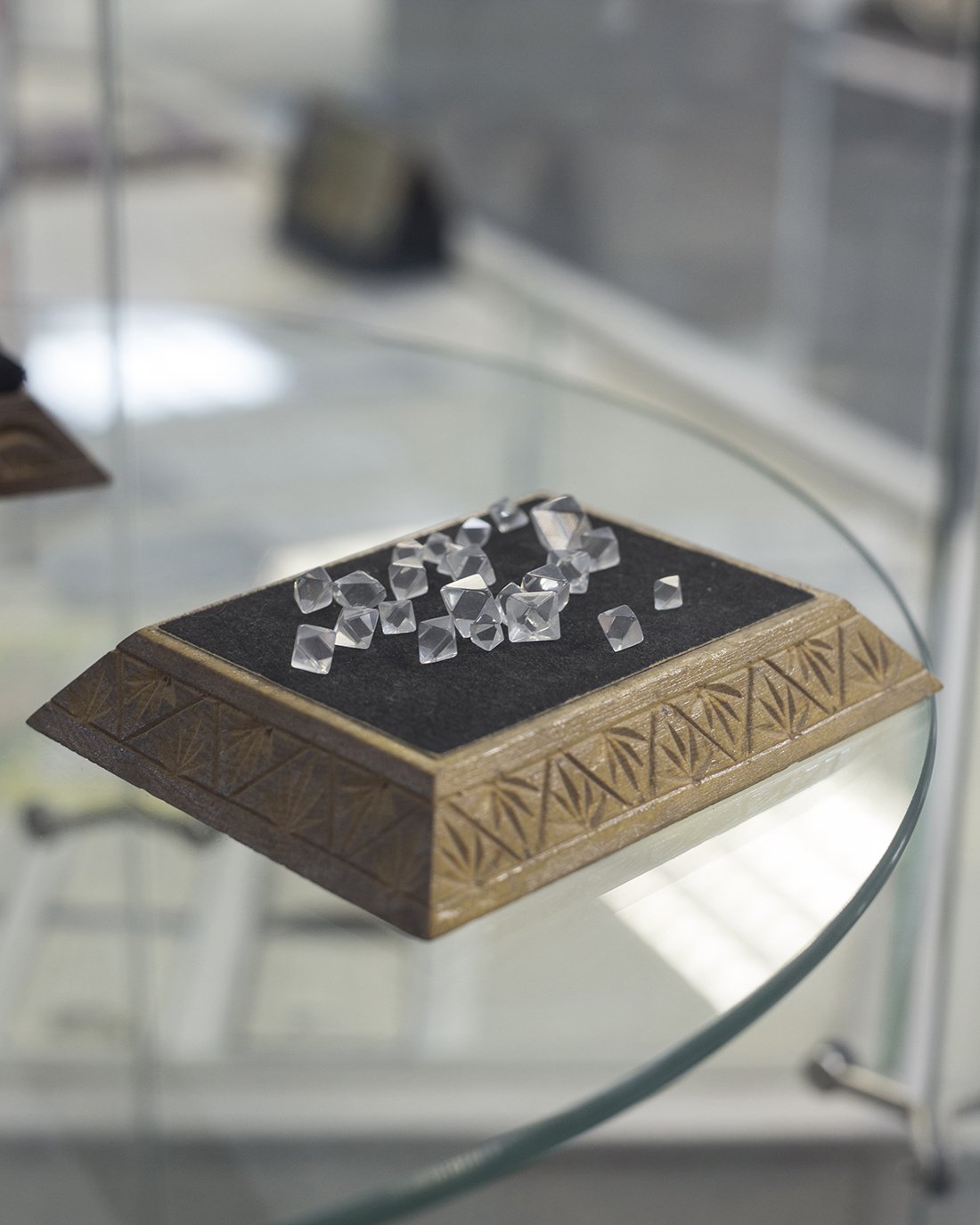
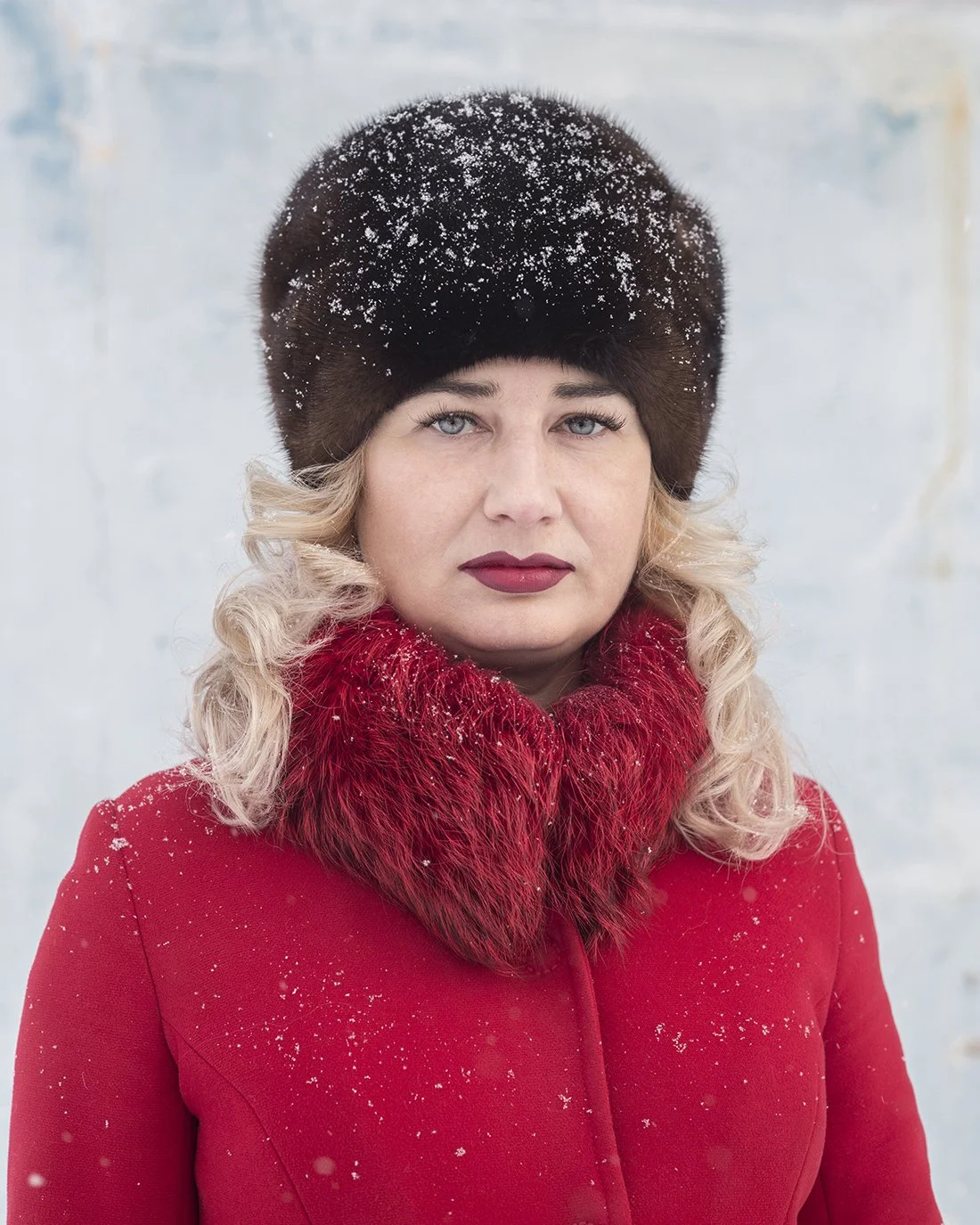
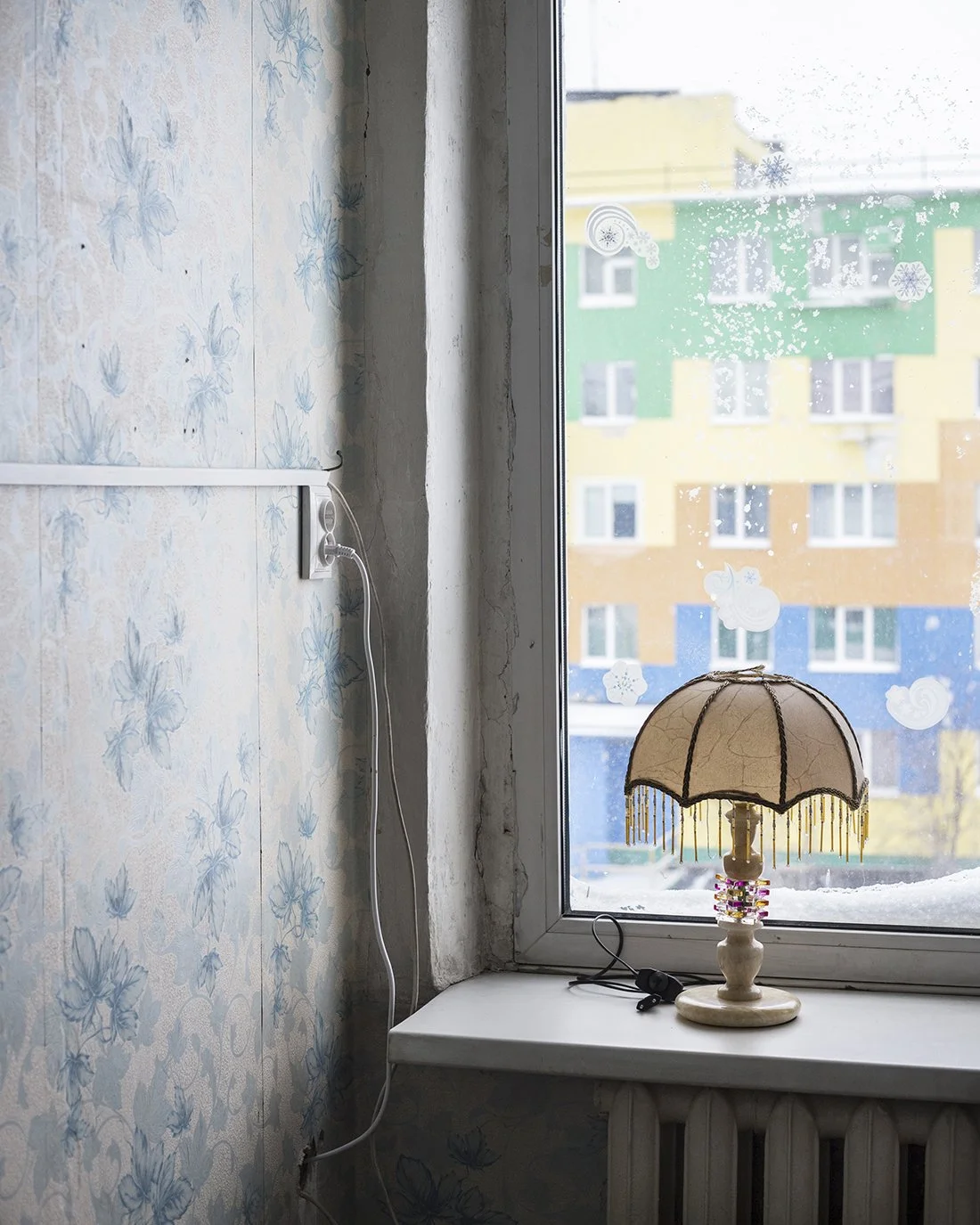
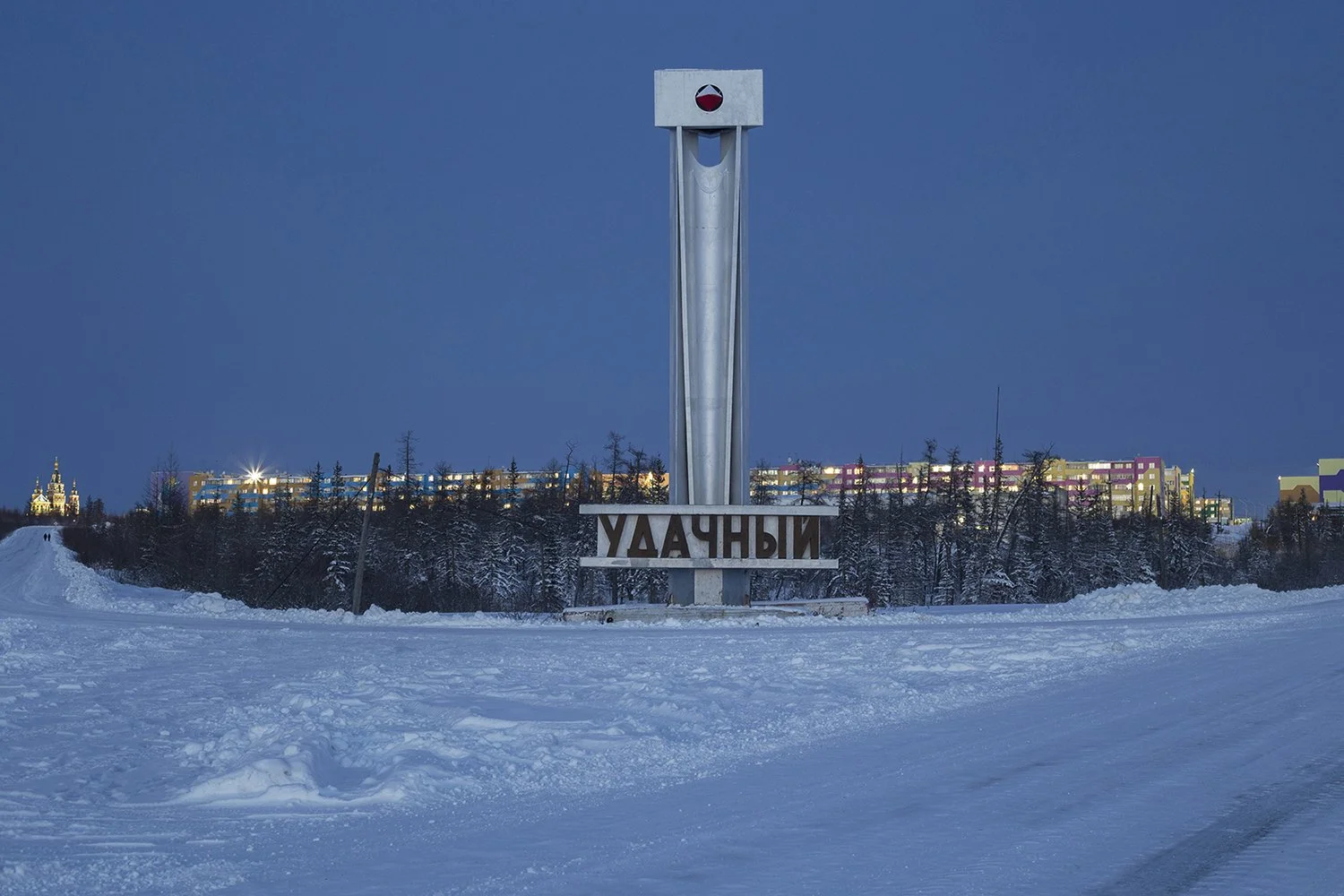
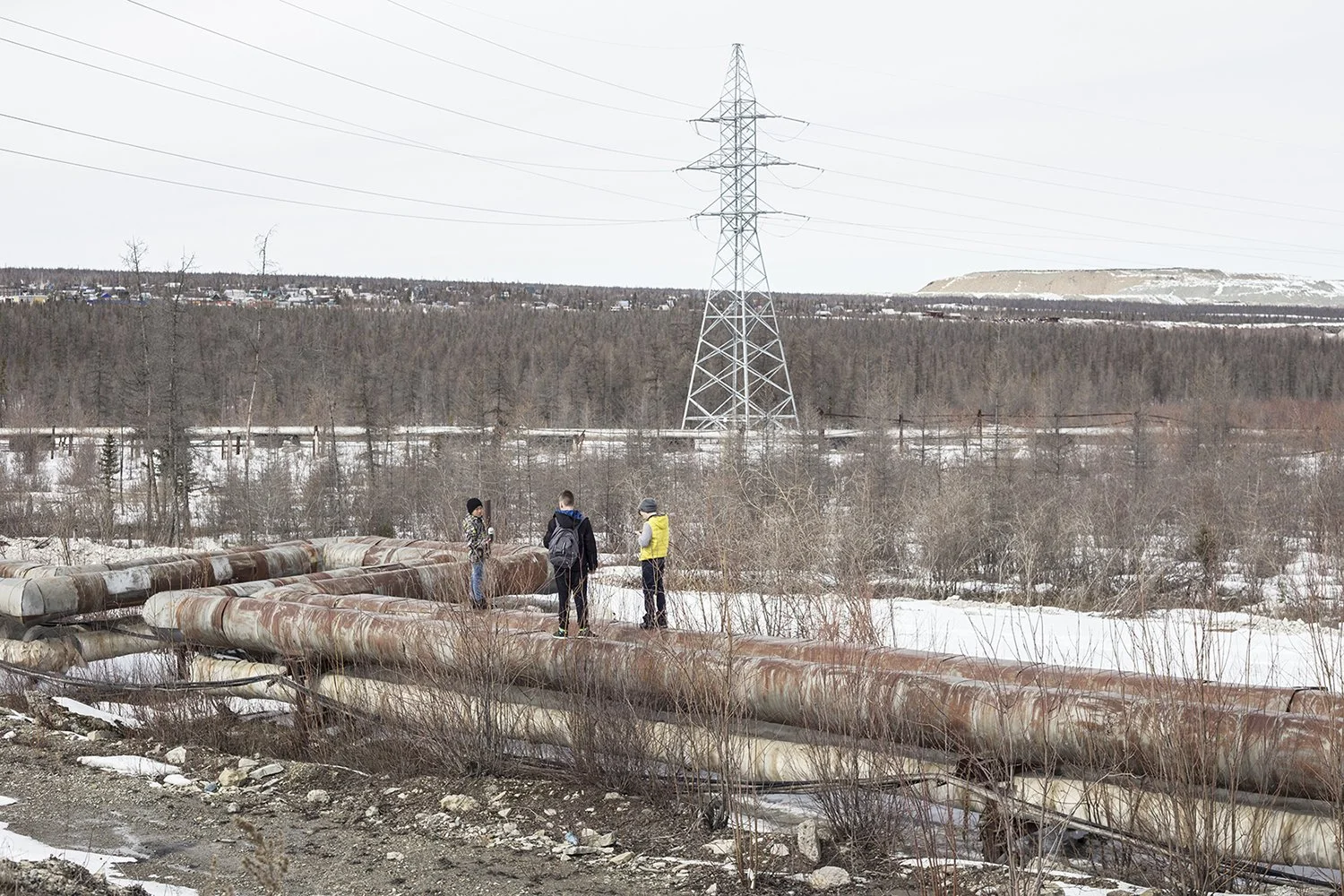
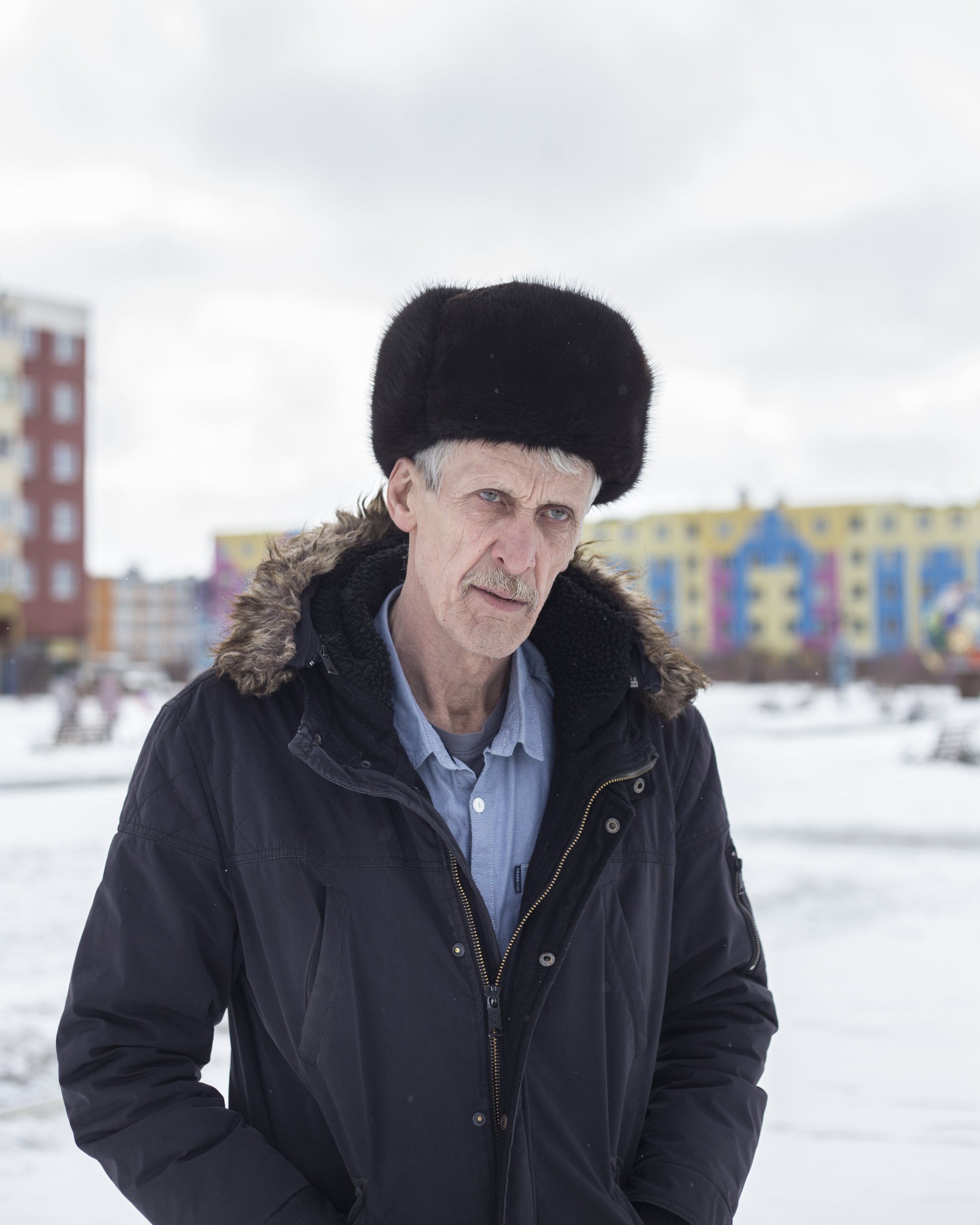
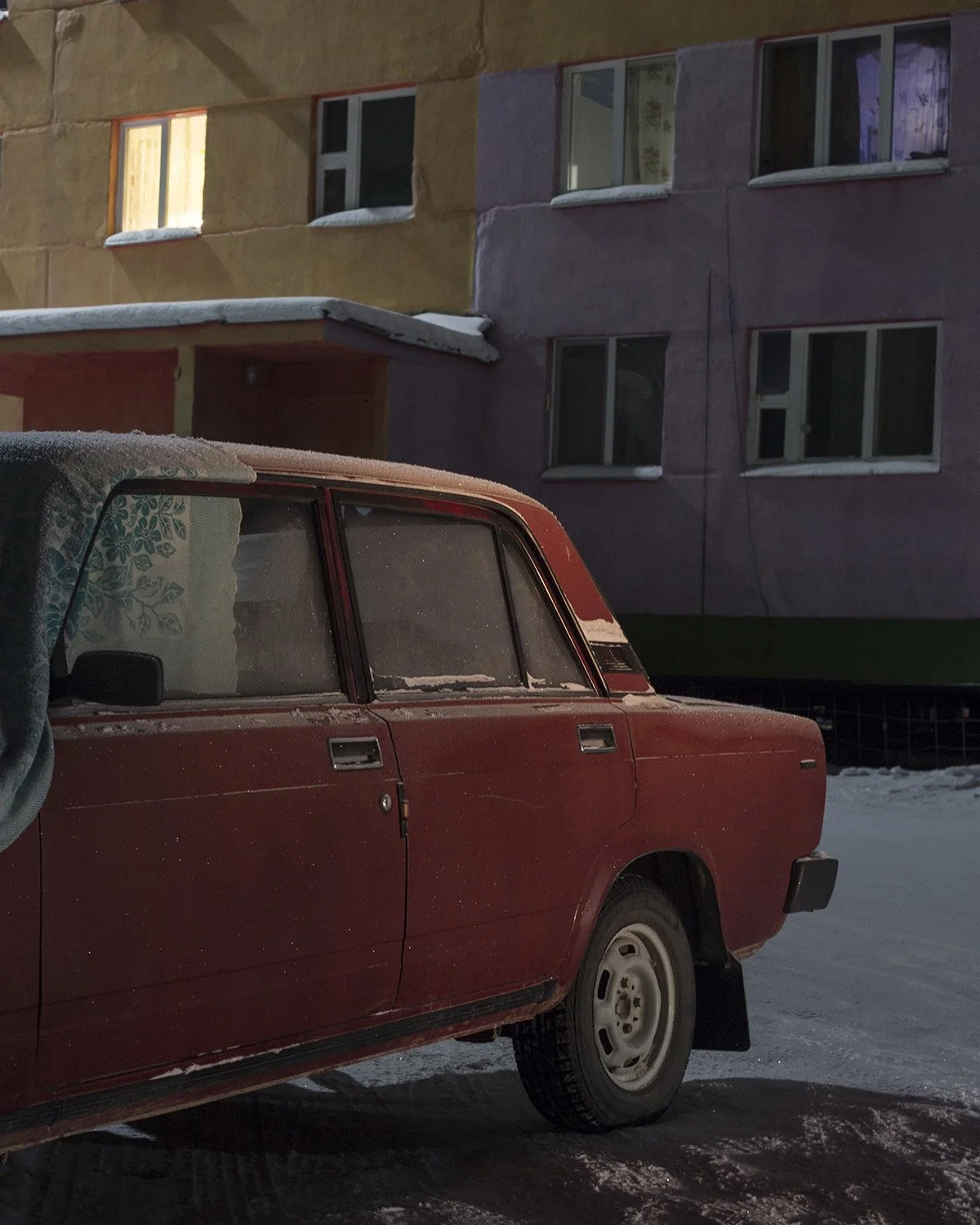
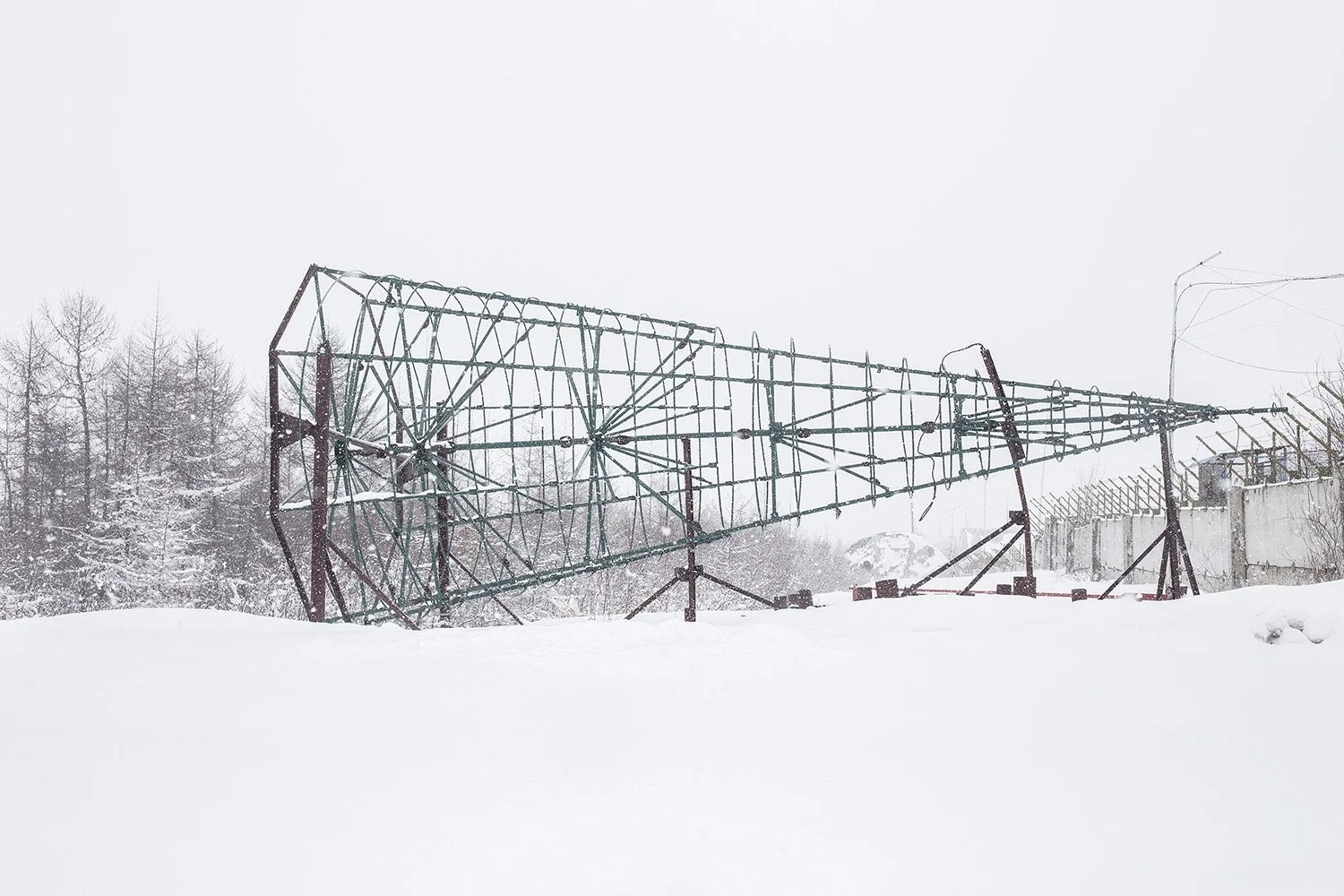
In the far East of Russia lies a small mining town called Udachny. It is located in Yakutia, a remote region captured in the icy grip of winter most of the year. A frozen world of dense taiga and immense tundra zones and hardy pine trees. Few people choose to live here, but those who do are proud citizens. Yakutia is known as the treasury of Russia. It is one of the world’s richest regions in natural resources. According to Siberian legend, God once spilled a bag of earthly treasures over this part of the country. A thick layer of permafrost covers large reserves of coal, gas, gold and – diamonds.

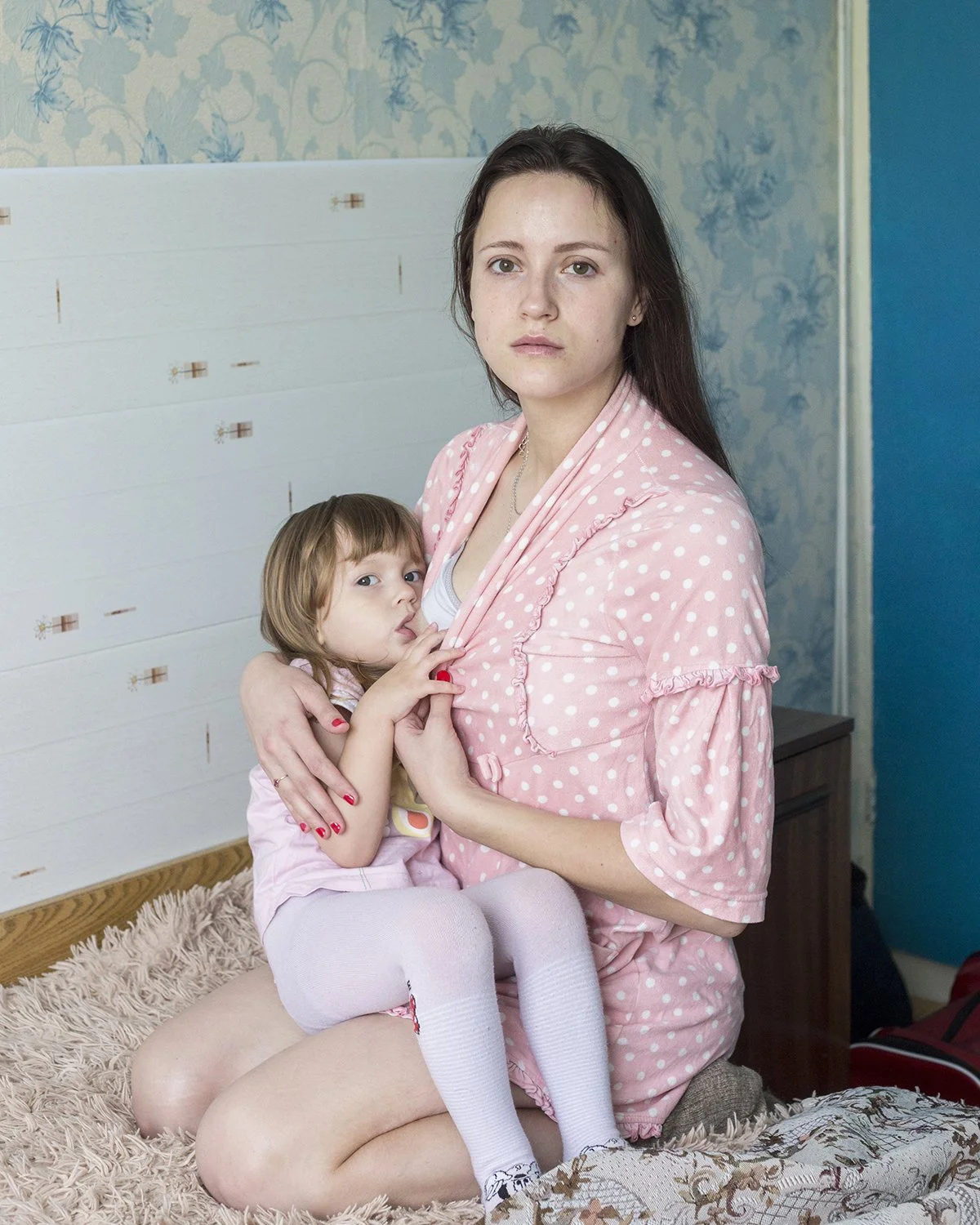
The first rough diamond in Yakutia was discovered in 1949, transforming the Soviet Union into an important diamond producing country. Geologists scoured the vast territory, in search of this precious mineral. In 1955 they stumbled upon an exceptionally large diamond deposit. Its discovery was a stroke of luck. Since then, Udachny has transformed into one of the largest open-pit mines, reaching a depth of 640m. Mining is overseen by the Russian company Alrosa. Back then, workers travelled from every corner of the Soviet-Union and established a small settlement near the mine. This was the foundation of the town Udachny, and it continues to exist up to the present day. Today, the 12,000 inhabitants of this town are still connected via the mine. Alrosa expects Udachny’s production to last for at least another 25 years and continues to facilitate the lives of its workers. Even though a steady job seems to be the only motivation to live in this monotown, residents find more reasons to stay, often related to the strong connection they experience with nature and their fellow citizens. Isolated from the rest of Russia, Удачный truly feels like a world on its own. The hospitality and optismism of the inhabitants soothes the harsh climate. It is them who turn the scenery of a frozen and isolated world, defined by extraordinary contrasts, into a vibrant and colorful community.

Hanne Van Assche is a photographer who recently graduated as a master in photography at the Royal Academy of Fine Arts in Ghent (KASK). She obtained her bachelor's degree from photography at Narafi, Luca School of Arts in Brussels. Her work focuses mainly on social topics, with a documentary approach.

There is a book of her latest project 'Udachny' which is being published in 2022 by Stockmans Art Books. She is doing a presale through crowdfunding, where people can purchase it on her website.

hannevanassche.com

Guest Feature - Benedict Flett

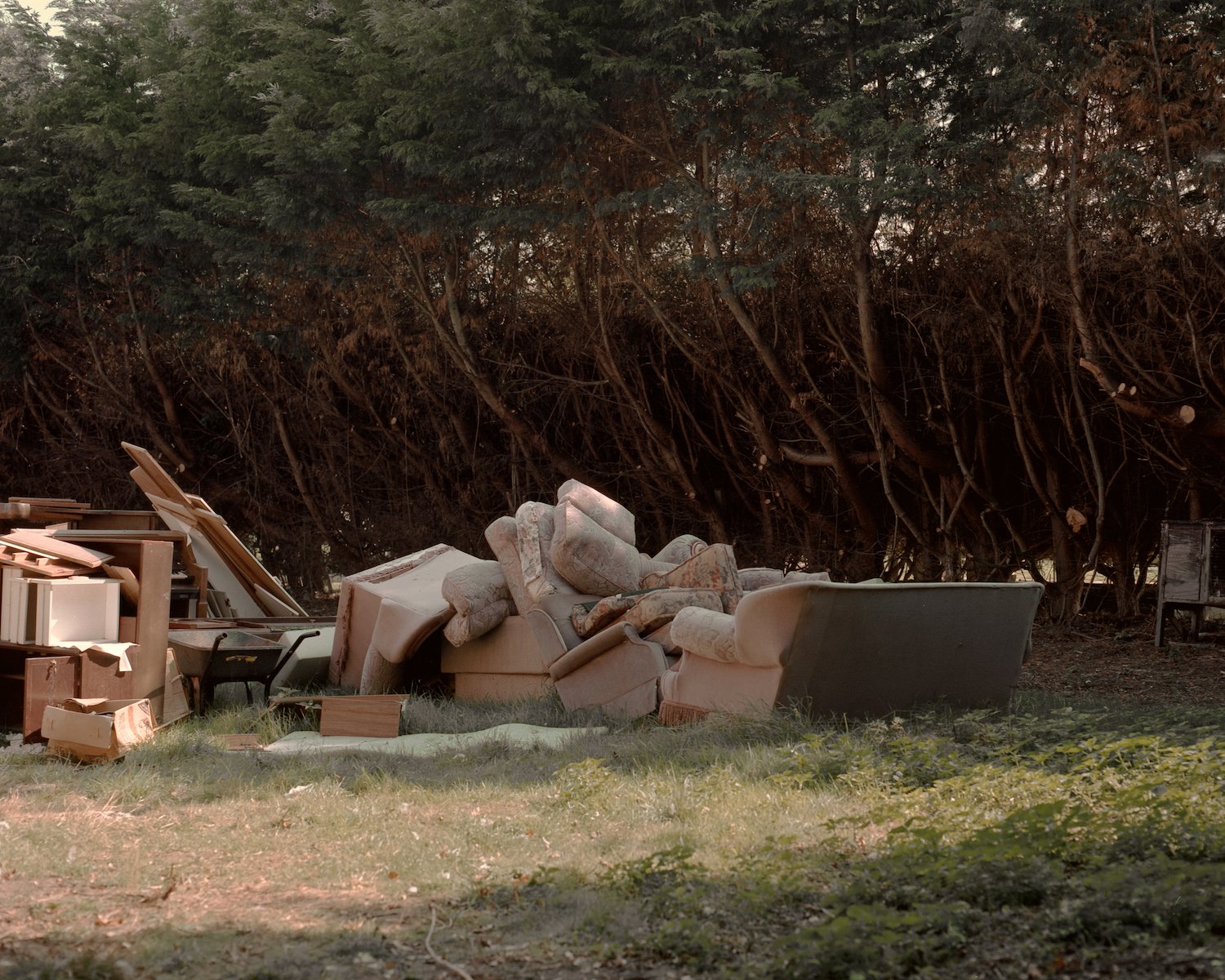
I became a bit obsessed with London’s waterways during the autumn lockdown. The canals of the East offered an escape from the claustrophobia of pandemic life and I took to running by them. I learned their names and interconnections and used the brief respite from restrictions in December to visit the Canal Museum near King’s Cross, housed in a Victorian ice warehouse. By this point I’d already become familiar with the Grand Surrey Canal, which for more than a century-and-a-half was one of south London’s most prominent topographical features. But since it was finally filled in 1974, its fate linked to the demise of London’s port, under pressures from containerisation, the canal has fallen into obscurity, little known outside of Southwark. Using old maps I found online, I plotted its erstwhile course and cycled down to Surrey Quays one cold morning to see what could work. Before too long, the route became like an old friend. I discovered that it passed through an almost complete spectrum of zones and functions, and that together they materialised the history of postwar London. It was all there: big money, decay and dereliction, work and leisure. I enjoyed the ritual of repeating this cycle every now and again, my eyes peeled for traces, remnants and commemorations. 

At Greenland Dock, I met a man who explained the machinery for hauling barges onto land. He mostly spoke about politics, but it eventually transpired that he’d pulled a friend from the canal at the age of about twelve, an act of bravery which apparently made the papers. I was astonished. It was event just like this which triggered the final draining - and he seemed about the right age. Either way, it occurred to me then that there’s a whole human history of this lost waterway waiting to be documented, while there are still those who remember it. Inscribed onto slabs along the central path of Plough Way, a recent development near the canal’s end, is a poem which honours the dockers and ‘watermen’ who for generations plied the canal from Rotherhithe to Camberwell. Their names are ‘long forgotten’, their stories lost to time. It’s hard to separate such gestures from the designs of those capitalising on industrial heritage. But my ambition for this project became to concentrate the vestiges of the Grand Surrey, to bring them together in one place, so that, at least for my own sake, it could be made a little tangible once again. As such, the photographs are sequenced linearly: spatially coherent but temporally intermingled. 

Benedict Flett is a photographer and writer from London, currently living in Hackney. His interests range across networked photography, satellite imagery, political aesthetics, critical theory and the post-Soviet space. His work so far has mostly focused on exploring manifestations of ideology and discourses of progress on landscapes and the built environment. He studied Politics and Sociology at Cambridge between 2016-2019, where he focused on social theory, political economy and the history of political thought. 

www.benedictflett.com

Guest Feature - Filippo Trojano

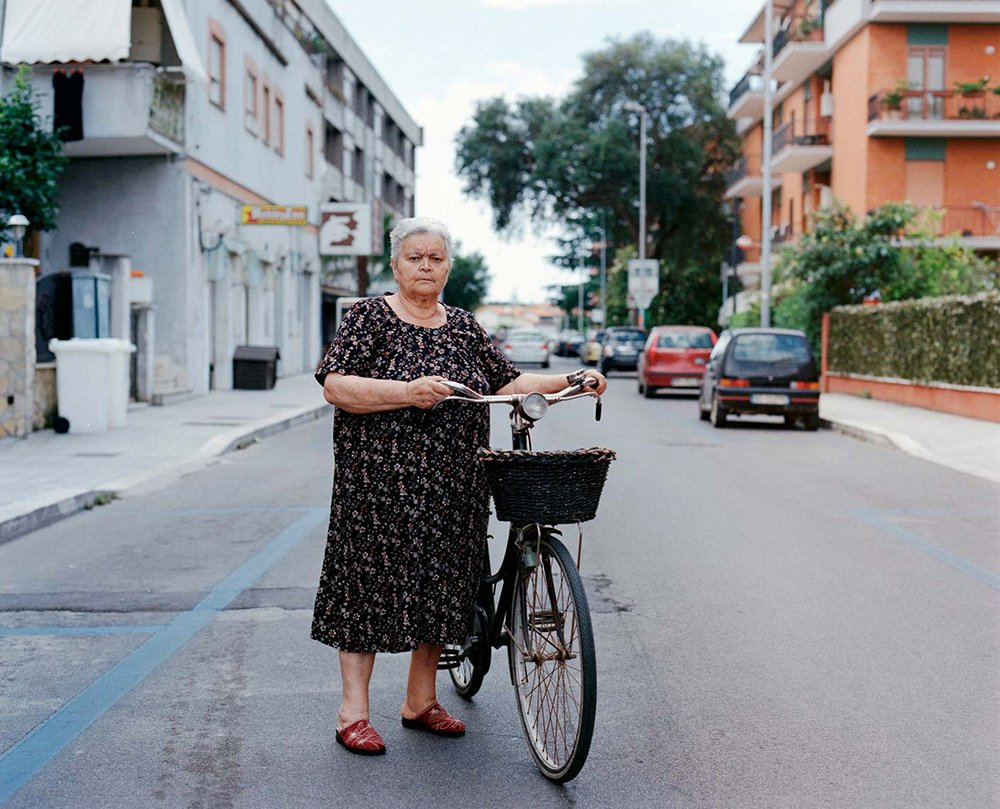
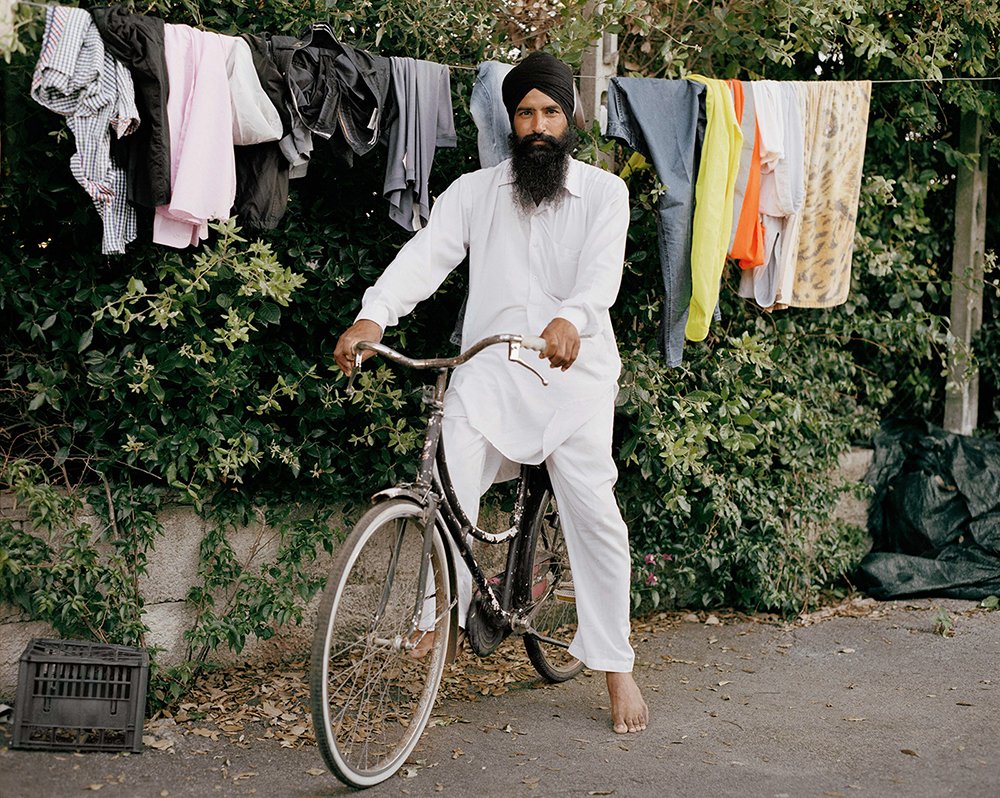
It started one night in March eight years ago under a heavy rain storm. We traveled by car at a walking pace without being able to see much, due to the amount of rain coming down. I turned to look towards the fields and a line of four Indian people on bicycles proceeded slowly towards home. From the following day I started to slow down every time I passed somebody on a bicycle in the car to meet their eyes in the rearview mirror, and I began to think about how to tell the story of the Punjab migrants together with that of the first migrants who came from Northern Italy. In a short time I came into contact with dozens of Indian men and women and went to look for those few Italians still alive who arrived in the early 1900s to learn about their stories, then those of their children and grandchildren. I made almost two hundred portraits over the span of a summer. Afterwards I went to the Bella Farnia residence, a kind of Indian ghetto on the coast where I met a group of children for whom I decided to hold a free photography course during the summer. After a few days they became valuable assistants and translators with all of the adult Indian people who, despite having lived here for decades, still do not know Italian. Mandeep, Daranprit, Savitan… it is to these children who have become adults that this work is dedicated. The realisation of the book was possible thanks to a crowdfunding campaign that saw the support of 182 people from 10 different countries around the world. The ultimate goal of the project was the creation of a free three-year photography and writing workshop for Indian children in a middle school in Sabaudia.

Fillipo Trojano is a photographer, photography teacher, actor and author. He became a professional photographer at the end of high school, worked for three years in a fine art darkroom, and in 2009 began the long-term project Portraits of Mari. He was also the lead actor in the film Tickets by Abbas Kiarostami, Ken Loach and Ermanno Olmi. He has been teaching photography since 2001 and has been a lecturer in a psychiatric community for four years. He recently published the volume Mandeep and Other Short Stories and is currently carrying out the La Vela project on Santiago Calatrava's unfinished swimming stadium which intertwines photography and illustration.

filippotrojano.com

Wales: The Landscape Project

MAP6 are excited to announce our new collective project is underway! This weekend 9 photographers are en-route to Wales to explore it’s landscape and people. From tomorrow we’ll be posting images from our journey sharing our encounters, adventures and endeavours.

Be sure to tune in this week on our Instagram feed to hear more…

WALES INTRO 3.jpg

Heather Shuker Exhibition

Dancefloor_recall_Black.jpg
Dancefloor.recall2.jpg

The photography project celebrating stories from the dancefloor 

At this critical time with many nightlife venues under threat of permanent closure, there is a need to tell the human interest story of what “going out dancing” means to so many and to society as a whole.  One great thing that has come out of the pandemic is that people are now really conscious of the importance of human connection. Sharing and wanting to know about people’s stories is a big part of this changed way of thinking. Lockdown aroused a lot of nostalgia and memories of nights out. What was missed, what did “going out” dancing and connecting with others in a club mean.

 “As a species, we are born to dance...Moving to music when we are alone can make us happy. Doing it in a room with others takes things to the next level, adding the pleasure of social bonding into the mix, too…

It’s all about community.  Music is an integral part of everyone's make up. Music is tribal. Industries have been created on dancefloors, families, business partnerships and long term friendships supporting mental health.

Dancefloor.recall4.jpg

Dancefloor Recall Launch Exhibition - 7th October

The long term project by MAP6 photographer Heather Shuker, along with photographer Fran Hales is launching on 7th October at Corsica Studios, 4 - 5 Elephant Rd, London SE17 1LB. See the portraits and hear the stories; from new friendships, marriages and births. Chance meetings and sliding door moments. The revelations and euphoric moments. The photography exhibition will have links to audio stories and many of the families, couples, DJ’s and friends captured will be at the exhibition to share their story in person. This event is the launch and features stories captured so far outside many of London’s iconic nightlife venues. From November the project will be capturing people and their stories across the United Kingdom. 

The preview hour for special guests and media is from 6-7 on Thursday 7th October and the party then continues until midnight. Please note: entry is free to this event but a ticket is required to gain entry:

Preview Hour for media & VIPS here.

Corsica Studios
4 - 5 Elephant Rd, London SE17 1LB

dancefloor-recall.com

Barry Falk - New Publication

MAP6 photographer Barry Falk has been working with Another Place Press to publish his series Calypso’s Cave. The project is part of the ‘Field Notes’ collection of zines, which is now available to pre-order for just £8. There are a only a limited number of copies, which are already selling fast. You can pre-order a copy here.

thumbnail-4.jpeg
thumbnail-6.jpeg

Due for release Nov 2021

32 pp / 190 x 230mm 
Staple Bound 
Fedrigoni paper 
First edition of 100 
FN039

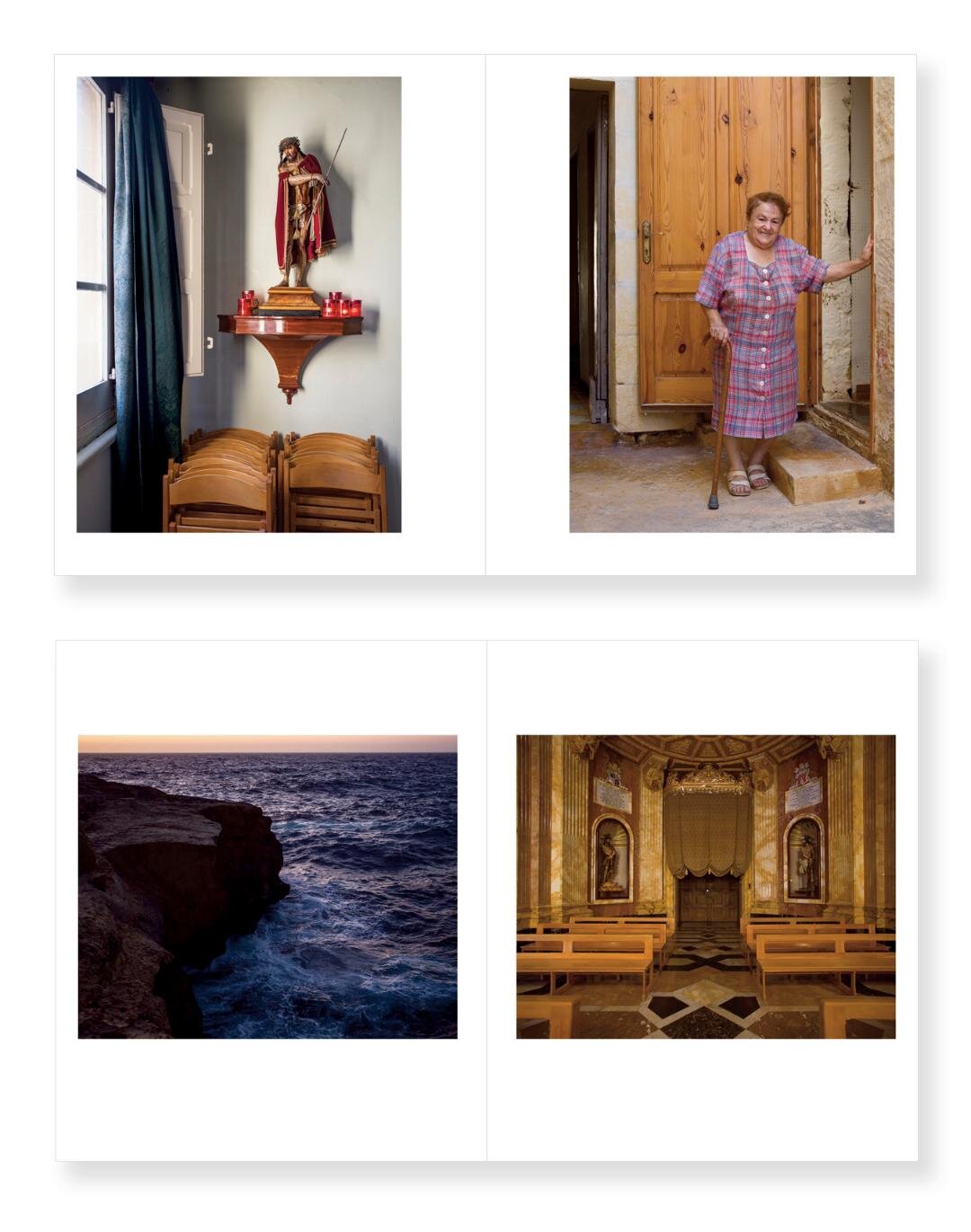
The island of Gozo, known locally as Għawdex, is part of the Maltese archipelago and part of the Republic of Malta. Like many tourists I entered this rock via the ferry that runs from the main island. Gozo has been inhabited for thousands of years and you feel it’s age as you enter from the harbour: its architecture of low, limestone buildings built on top of rocky landscape is reminiscent of north African and the guttural spoken language sounds more Arabic than European. My fascination with islands comes from the realisation that they often represent a microcosm of a larger narrative, their history inextricably linked to the larger story of the mainland. Gozo, like Malta, is predominantly Catholic and religious figurines proliferate, from large statues in the streets to small figurines in the toilets. But its history goes back much further than this: it is etched into the stone and evident in the archaeological evidence of Neolithic temple ruins. Gozo, as part of Malta, has been ruled by Phoenicians, Romans, Arabs, Sicilians, French and British. Malta itself was part of the British Empire for 160 years, gained its independence from Britain in 1964 and became a Republic in 1974, and there are indications of this on the island, the odd English folk with UK passports still form the largest group of foreign residents living on Malta and Gozo. Today it is, of course, a popular tourist destination, renowned for its ragged yet beautiful coastline, its laid back lifestyle and leisure industry.

With this history in mind I set myself the task of exploring the 26 sq mi to patch together a picture of its culture and landscape, to document the people that live here. The island is easily traversed by car allowing me to set out before sunrise before the heat of the day burnt details away. I was seeking the island’s secrets, looking for a way to enter behind the facade. The Gozitans are a hardy people, as busy harvesting salt as catering to the tourists, and the interior harsh, it’s coastline cliffs reminding one that this is as much a potential prison as a paradise. The island is linked to both fact and fiction: it has a fabled history linked to the Greek myths: Calypso’s Cave is apparently located on the island and believed to be the same cave that Homer refers to in The Odyssey. And this myth, that tells the tale of Odysseus marooned upon the island of Ogygia, trapped by Calypso, the Goddess Nymph, links in strange ways to a wider narrative of today. The locals sell their trinkets to the tourists; the retired Brits scour the beach with metal detectors and buy their retirement homes, the legacy of 160 years of the British Empire, but what is less talked about is that Gozo lies en route for immigrants making the treacherous transit from North Africa, seeking sanctuary in Europe. This is an island of secrets and myths and harsh realities.

Guest Feature - Tom Illsley

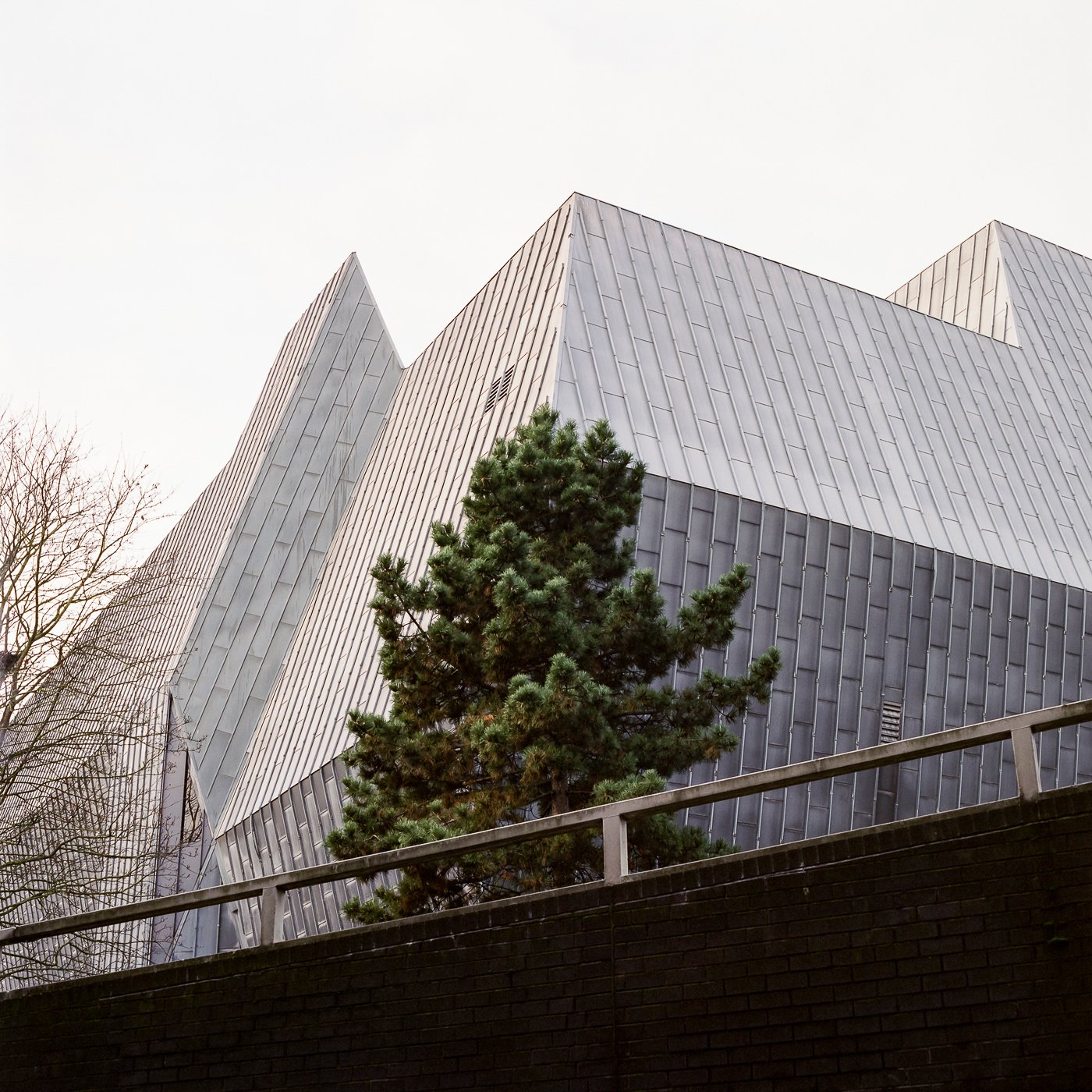
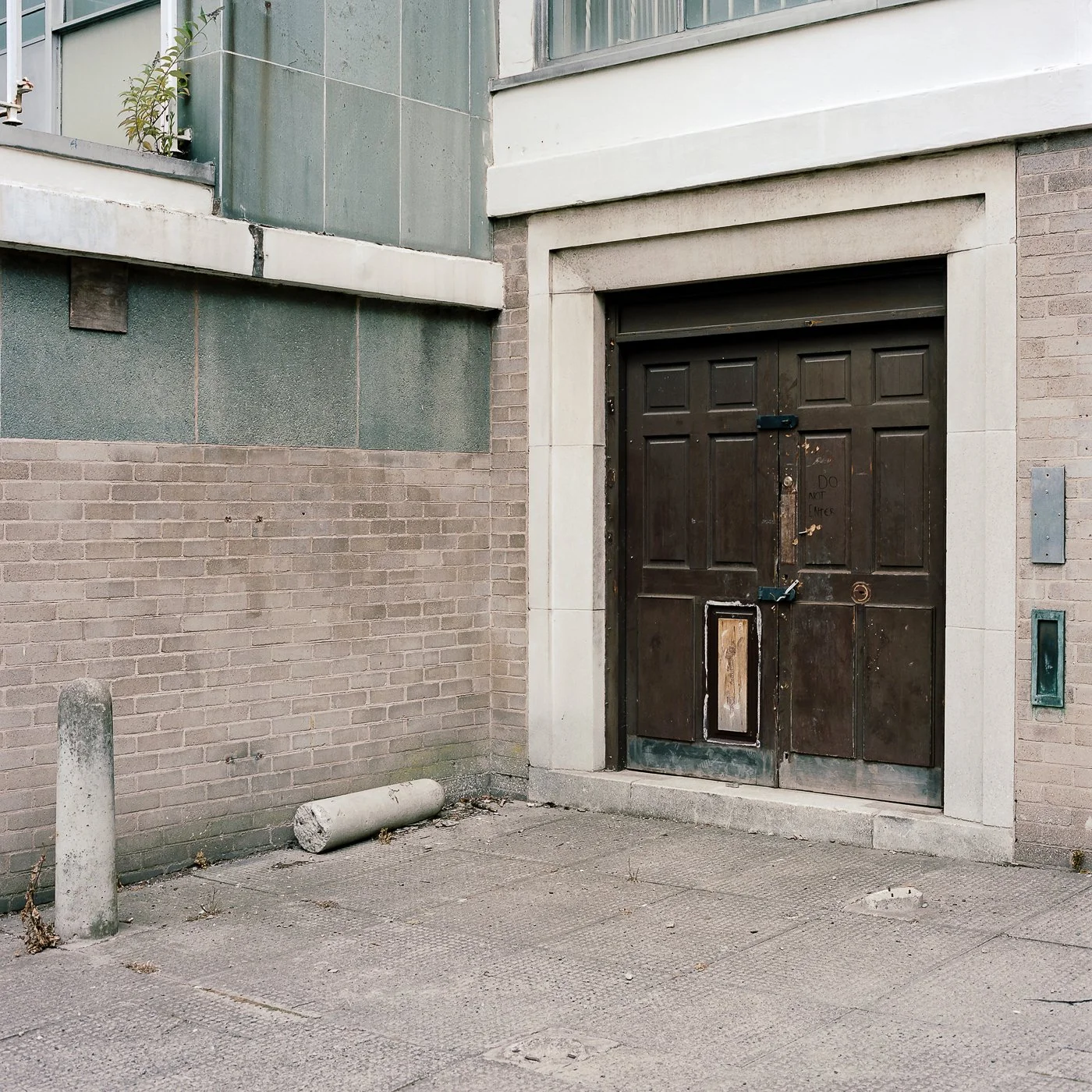
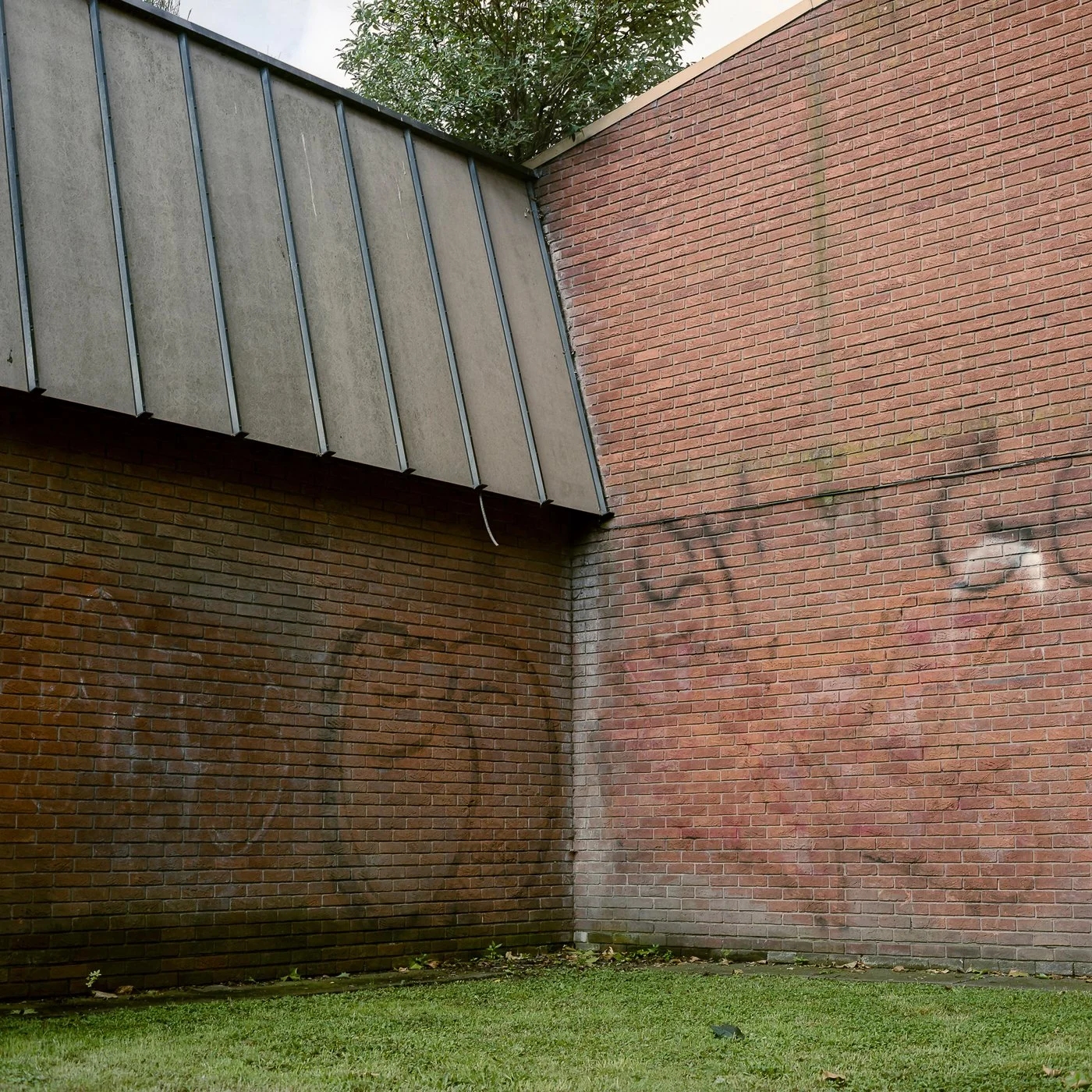
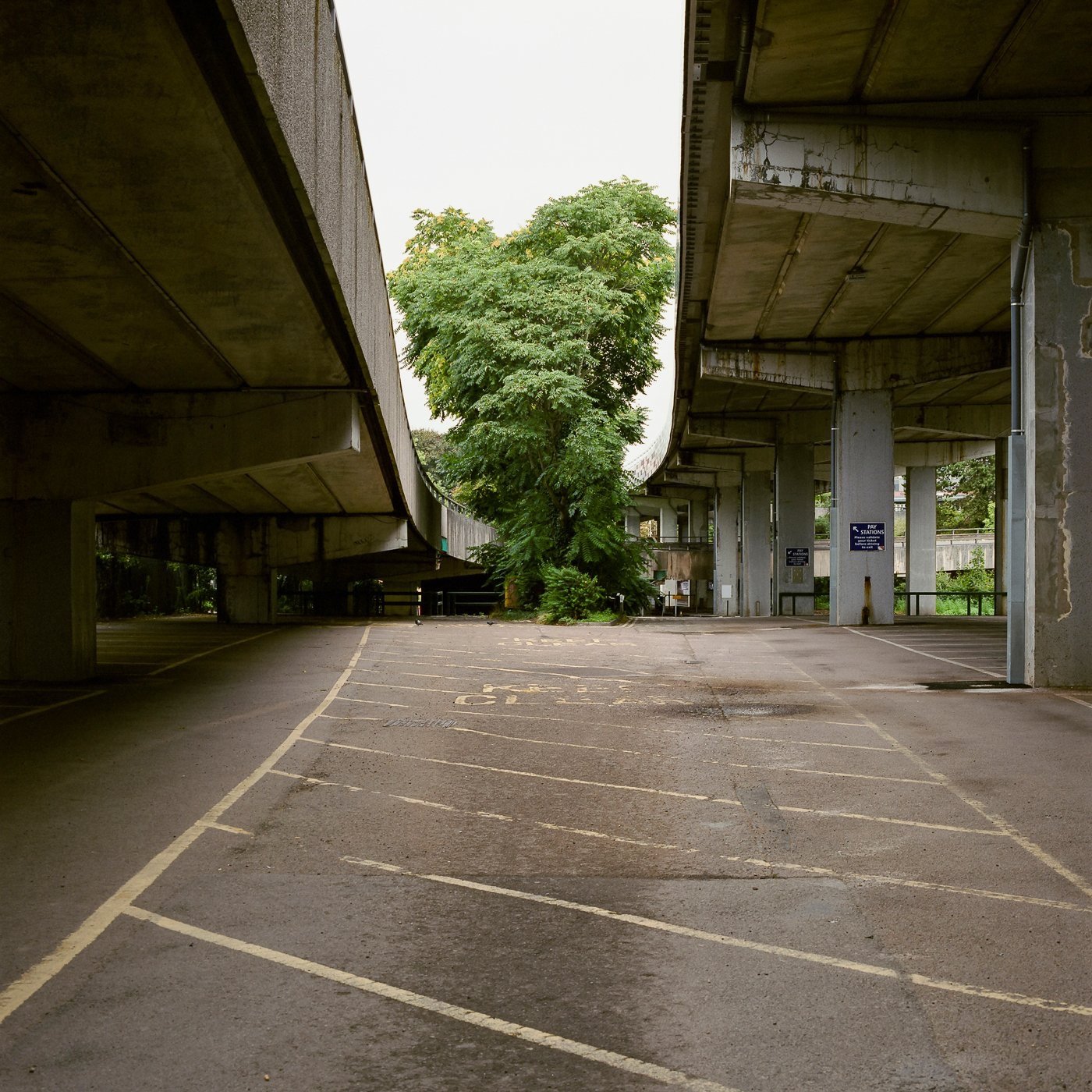
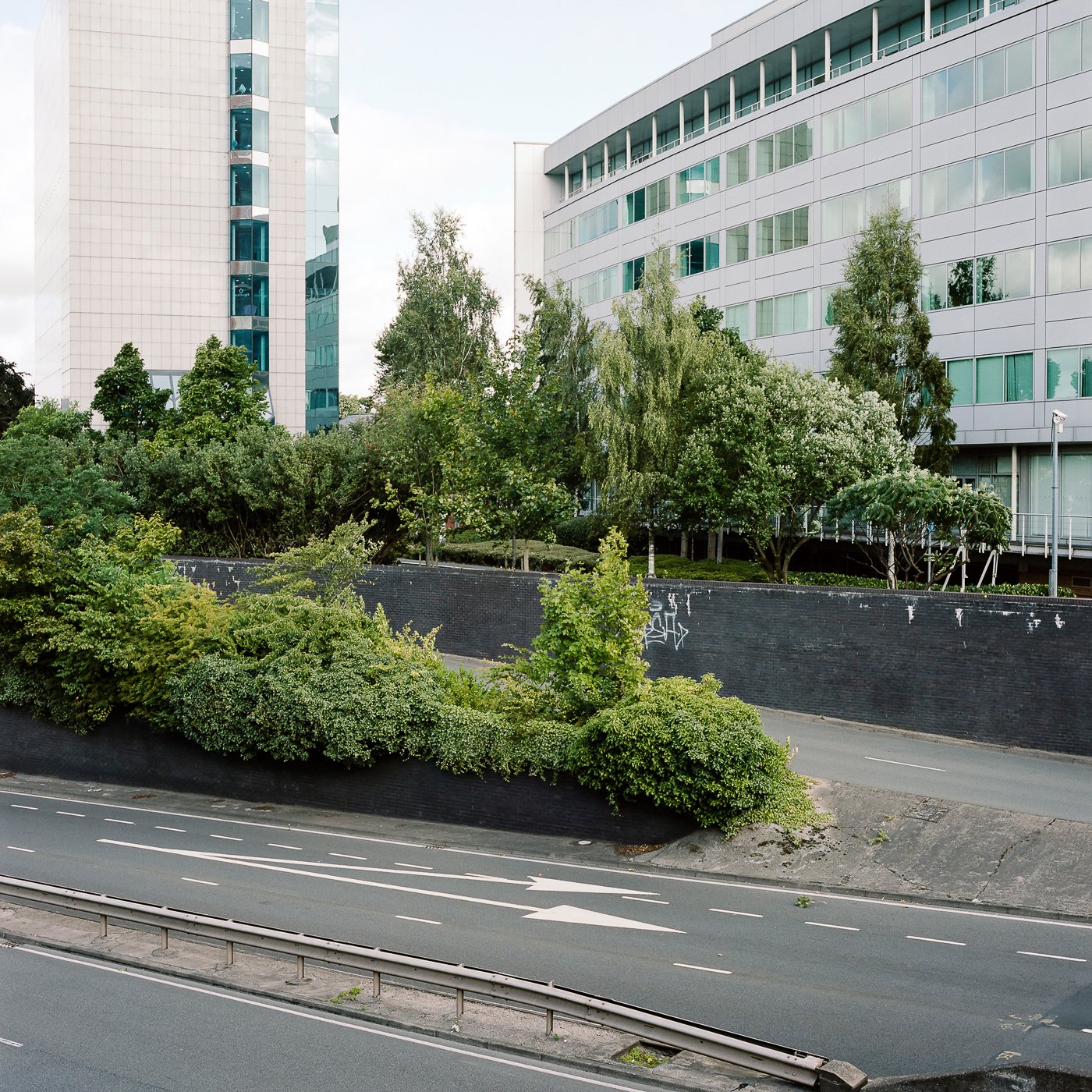
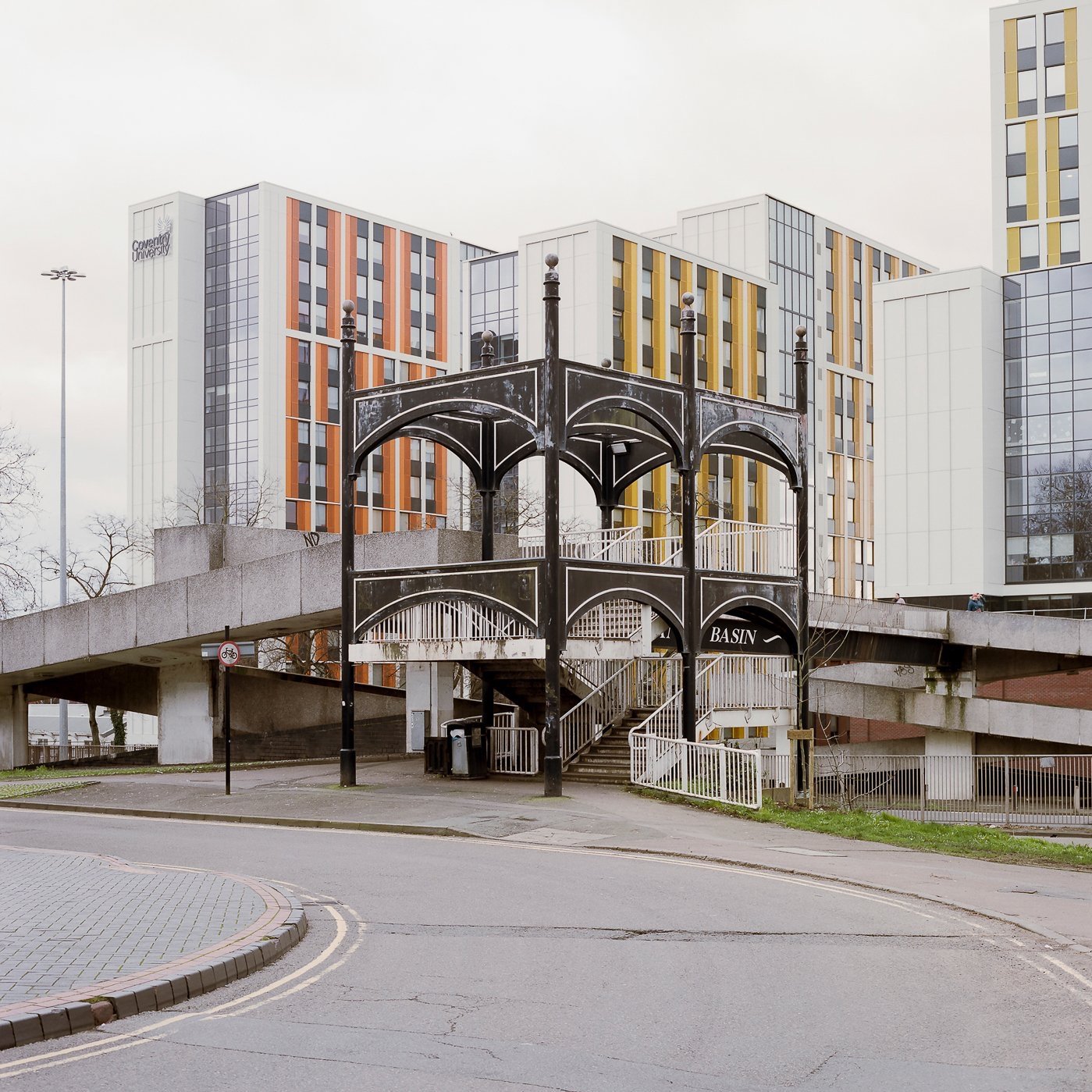
Built for the growing demand of the motor vehicle following the Second World War, on the blank canvas of a flattened city centre, the primary aim of Coventry’s inner ring road was to relieve the centre of congestion and connect the city. The Coventry ring road is a 2.25 mile dual carriageway encircling Coventry City Centre. It was designed by Coventry City Council’s in-house City Engineers Department, under Donald Gibson, Coventry’s first appointed City Architect and Planning Officer. Officially the A4053, it took 14 years of construction and more than 25 years of planning before the road was completed in 1974.

Concrete Collar was made over a period of three years. The photographs exhibit a historically and culturally important part of Coventry's urban landscape, as it exists within a rapidly changing environment. The images reflect how the city is regenerating and growing within the constraints of its post-war footprint. 

The ring road, and the radial arms that have been made linking traffic to it, have swathed through property, stopped up roads, brought us subways and overbridges. We have built another defensive wall like the old city wall, this time to keep the through traffic out!

Newbold, E. B. (1982) Portrait of Coventry p. 52

Tom Illsley is a photographer from Coventry. His practice involves explorations of landscape rooted in historical and geographical themes. Illsley graduated from the Photography BA degree course at Nottingham Trent University in 2015. He was the winner of the Genesis Imaging Bursary Award which supported the production of his inaugural solo exhibition Meridian. He is now engaged in professional development and personal projects. Concrete Collar, was exhibited at Coventry Cathedral in summer 2021.

tomillsley.com

Paul Walsh - New Publication

MAP6 photographer Paul Walsh is part of a new publication released by The Velvet Cell. Chronicles is a collection of five small projects by five different photographic artists who also include Hans Schlimbach, Maarten Vromans, Miguel Henriques, and Sam Oberter. Presented in a box with accompanying text, each of the projects comes as its own separate booklet. Included is Paul Walsh’s series Bokštas 25, where he circumnavigated the Televizijos Bokštas 25 times on foot, photographing the TV tower from different views across the city of Vilnius in Lithuania.

Screenshot 2021-09-07 at 16.44.32.png
mail-3.jpeg
mail.jpeg
mail-2.jpeg

5 Separate Booklets
Softcover, Staple Binding
Digital Printing
Limited Edition of 100
CRN001

Free Shipping to EU + UK

€18.50

You can purchase Chronicles from the Velvet Cell website here.

Ioanna Sakellaraki - Kickstarter Campaign

The Truth is in the Soil, a new photobook by our friend Ioanna Sakellaraki, charts a 5-year photographic exploration of grief as an elegy to her father and the dying tradition of mourning in Greece. Ioanna is currently running a Kickstarter campaign offering advanced signed copies of the book as well as a selection of limited edition prints and a special edition of the photobook which by pre-buying will support the overall production of the book.

My return to my homeland Greece marked the departure on a journey of understanding death through family, religion, mythology and the self. My own grieving process became the lens through which I investigated the collective mourning in Greek society, the intersection of ancestral rituals, private trauma and the passage of time. Further inspired by the last communities of mourners on the Mani Peninsula of Greece as the doyennes of a dying tradition, the work incorporates a new kind of subjectivity, intimacy, and criticism, exploring mortuary rituals as a way of humans adapting to death.

Five years later, The Truth is in the Soil, reflects on how my personal story has transformed into a collective narrative of loss aiming at contributing to the collection of tales of human struggle for meaning. To me, these images work as vehicles for mourning perished ideals of vitality, prosperity and belonging, attempting to tell something further than their subjects by creating a space where death can exist. Death brings with it an inevitable rupture in beliefs, roles and identity for those who encounter it. How can one deal with loss?

In the wake of witnessing loss globally within our cultures and civilizations, I want to stimulate the viewer to rethink mortality through this imagined path of departure onto a new landscape. 

Publishing this book marks the end of a journey for me and the transition into a new phase. I can only hope for it to become a source of empathy, strength and inspiration for the ones who will acquire it.

The support I receive through this campaign will be entirely dedicated to the production of the book. The book has been designed in collaboration with renowned book designer Stu Smith and will be published by GOST Books. It will be a hardback, clothbound book, 220 x 300mm in portrait format and printed both colour and duotone at EBS in Italy. The special editions will be presented in a handmade clothbound slipcase. Accompanying the images will be a series of fictocritical essays written as part my research and engagement with critical theory, philosophical poetics and aesthetics throughout this project.

Giving this work a permanent existence by realising it into a book has been one of the long-standing objectives of my practice and the wishful outcome of my personal and emotional investment into this project. However, publishing a photography book is increasingly challenging due to the high costs of design, printing and distribution. As a young, self-funded photographer, I will be putting part of my savings into the production but I am not able to cover all the costs. I therefore count on your support for bringing this project into the world. I am forever grateful for helping me make this real.

To help Ioanna fund her new book, you can visit her Kickstarter campaign page here.

Guest Feature - Angela Zheng

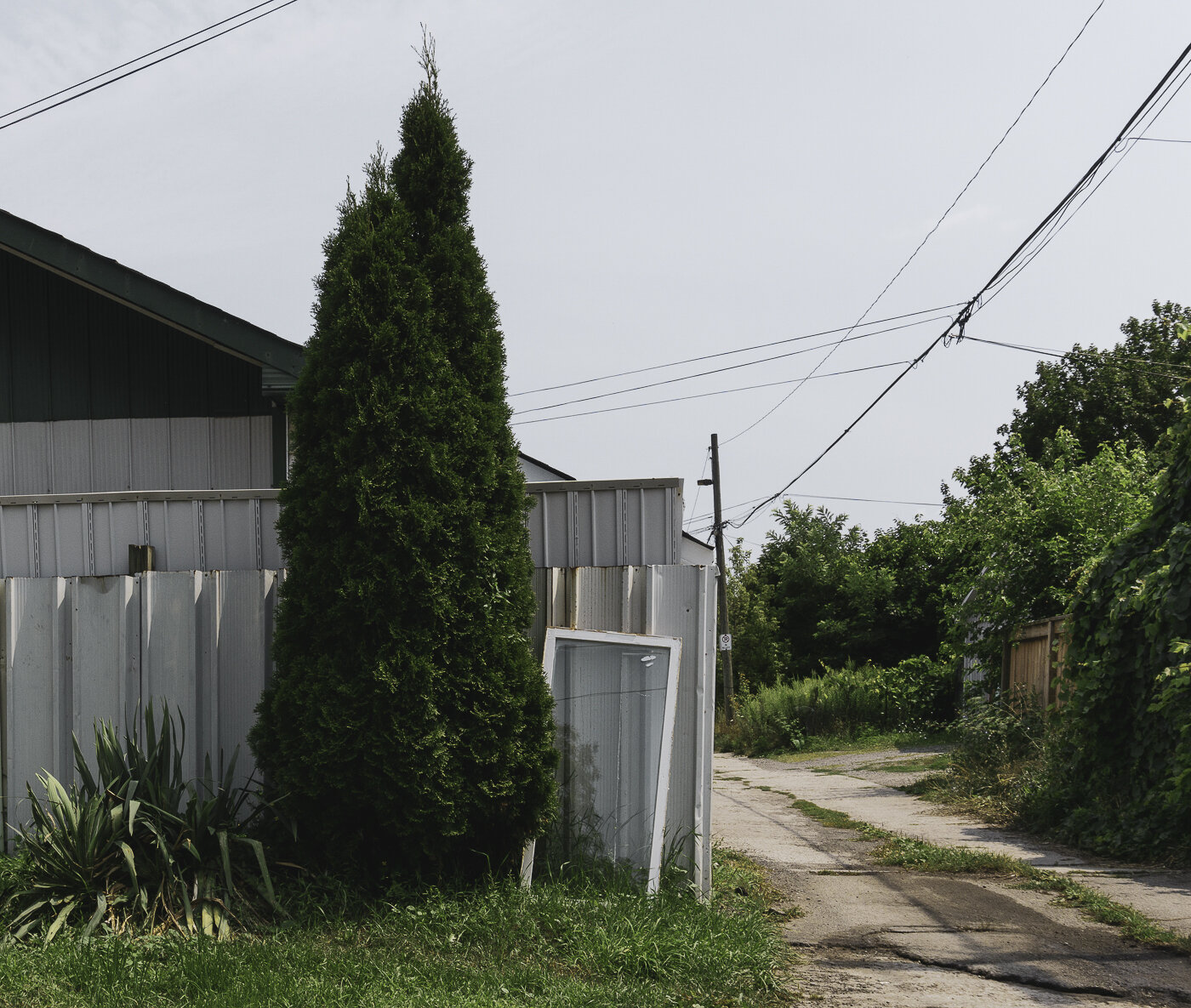
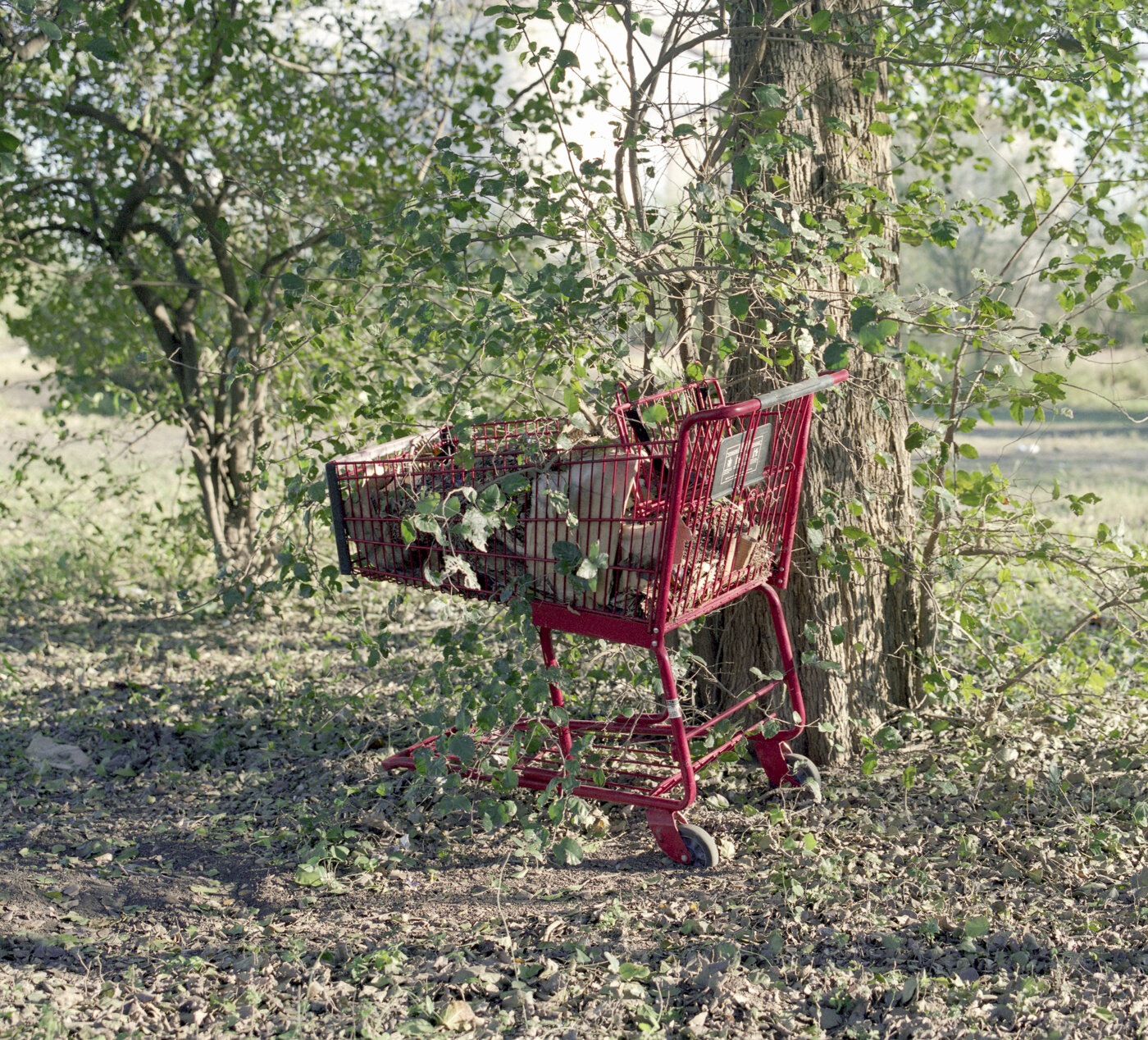
This work showcases the alleys that run along the backyards of residential homes in several Hamilton neighbourhoods. In practice, these alleys serve as parking space for residents; cars can drive through the alley and park behind the yard. Here though, I document the passage of time as it transforms these alleys and the power of nature in reclaiming its land. In areas of the alleys that humans have left unmaintained, wildlife has taken over. There are traces of human life in the household items left behind. Taken together, these photographs bring to light a different kind of place within the city and in between rows of houses, where the alleys run, the forces of nature dominate.

Alley1.JPG
Alley4.JPG
Alley5.JPG
Separation.JPG
Doors.JPG
Alley6.JPG
Shed.JPG
Window.JPG
Transformation.JPG

Angela Zheng is a photographer based in Ontario, Canada. Her interests are in urban landscapes and still life. Her current work focuses on highlighting abandoned or decaying buildings, emphasising the economic transformations taking place in the city of Hamilton. Angela is a member of Gallery 1313.

angelazh.com

Guest Feature - Drew Ducote

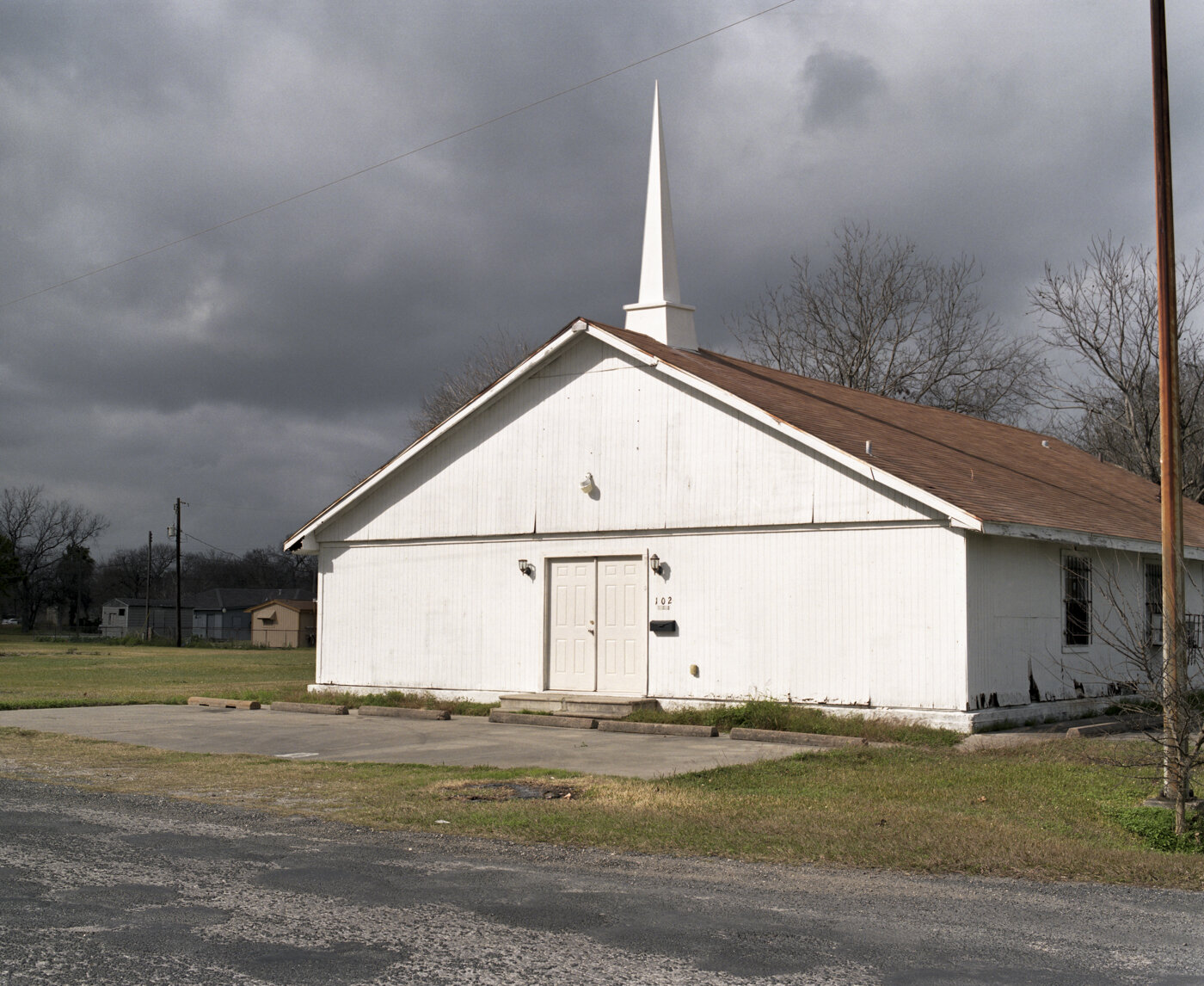
Oil Country is a project about the numerous refinery towns along the Texas Gulf Coast and the communities within them. This project uses the medium of photography as a geographic research tool to provide an illustration of place. These towns, which are some of the most heavily polluted areas in the United States, struggle to deal with the environmental and health impacts of the refineries. Still, the communities within them remain resilient. These images provide a window into these towns and the reality their people face today. This reality is one that is pertinent to this moment in time and exemplifies humanity’s strength against forces that threaten our existence on this planet.

img352-copy.JPG

Drew Ducote is a photographer currently based in Brooklyn, NY. His photographic work incorporates geographic concepts like place, space, and the passage of time to craft a narrative through his images. Additionally, his work often highlights environmental issues and power struggles that are apparent in American society today.

drewducote.com

Guest Feature - Per-Olof Stoltz

My latest project The world is somewhere else is a documentation of Scandinavian suburban life. Just plain daily middleclass life as it turns out for a lot of people in Sweden. Not very exiting, daily life usually is’nt, but also very seldom documented. Like there’s a white spot between the stories from all those picturesque villages and violent city districts. The name of the place where I grew up is Rydebäck, a large suburbia situated along the coast of Öresund in the south of Sweden. I left it some 40 years ago to start my own life, and in this project I'm back to see what's changed since I left. As it turned out not that much has actually changed. Well, the decor has been updated of course, but otherwise it's the same middleclass dream based on prosperity and comfort.

Björkar.jpg
HallenNygrenKöning.jpg
Ingemar olsson kanot.jpg
Ingvar Johanssson.jpg
JellumLing. Elton, Silene, Zac o Jeppe. Kvällsrutiner1.jpg
JellumLing. Elton. Ballonglek3.jpg
Olivträd.jpg

Sometimes I get a feeling that a suburbia like Rydebäck is a place that isn’t in touch with the rest of the world. That the world is distant with all it’s conflicts, streams of refugees and crises. Everything and everyone seems molded into the same shape and nothing is allowed to disturb the harmony. The lawns are mowed, the kids sent to school and sometimes the neighbours come over for dinner. Saturdays are football practice, grocery shopping for the week to come and a carwash. The disasters and conflicts of the world are hardly noticed at all. Well, there’s usually a beggar sitting by the grocery store, but that is as far as the world reaches. But of course there must be those that care and act. They might be involved in politics, NGO’s or something similar in neighbouring places. But not in Rydebäck. That’s where you live. The world is somewhere else. 

Radhus.jpg
Linn Zetterström o Fredrik Stuhr Pedersen .jpg
Porslinshund.jpg
Tomt hus2.jpg
Martina Simberg1.jpg
Spraymoln.jpg
VäxthusVer2.jpg
Verishureplank.jpg

Per-Olof Stoltz is a photographer living in Gothenburg, Sweden. He has worked as a professional photographer since 1989 in news, magazine and advertising, and has produced several projects that have been exhibited in Sweden. His latest project The world is somewhere else was also turned into a book. For the last +10 years he has used photography as his artistic outlet, not as his living. He has always been working in the photojournalistic/documentary realm. He believes that the image is a superior way to tell a story, to reach the viewer, and has a passion for showing those everyday lives, and signs of it, being lived quietly. Those stories that normally aren't told, unless disaster has struck. Because there's a story to be told everyday in life. 

postoltz.jimdofree.com

Raoul Ries Exhibition

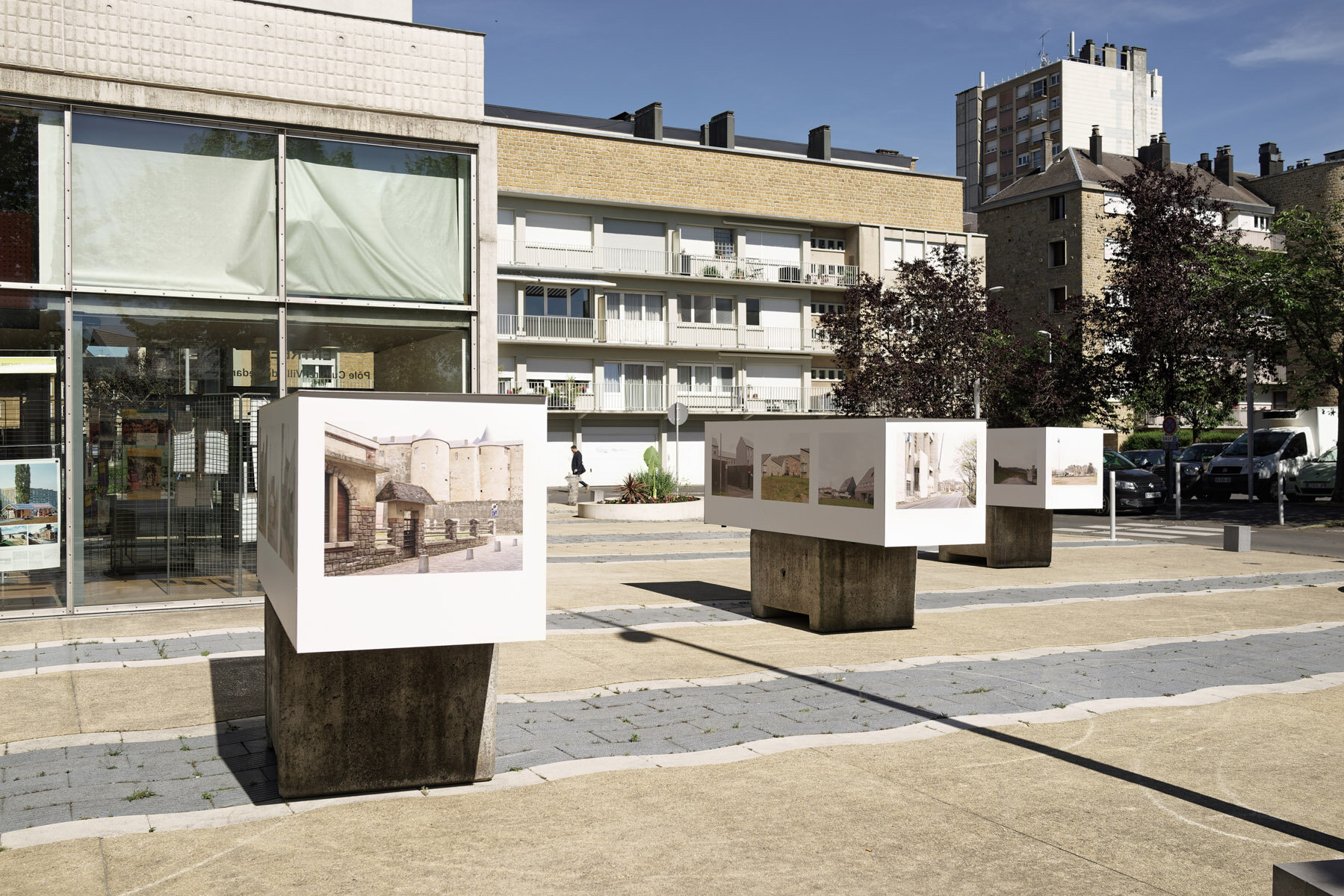
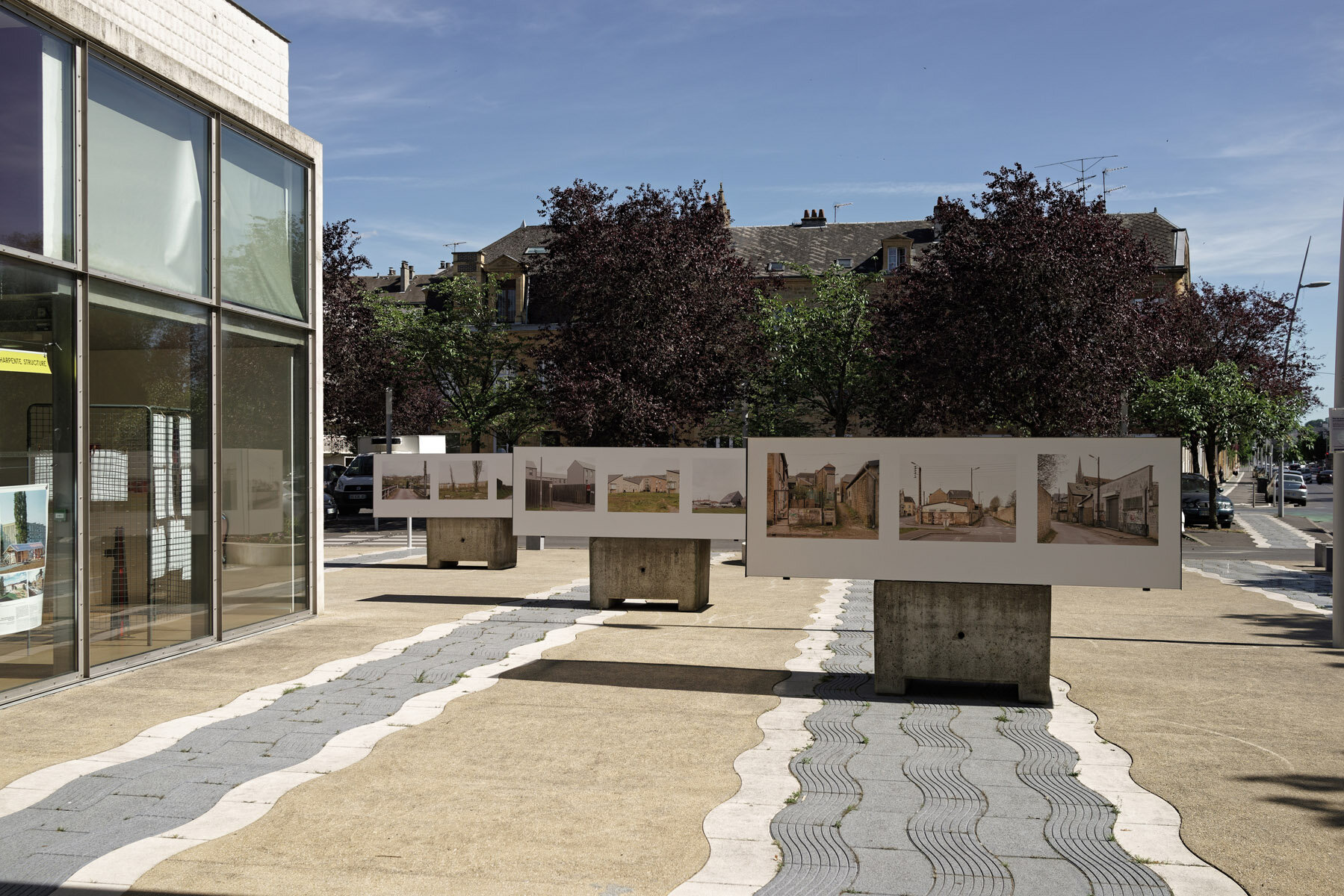
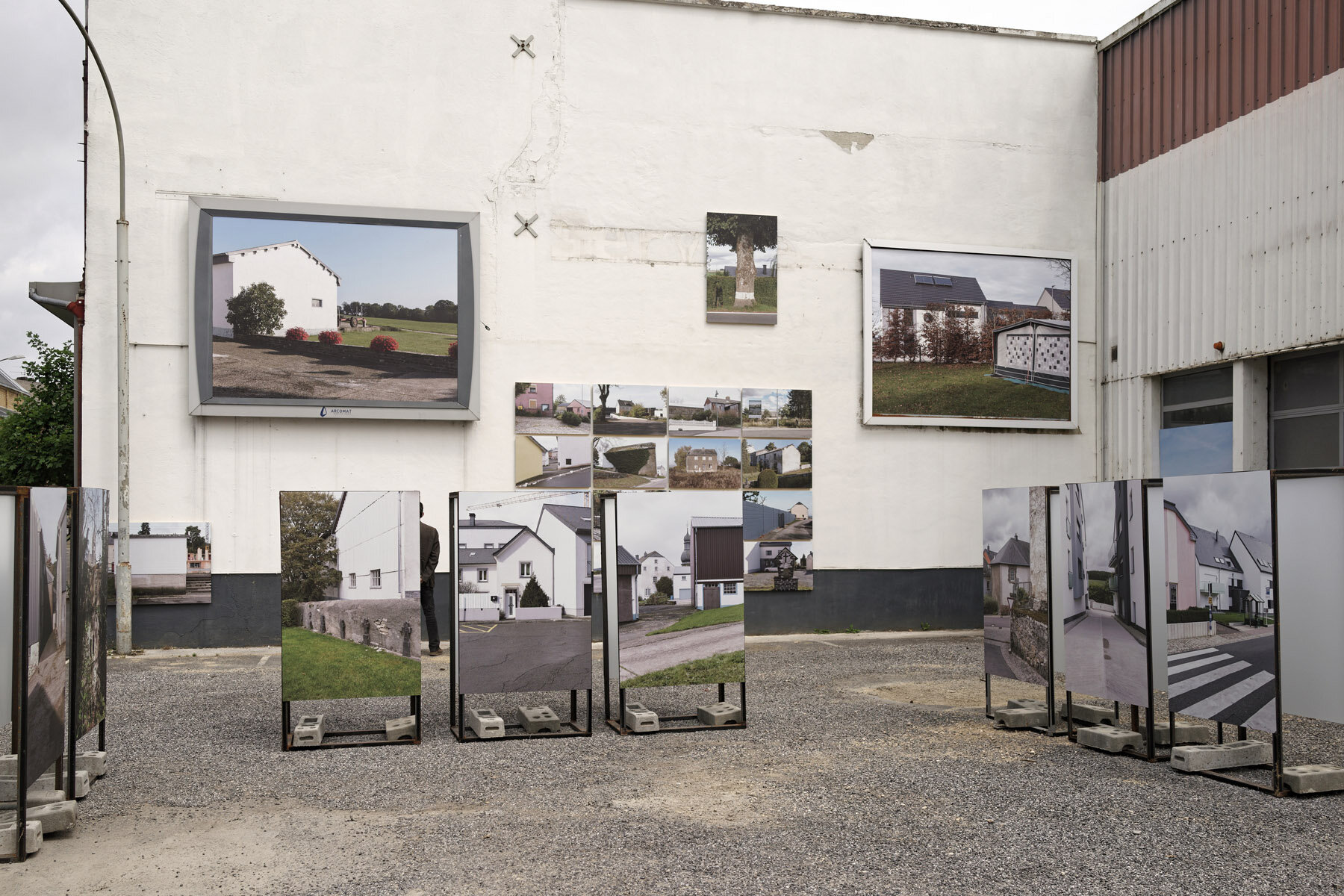
URBI & ORBI Biennale de la photography et de la ville’ recently hosted 26 public exhibitions across 9 different locations in the city of Sedan. At the invitation of Clervaux - cité de l'image and in cooperation with the Urbi & Orbi Festival, a new series was created by MAP6 photographer Raoul Ries. During his artist residency Ries investigated questions about the density of the cityscape and the identity of the different neighbourhoods of Sedan. He travelled throughout the territory of the municipality of Sedan making images that question where the city centre becomes a residential suburb, and where commercial exploitation zones and rural spaces begin. Titled ‘Sedan, jusqu’aux limites de la ville’, his work was also on display at the festival. Alongside Ries was Luxemburg photographer Christian Aschman who presented the body of work ‘État des lieux, états d'un lieu. His images show compositions of urbanist activity that concentrate on strong contrasts, harmonious coexistence and pastoral constructions.

zoom-4.jpg
zoom-3.jpg
zoom-5.jpg
zoom-6.jpg
zoom-2.jpg

Richard Chivers - Degeneration

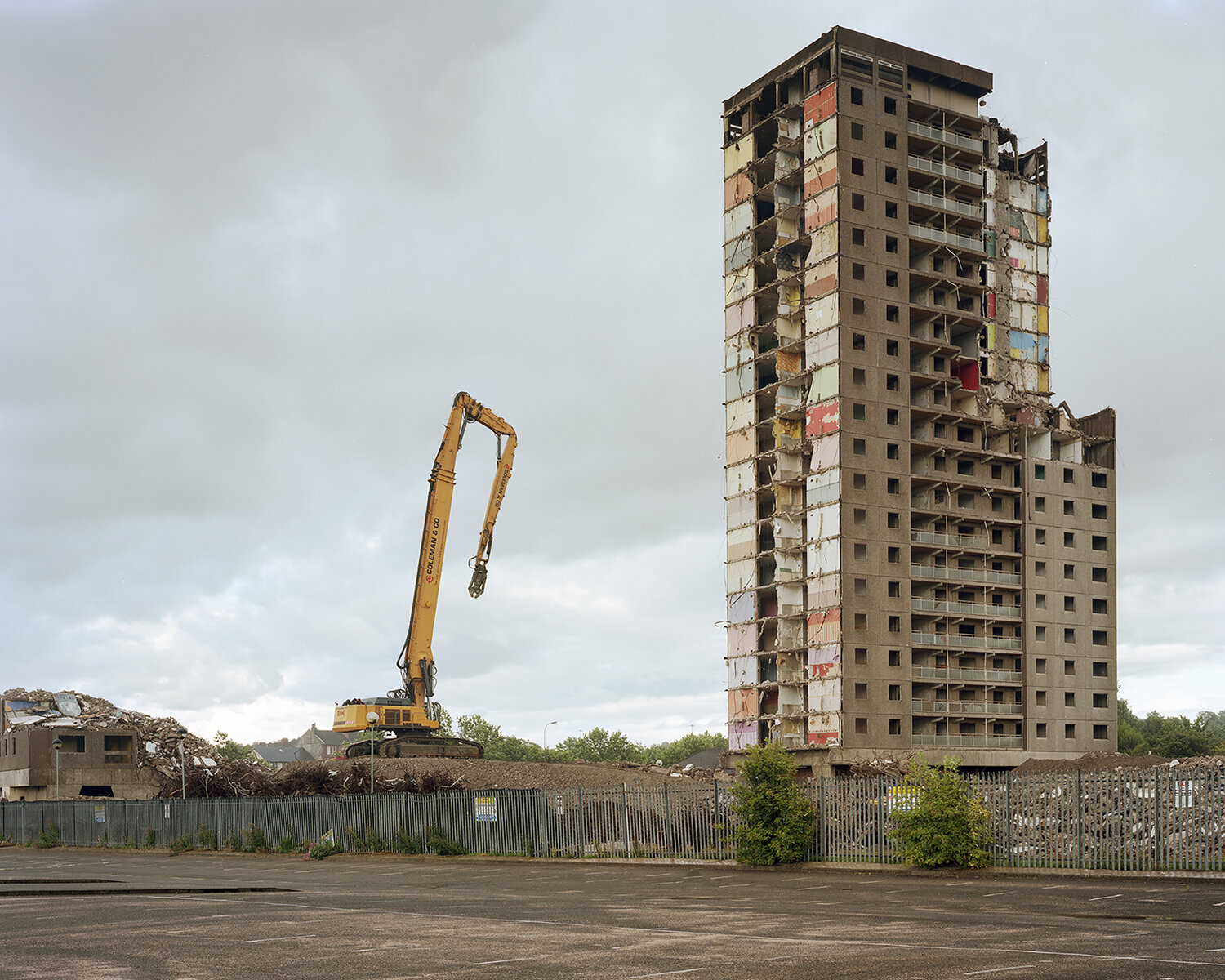
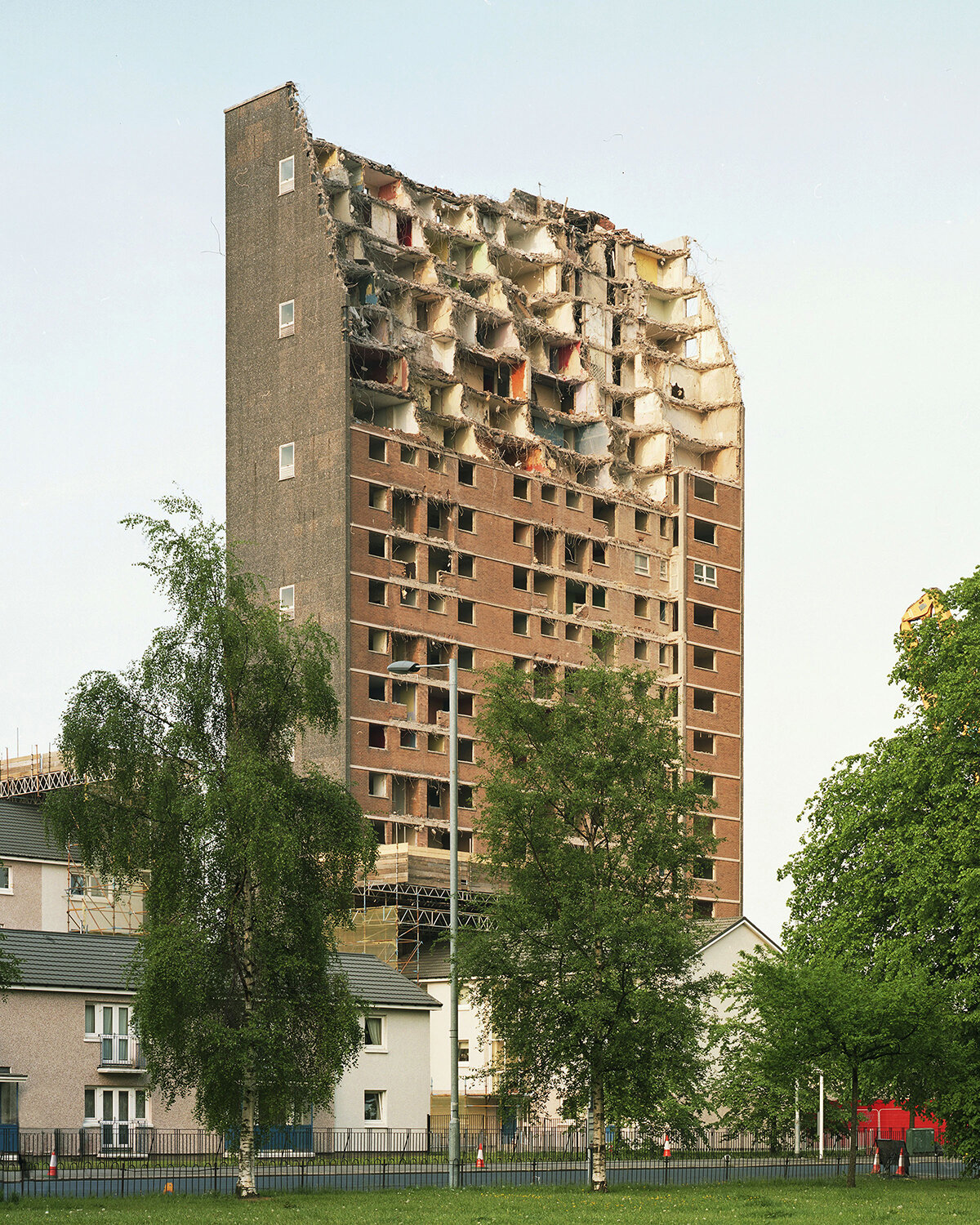
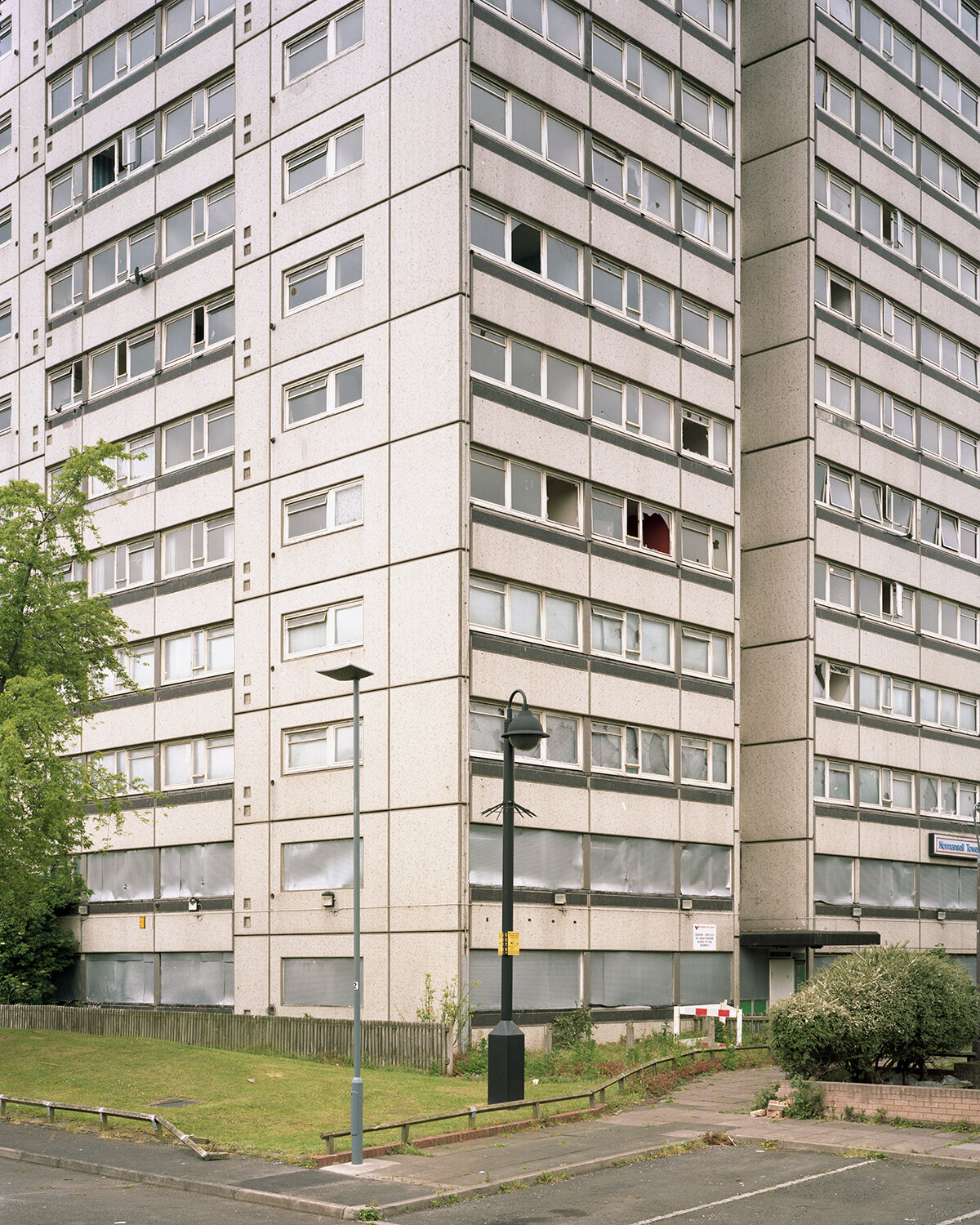
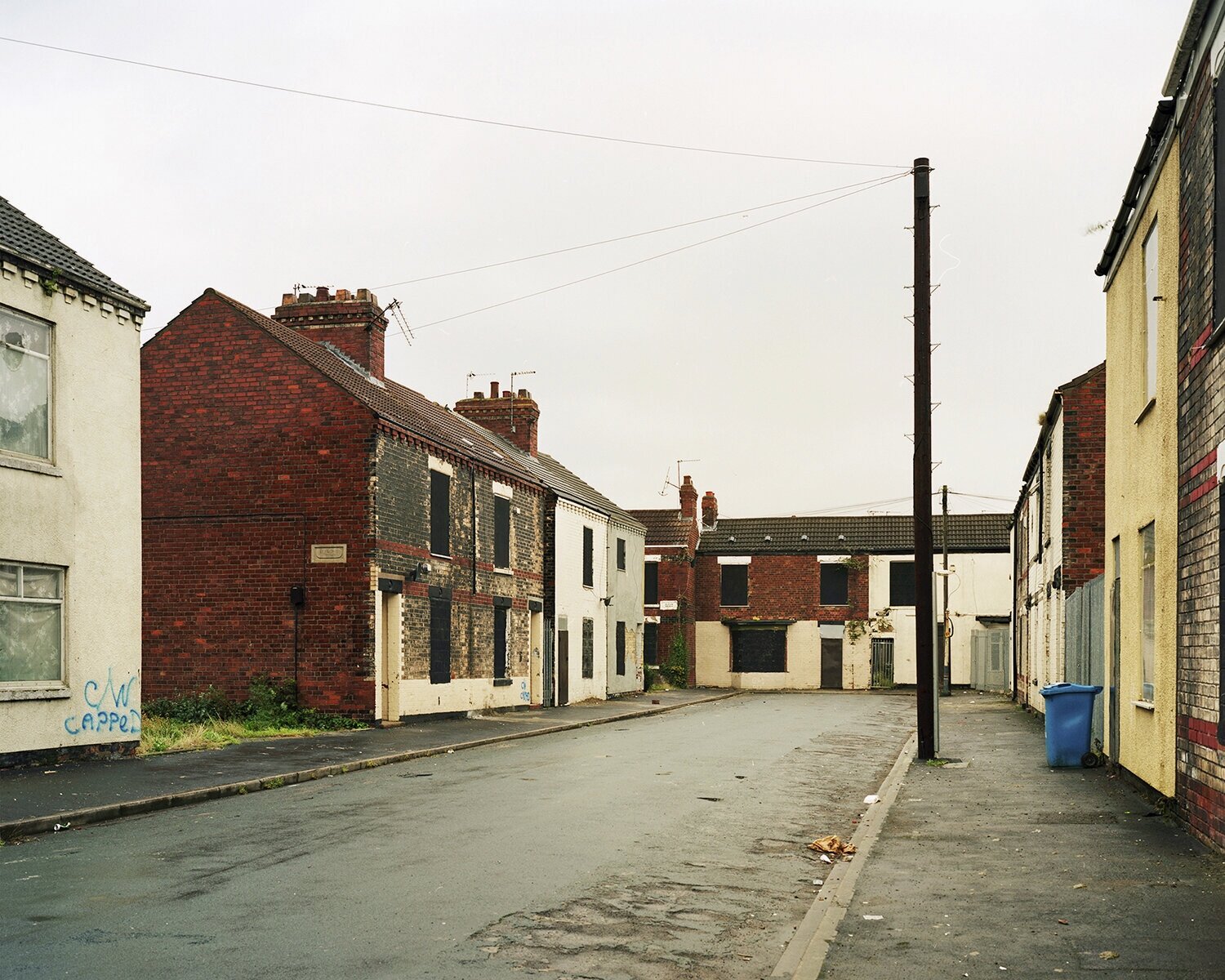
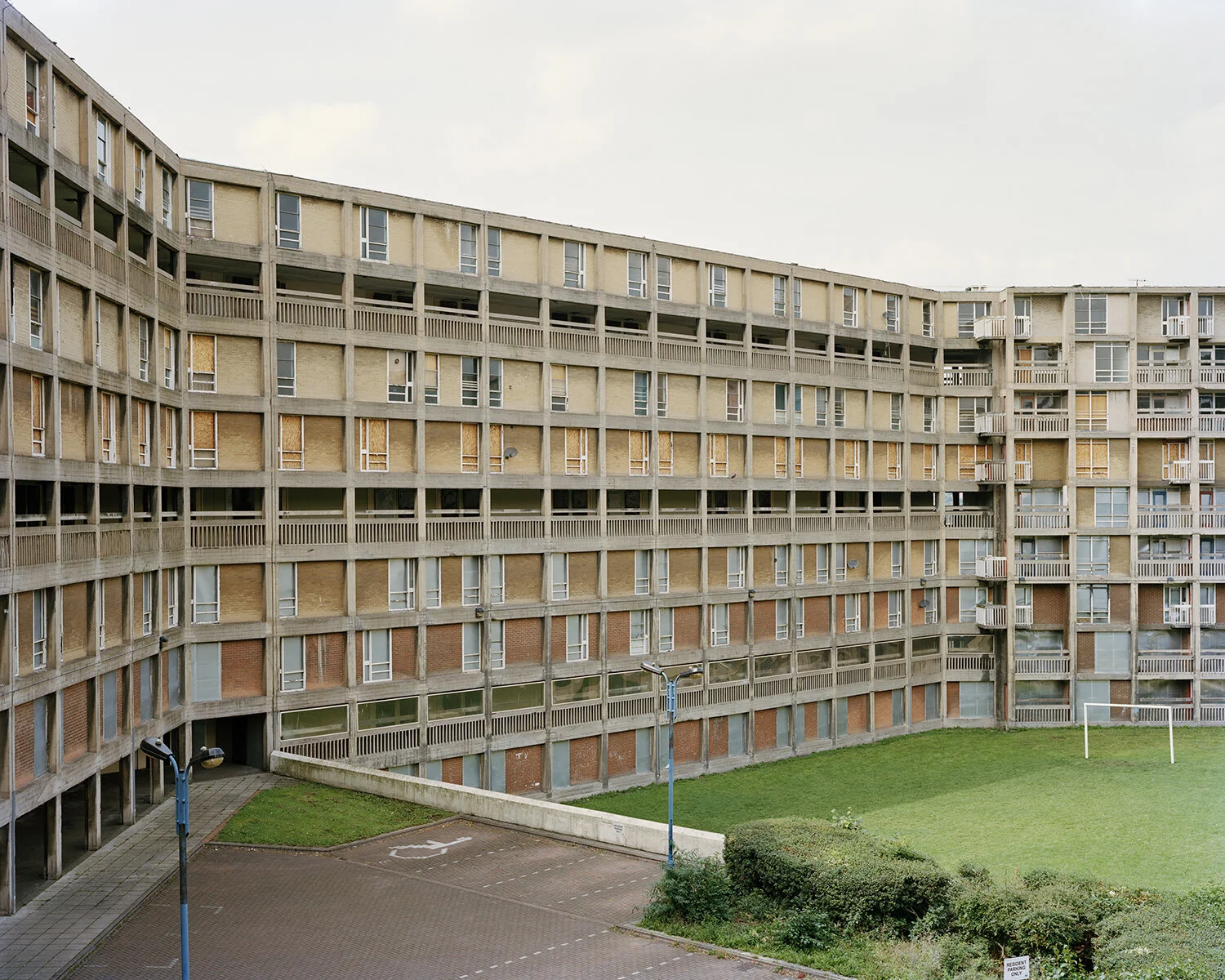
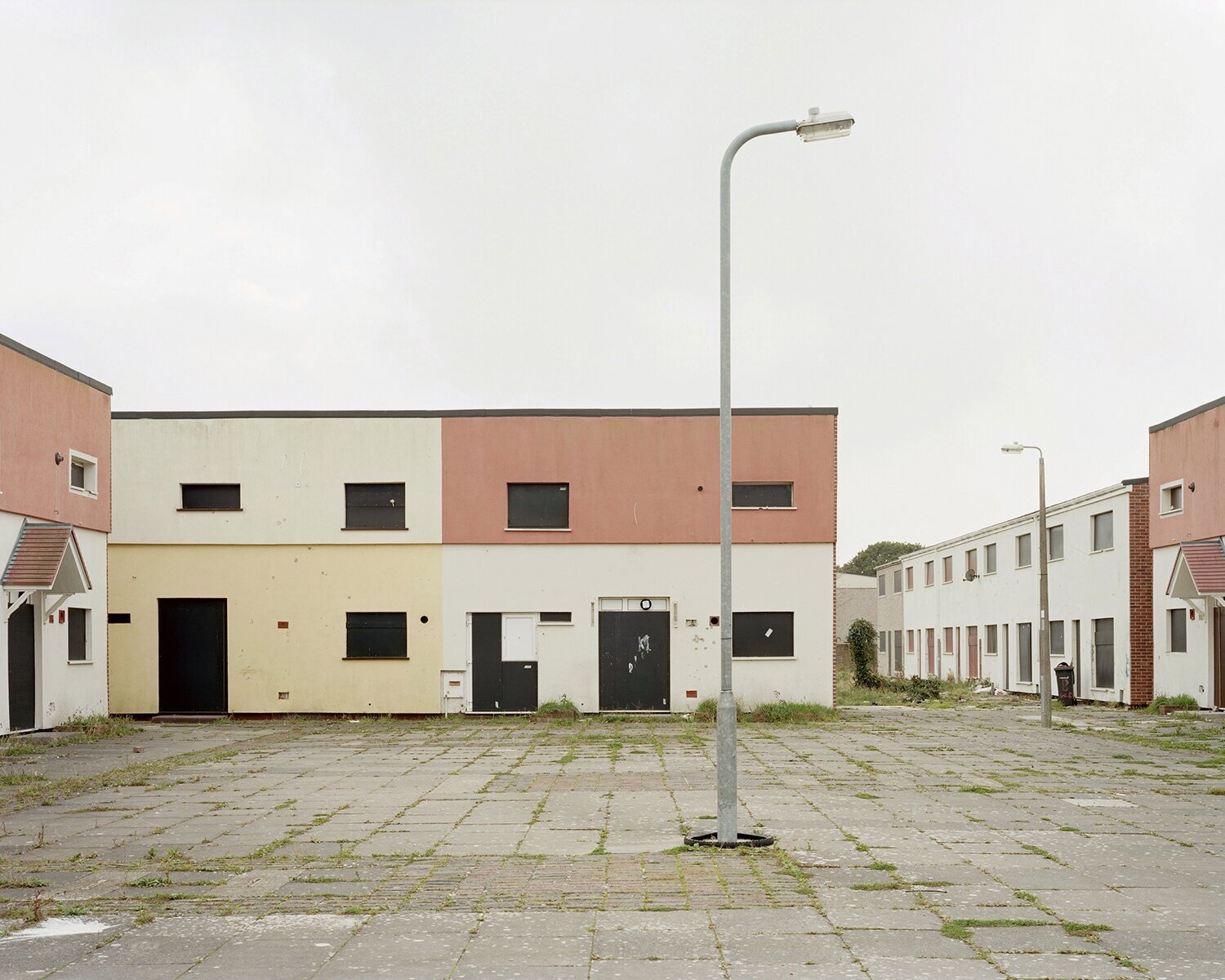
The photographs in Degeneration were made specifically in collaboration with the photographic collective Human Endeavour. Degeneration is an investigation of various housing estates across Britain. Each photographer chose a different area to photograph, these included Glasgow, Edinburgh, Salford, Liverpool, Birmingham, Sheffield, London, Cardiff, Southampton and Portsmouth. With Degeneration being a research led project, the objective was to take a critical look at the state of housing and regeneration in the 21st century, and the implications and complex nuances this may have on some of the poorest in society, reliant upon social housing. After several decades of neglect, consecutive governments have overseen the gradual demise and disappearance of social housing, due to 'Right To Buy' and a lack of new housing stock built, arguably fuelling the necessity to own rather than let that has instigated the artificial inflation of the housing market. This opens up many questions as to why this was allowed to happen, has fuelled the rise in homelessness and poverty and left the majority of people living in social housing trapped in so called 'sink estates’.

2.The Red Road Flats. Glasgow.2010.jpg
3. The Red Road Flats. Glasgow.2010.jpg
4. Muirhouse Edinburgh. 2010.jpg
5 Muirhouse Edinburgh 2010.jpg
6. Ibrox Glasgow. 2010.jpg

The post-war era Britain's population was faced with massive housing shortages. The existing housing stock was often disgracefully inadequate for even the most basic of needs. Modernist architecture with its close links to left wing ideology reflected a progressive solution to the practical and social issues of the time. At its height in the 1950s Social Housing was unquestionably a central pillar of Britain's regeneration following the devastation of the Second World War. Modern, and affordable, it represented an advancement in society; where the working classes were for the first time given the opportunity to live in a decent home. These projects and buildings were often striking exercises, bold and futuristic in their character and breathtaking in the scale of their ambition. Of course not everything proposed and executed by the town planners was to be warmly received. The high level philosophy and design of Corbusier was all too frequently brought crashing down to earth by the constraints of both economy and ability. Despite the misgivings, the new house or flat on the estate offered to millions the promise of a new beginning; a chance of escape from the almost medieval squalor endured by working class families through generations since time immemorial. But this wasn't only about a specific part of the demographic. Social Housing was intended for all, to encourage the integration of different echelons of society. As late as the mid 1970s you would find a wide range of people living on these estates. Our home was in a tower block in Sheffield's Norfolk Park. My father was a skilled tradesman, our neighbour a teacher: the commonality shared by the occupants of these developments was that of employment. These places were on the whole very positive places to live in, vibrant and open with a strong sense of community. However by as quickly as 1979 the political landscape in our country had changed forever. 

7. Ibrox Glasgow 2010.jpg
8.Ibrox Glasgow 2010.jpg
10. Lozells Birmingham 2011.jpg
11. Hull 2012.jpg
12. Park Hill Sheffield 2010.jpg

Our leaders decided that talk of society was no longer valid, the interests of the individual reigned supreme and through the Right To Buy scheme we were encouraged to take part in the dismantling of this great social project. Those who could took advantage of the schemes. The theory was straightforward enough. If you give people the opportunity to own something themselves then they will take greater care of it than the state ever could. Their emotional connection to their homes will be stronger. Individuals will be empowered, less docile more entrepreneurial, all will benefit. Within a decade most of the new property owners had sold up and moved on. Who was left behind? And what did it mean to be there? A council tenancy now carried with it a sense of failure and increasingly blame. Within the upwardly mobile 80's paradigm it's your own fault if you are poor, isn't it? Beyond the physical our psychological relationship towards these estates and buildings was quickly and profoundly altered. Far from being symbols of hope and egalitarianism, estates became places to avoid. The notoriety increased exponentially through the 1980s and 1990s. Names such as Moss Side or Red Road taking on almost mythic proportions, becoming as much feared and despised as the very slums and tenements which they replaced. The rampant excesses of the housing market in the late 1990s, which lead to an Englishman's home becoming not only his castle but also his retirement fund, all but finished the job started almost thirty years earlier.

12a. Park Hill Sheffield 2010.jpg
13.Harefield Estate Soiuthampton 2011.jpg
15. Rowner Estate Gosport 2011.jpg
16 Rowner Estate Gosport 2010.jpg
17. Rowner Estate Gosport 2010.jpg

The unabashed pursuit of wealth and self-interest seeming to prove that there really was no such thing as society after all. Housing Estates today have come to be associated with high levels of social stigma; they are seen as places of social exclusion. Homes to the forgotten under-classes, they provide the stage backdrop to our broken society neuroses. As compelling and titillating as any of Hogarth's scenes. But in the midst of all the media hyperbole and theorising what are these places? Even today are they not people's homes? Places where children play and belong, where treasured childhood memories are formed however repellant this may seem to middle class observers? What do we see when we look at these images of neglect and decay? How strikingly the physical neglect and abandonment of these homes and proud ambitions seems to reflect the disintegration and malaise of our society as a whole and perhaps even ourselves as individuals.

Degeneration by Richard Healy.

Guest Feature - Harry Compton

Since the 1st January 2021, I began documenting the experiences of rurality during the third lockdown, the lives lived and the world that has changed around them. While some have experienced little change in their day to day, others have found the pandemic a truly isolating experience. The book documents the changing nature of the rural idyll. It has been a very personal story, evoking juxtaposing feelings of melancholy and stoicism. The title of the book 'Off We Go Into The Bright Blue Yonder'‘ derives from a song I sang with an elderly gentleman George Warren as I walked him home from his friend Gerry's at 9:30pm in the evenings. For me this ritual optimised these feelings as we shuffled along the road in the middle of Winter up to his porch as he slowly let himself in to his house.

Unknown copy.jpg
Unknown-19.jpg
Unknown-5.jpg
Unknown-6.jpg
Unknown-4.jpg
Unknown-3.jpg
Unknown-7.jpg

The book further explores the social consequences of lockdown that have effected the 'rural idyll'. From the; purchasing of second homes, the influx of digital nomads and the exacerbated use of remote services and consumption which are increasingly hollowing the social fabric of these communities. The process over the last eight months has seen me photograph and conduct interviews over the phone with a broad range of residents living in Tillington, home to 404 people in the South-East of England. Whilst it feels odd reflecting on such a harsh period of time as life begins to open again, it is important to rationalise the lives and realities that we are experiencing from the local to the national patterns in society.

Unknown-9.jpg
Unknown-11.jpg
Unknown-10.jpg
Unknown-12.jpg
Unknown-2.jpg
Unknown-17.jpg
Unknown.jpg

Harry Compton is an Anthropology and Law graduate from the London School of Economics (LSE) who is about to embark on an MA in Photojournalism and Documentary Photography at LCC. His Interests lie in observing and trying to understand localities, the people in them and where they align their values and beliefs. His area of current focus is specific to accounts of Rural England, which he has been documenting for the last eight months.

harrycompton.com

Paul Walsh - Sleeplessness

For years I suffered from insomnia, caused by having an overactive mind when trying to sleep. I would lay in bed for hours with thoughts going around in my head, one leading into the next. Insomnia can be a lonely experience, even with somebody lying asleep next to you. One night I decided to go out walking to try and tire myself out. As I walked I saw that familiar places surrounding my home had transformed in appearance whilst under darkness, and usually busy streets were now eerily quiet and still. I became interested in the idea that places have a different existence at night when there is nobody around, and I began taking my camera out to record what I found. Whilst making photographs I was trying to find connections between what I was seeing outside in the darkness, and what would happen in my mind when I lay awake in bed.

Paul Walsh-Sleeplessness-3.jpg
Paul Walsh-Sleeplessness-2.jpg
Paul Walsh-Sleeplessness-8.jpg
Paul Walsh-Sleeplessness-9.jpg
Paul Walsh-Sleeplessness-25.jpg
Paul Walsh-Sleeplessness-22.jpg
Paul Walsh-Sleeplessness-30.jpg
Paul Walsh-Sleeplessness-13.jpg
Paul Walsh-Sleeplessness-26.jpg

Over the course of a summer I explored Brighton as well as the suburban peripheries and countryside. Using a local map, each night I would walk a different part of the town centre, coastline and countryside until I covered the entire area. For the project I used flash to illuminate objects in the darkness, it also meant that I didn’t have to carry a tripod. Walking at night is generally considered a risk, but I found it to be a calming and safe experience as there were very few people around, almost no traffic and I felt free to explore places without being watched.

Paul Walsh-Sleeplessness-4.jpg
Paul Walsh-Sleeplessness-23.jpg
Paul Walsh-Sleeplessness-33.jpg
Paul Walsh-Sleeplessness-10.jpg
Paul Walsh-Sleeplessness-24.jpg
Paul Walsh-Sleeplessness-32.jpg
Paul Walsh-Sleeplessness-20.jpg
Paul Walsh-Sleeplessness-6.jpg

Sleeplessness explores themes of insomnia, night walking and the aloneness that can be experienced during the night. The work is intended to draw parallels between the isolation of the nocturnal urban environment and what happens to the mind when we are unable to sleep.

Guest Feature - Jonathan Browning

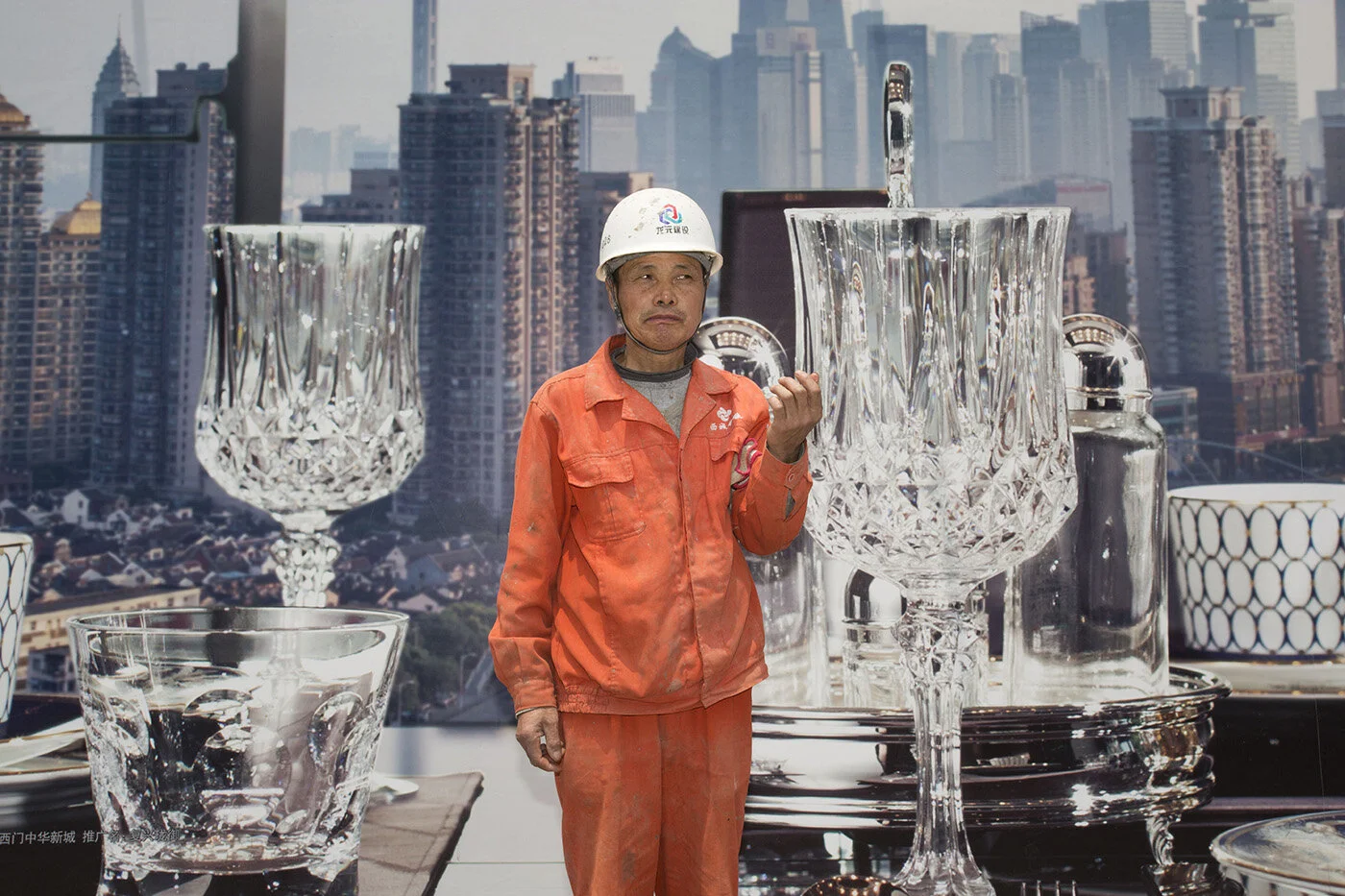
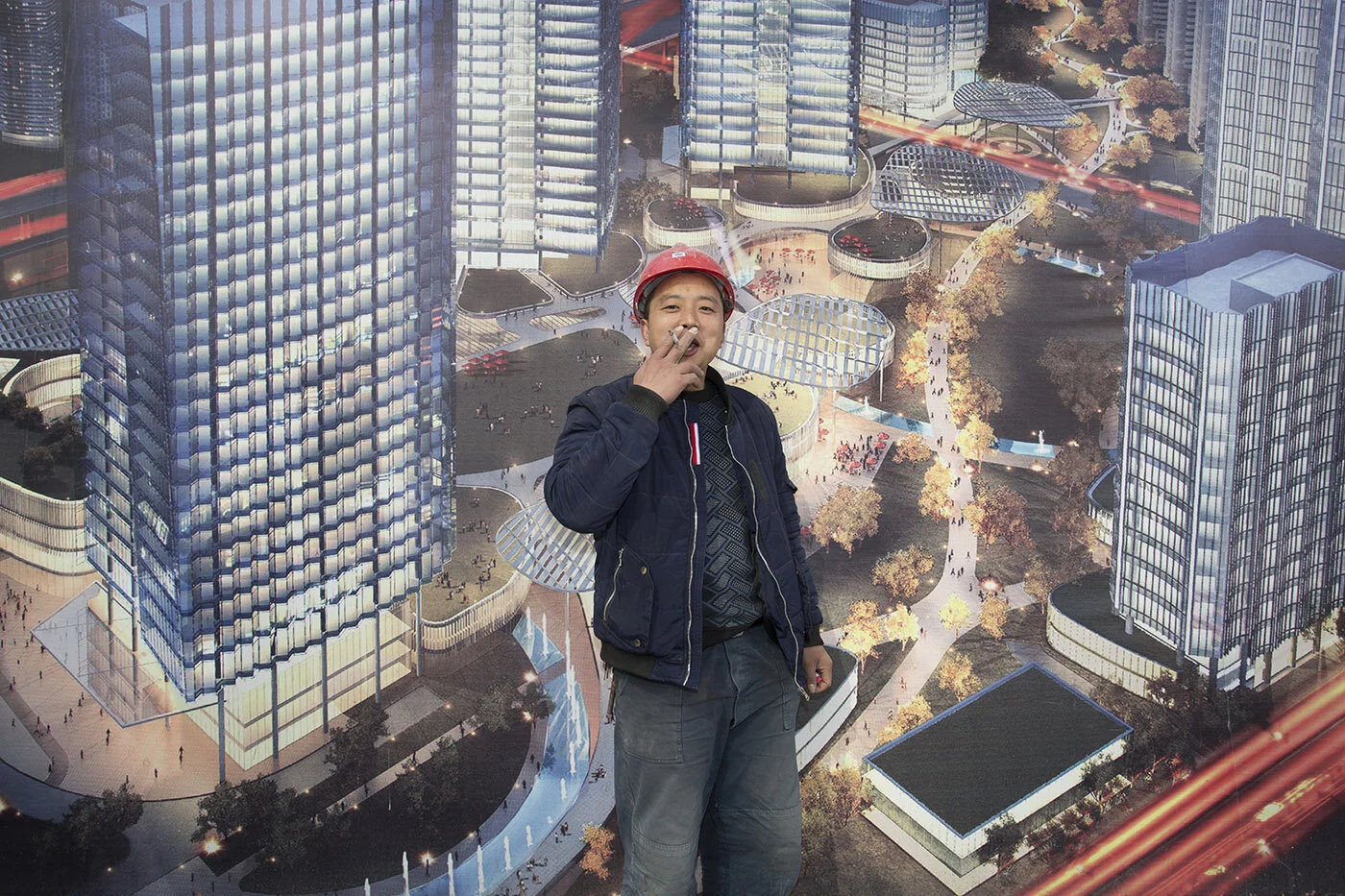
Migrant workers are the backbone and unsung heroes of China’s rapid economic and urban transformation. Originating from the less developed provinces, they come to cities such as Shanghai in search of a higher wage and a better life. I made this work in response to the widening wealth gap in China. Some of these workers, who are crucial for the economy and infrastructure projects of China, would need a year's whole earnings (6 days a week, sometimes 7) to afford just 1 months rent for some of the apartments they help construct. They spend their working lifes within these large fenced off construction sites - working and sleeping in large dormitory style temporary buildings. I made these images when they were on their lunch break - when they might go outside away from the construction sites own canteen. Asking them to position themselves in front of the billboard style adverts that surround the site for a quick portrait. 
Changfeng Center copy.jpg
Changfeng Center_3 copy.jpg
green coat copy.jpg
Migrant worker series_1 copy.jpg
Migrant worker_19 copy.jpg
The Mix C. Name withheld.  copy.jpg
Upper West copy.jpg
Vanke Xuhui Centre_7 copy.jpg
Xinhua Redstar Landmark copy.jpg
Xinhua Redstar Landmark_1 copy.jpg
Xintiandi_1 copy.jpg
Xintiandi_4 copy.jpg

Jonathan Browning is a London-based photographer who also travels regularly to Shanghai and Beijing; his previous home of 10 years. He specialises in documentary, portrait, corporate + industrial photography and videography. He studied a BA (Hons) in Photojournalism, graduating in 2005, and in 2007 moved to China to establish himself as a freelance photographer, working for editorial and corporate clients; from shooting illegal coal mines and dissident artists to making a portrait of the president of Taiwan. His work has been published worldwide in international broadsheets, magazines, ads and annual reports.

jonbrowning.co.uk

Chloe Lelliott - Island

The concept of Utopia in every age has in some way been a variation of an ideal past, present or future. These ideas may be imaginary, mythical and religious, or have their foundations rooted in history and other civilisations before them.

Island explores ideas of the desire to be elsewhere, to escape from the here and now and be seduced by the exotic. A search to find a place that exists on the periphery of time and the borders of fiction. A picturesque landscape of wonder tinged with an ever-present shadow. An impossible desire to reach a paradise lost.

1island.jpg
3.jpg
2 (1).jpg
5.jpg
6.jpg
7.jpg
bdone17.jpg
8.jpg