Featured Collective - Wideyed

In our second ‘Featured Collective' we got the chance to catch up with Wideyed. We love what these guys do, so we’re delighted to share an insight into their work and how they function as a collective.

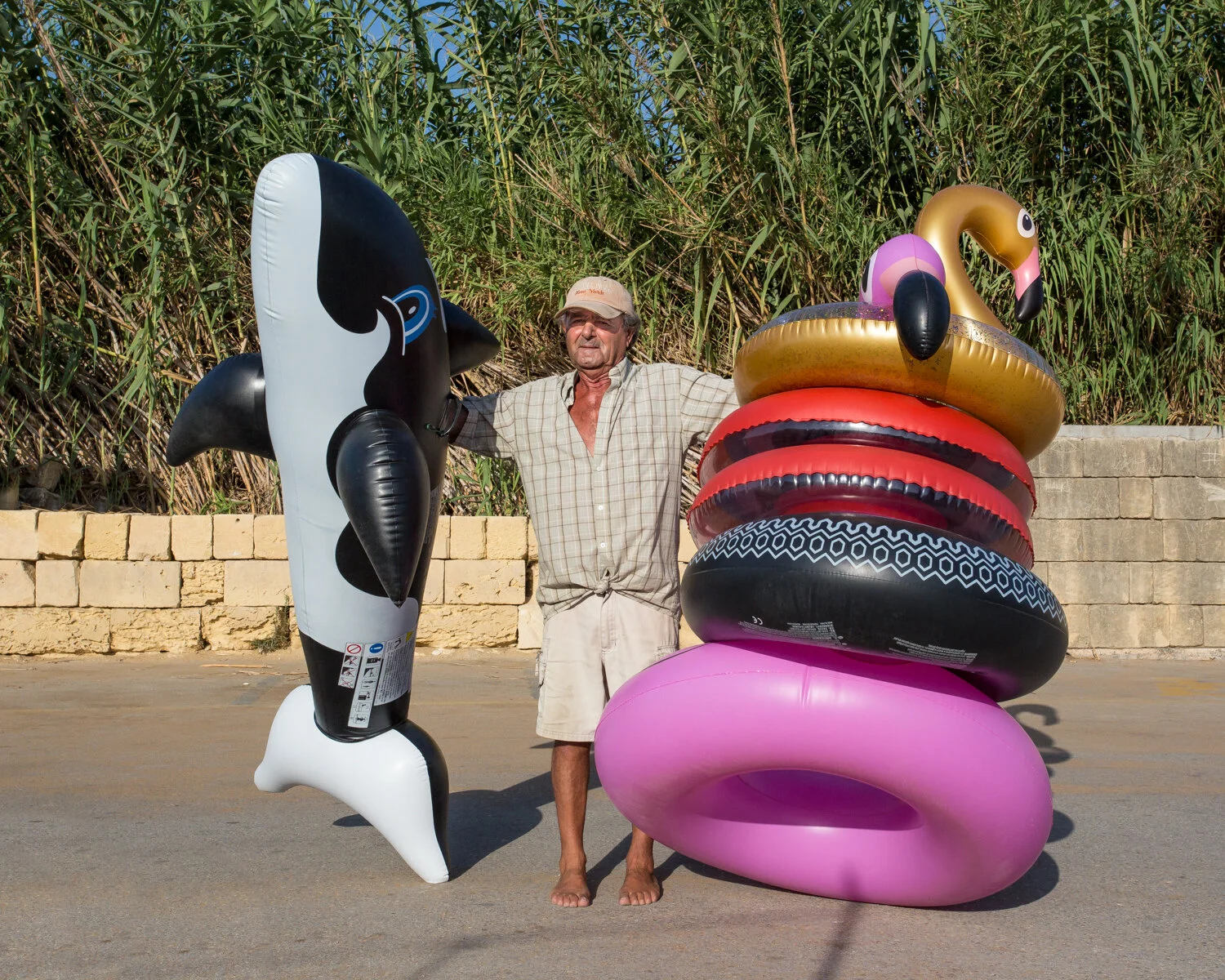
Nat Wilkins, from the Wideyed project Agri[culture]

Nat Wilkins, from the Wideyed project Agri[culture]

Can you tell us a little about Wideyed, how you began, and what were your intentions when creating the collective?

Founded in 2008, Wideyed currently combines the practices of Richard Glynn, Louise Taylor and Nat Wilkins. We’re based in the North East - but also work nationally and internationally. Co-founder Lucy Carolan left the group earlier this year to focus on her practice-based fine art PhD.

One of the initial reasons for forming was the recognition that collaborative working was beneficial both collectively and individually, and that sharing resources, such as our neg scanner, made higher end equipment more affordable. Some of our projects involve us all, and others just one or two. This flexible approach takes into account our individual work and other commitments.

As a self-funded non profit making group we have covered a lot of ground since we formed. We’ve been part of international photography festivals, received awards and bursaries, worked on commissions, and exhibited from the UK to South Africa - most recently collaborating with artists in the US and Sunderland. Collectively and individually, we’ve taken part in numerous international artist residencies and photography festivals such as Fotofestiwal Lodz, Supermarket Independent Arts Fair (Sweden), FORMAT and Brighton Photo Fringe (UK), and Mois de la Photo and Mois-OFF (France).

Can you tell us about each member, what are your individual photographic interests?

Richard Glynn

As a 1970’s teenager, a friend told me about her grandfather who would make his own tools specifically if there wasn’t something available or affordable. This idea that you could make something rather than just buy it off the shelf has hugely influenced my approach to both photographing and exhibiting.

I did an MA in Contemporary Photography at the University of Sunderland (2008-10), and throughout my career have always had a strong interest in the limitations of photography as a medium. This started with low-light photography - long-exposures and pushing film - and coupled with a fascination with people, has gradually developed into an ongoing series of 10 x 8 paper negative portrait experiments. In recent years, this has led to several interesting commissioned projects, some of which have involved makeshift studios with portable darkrooms, but also colour documentary and architectural imagery. The experience gained from working as part of Wideyed and undertaking residencies have really consolidated my interests and the development of my work.

Everything I have done has reinforced my belief that presentation and audience engagement is as important as the photography itself. My experiences have enabled an openness and flexibility towards what can be done with photography.

Richard Glynn, from the series Hefted To Hill

Richard Glynn, from the series Hefted To Hill

Louise Taylor

Louise’s interest in photography and the documentary/socially engaged approach was piqued when Czech photographer Jindřich Štreit visited a neighbouring farm for AmberSides’ Unclear Family international workshop in Crook, County Durham, 1993. Since then she has embraced an 'embedded' approach in which she becomes comfortable in the communities she documents. Her personal work tends to focus on rural people and place, often where there is a connection to the land. Nomadic herders, Gypsies and Travellers, farming, rural traditions and rare breed enthusiasts are the themes she is drawn to. Recent commissions include Northern Heartlands’ Hefted to Hill, a year long project documenting seven hill farmers with Richard Glynn and artist/philosopher Ewan Allinson. In addition to her personal work Louise devises participatory photography workshops with schools and environment/heritage organisations.

Louise is currently working on Wombling:Archiving Dad - a very personal project, and a bit of a departure for her in terms of style. When her dad died suddenly 7 years ago he left behind a wealth of treasure. He had a tool for every job and that ‘thing’ to fix every problem. Louise is archiving his collections prior to binning, selling or scrapping them… which is no mean feat!

www.louisetaylorphotography.co.uk

Louise Taylor, from the series SHOOT!

Louise Taylor, from the series SHOOT!

Nat Wilkins

Nat joined the collective in 2017. His work is documentary in nature and has two significant strands, family life and alternative rural living, having worked with Zen Buddhists, retired rock stars, coal miners and off grid families. Most of his subjects live within 15 miles of his home (which is essentially next door when you live in the middle of nowhere).

Having worked in conservation for ten years managing some of England's most remote and visually stunning nature reserves, he brings a depth of understanding and passion for rural life into his photographic practice. He graduated from Sunderland University’s Photography and Digital Imaging BA in 2017 and has been a practicing photographer since then.

He also works in the environment/heritage sector using photography and participatory arts to interpret a wide range of subjects from invertebrates to folklore. And uses video and photography to document and evaluate arts and heritage based projects.

www.natwilkins.co.uk

Nat Wilkins, from the series Ten Guineas an Ounce

Nat Wilkins, from the series Ten Guineas an Ounce

How is working collaboratively different from working individually, and how do you function as a collective?

Wideyed members don’t always work together on every project - the collective sometimes serves as a platform for work developed singly or in pairs, with the group providing support through things like peer review and technical assistance. Whether we work together on a project or not we still benefit from peer support and can draw on a wider collective skill set / networks where needed.

We don’t really have any fixed roles although officially we are Richard (Chairperson), Louise (Treasurer), and Nat (Secretary)! Our roles within each project vary and depend on which particular skills are needed, who has the most relevant networks and what time we have available individually. Our creative process can probably best be described as resourceful! We’re not shy about seeking out, and in some cases instigating opportunities. For example - BLINDBOYS WIDEYED (2010), one of our early international collaborations demonstrates our collective approach to making things happen. Lucy had spotted an open call to contribute to Blindboys’ ‘BlowUp’ street exhibition in Mumbai and made contact with them leading to a plan to reciprocally exhibit their work in the UK. Louise was given the heads up about a job lot of photographic equipment coming up for auction which we bought and sold on to raise funds to print the exhibition, and Richard, who was doing an MA at Sunderland University at the time learnt of a Symposium they were hosting so we timed the exhibition opening to coincide with that. The end result, in Newcastle, was an intervention in the Mining Institute, an alleyway billboard piece and an exhibition in an empty shop.

Collectively you have worked on many projects, can you share some with us? 

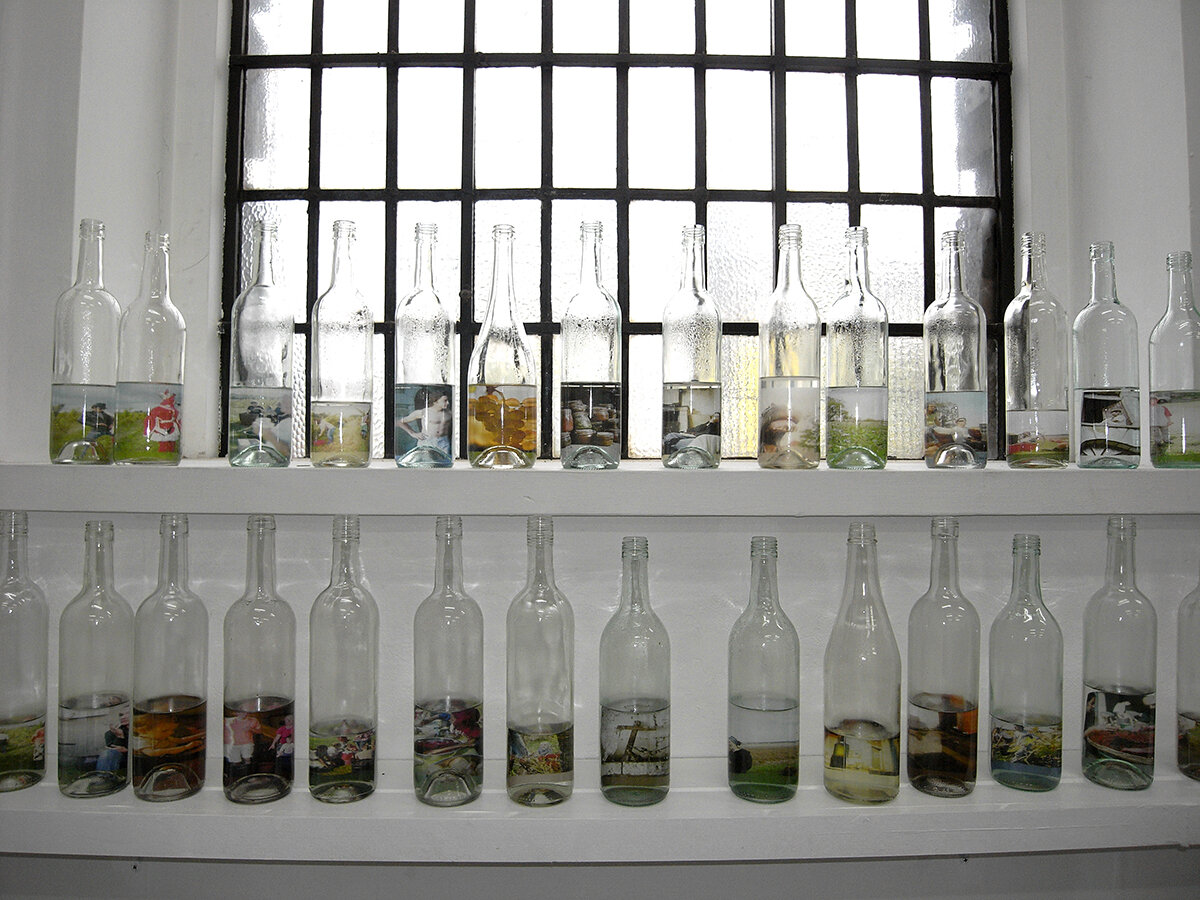
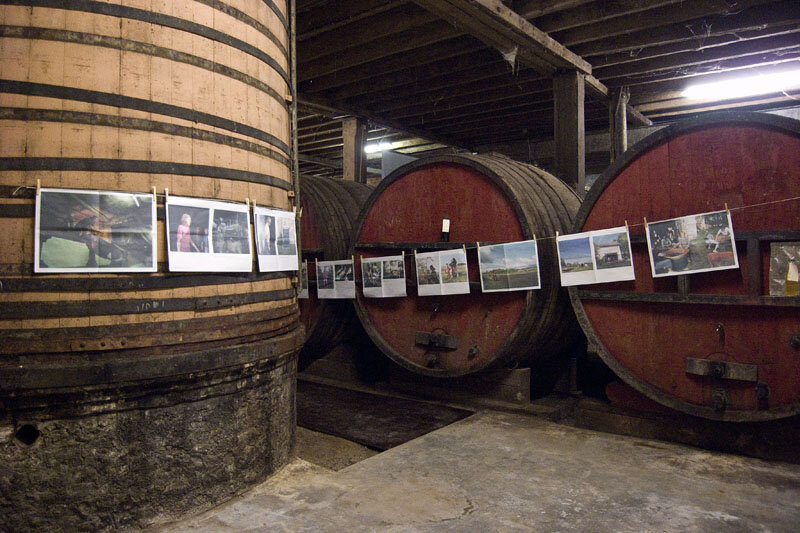
Our first collective body of work - IN VINO VERITAS (2010-2011) - was made through two self funded residencies at an organic vineyard in the Loire Valley during the grape harvest. Since ancient times, it’s been considered that wine reliably reveals a person’s character. For experimental natural wine producer François Blanchard, in vino veritas means remaining true to the character of the grape, respecting the integrity of this very complex fruit and skilfully drawing out its subtle aromas. Each year the grapes are picked and pressed by hand and foot. The harvest is labour intensive, but also a festive event, with families, friends, musicians and artists from all around France and beyond coming together to make and celebrate wine. The work returned to the vineyard as a 60pg newsprint exhibition before being curated for ArtHouse, Lewisham for our first collective show in the UK. With François’ contacts and Lucy's fluency in French we then secured Espace Beaujon, Paris and exhibited for Mois de la Photo-OFF. We’re constantly striving to find new and relevant ways to present our work. Photos inside wine bottles gave visitors to the gallery the experience of interacting with the work, as well as giving us the opportunity to curate a large exhibition comprising of 87 images.
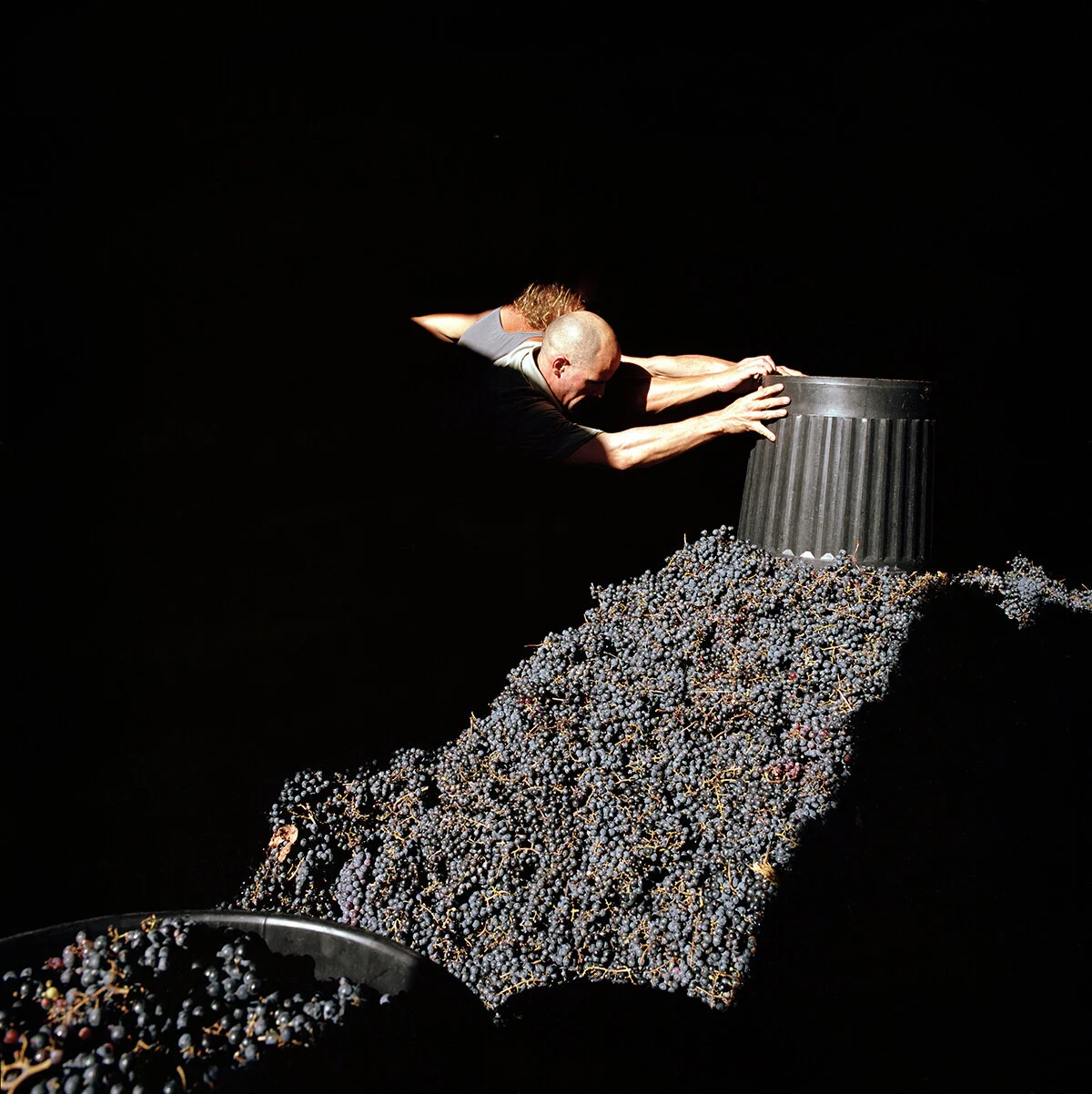
Richard Glynn, from the Wideyed project In Vino Veritas

Richard Glynn, from the Wideyed project In Vino Veritas

Lucy Carolan, from the Wideyed project In Vino Veritas

Lucy Carolan, from the Wideyed project In Vino Veritas

Louise Taylor, from the Wideyed project In Vino Veritas
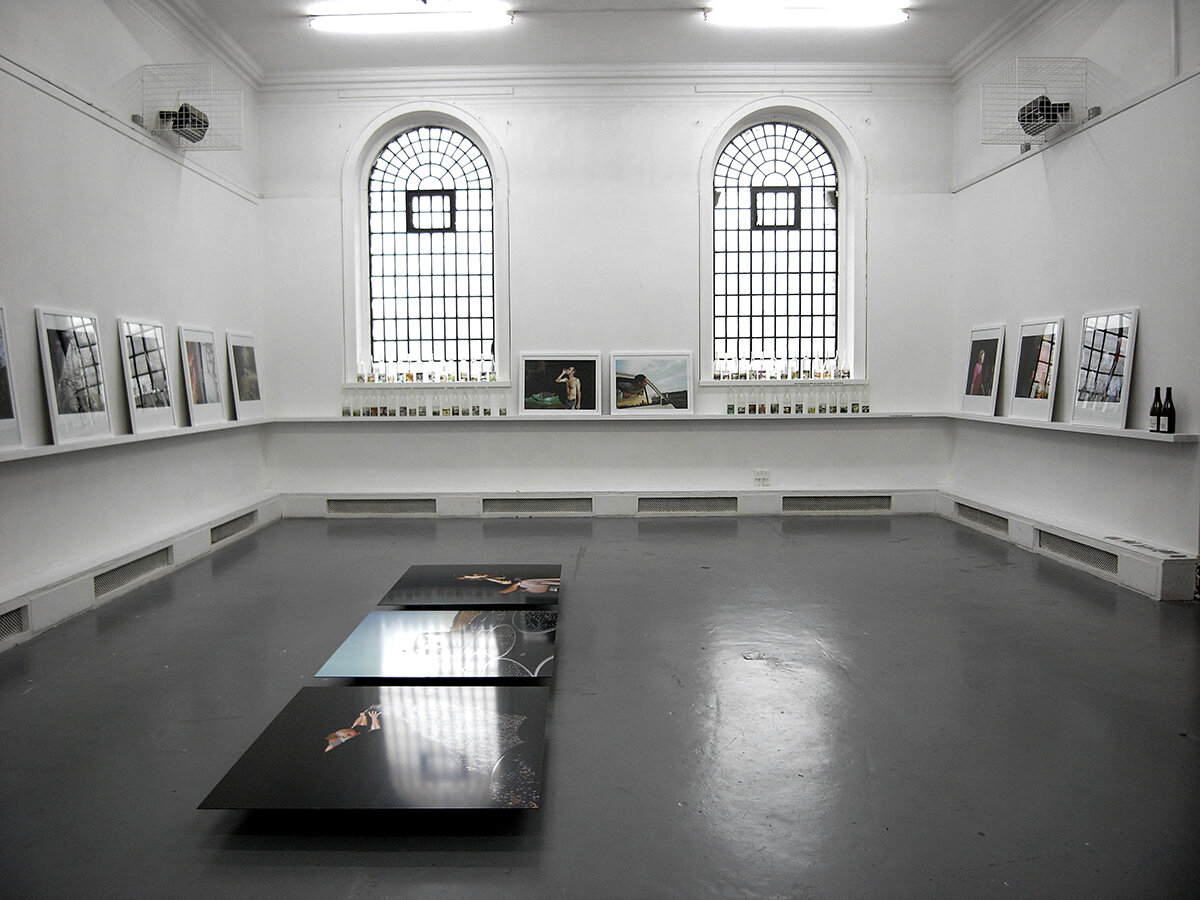
Louise Taylor, from the Wideyed project In Vino Veritas
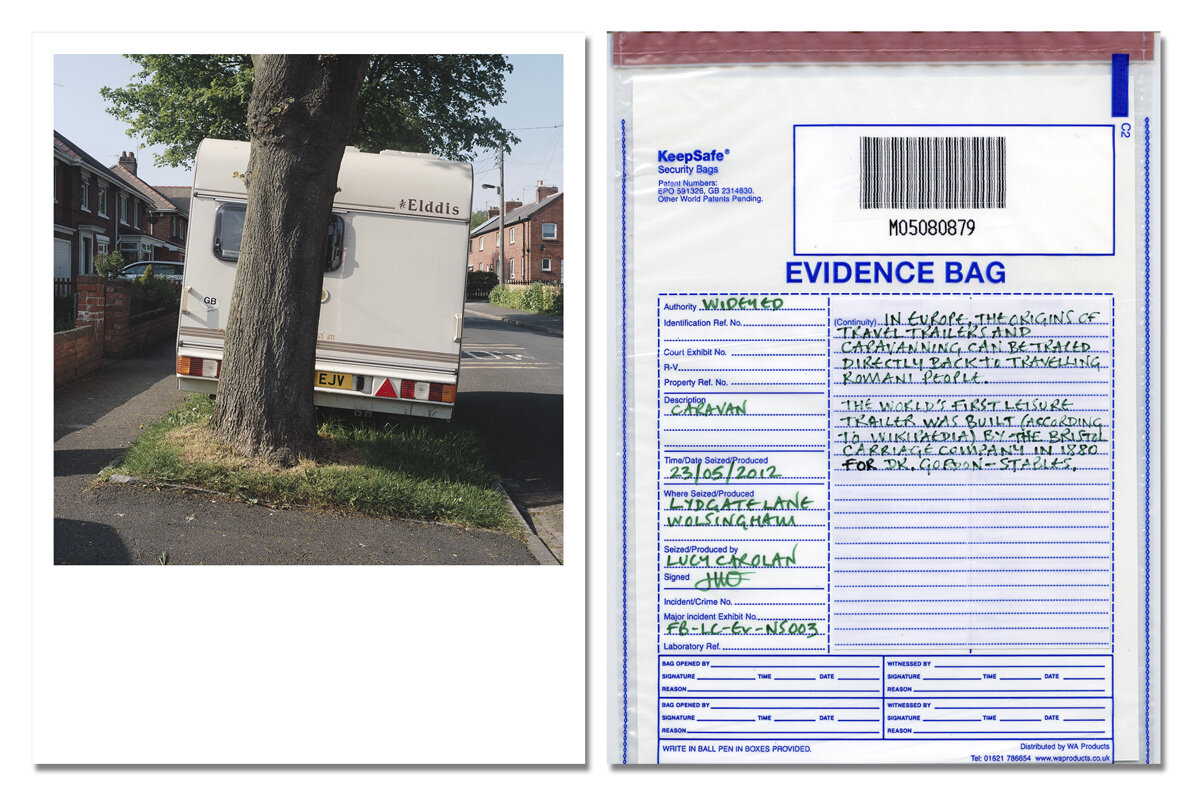
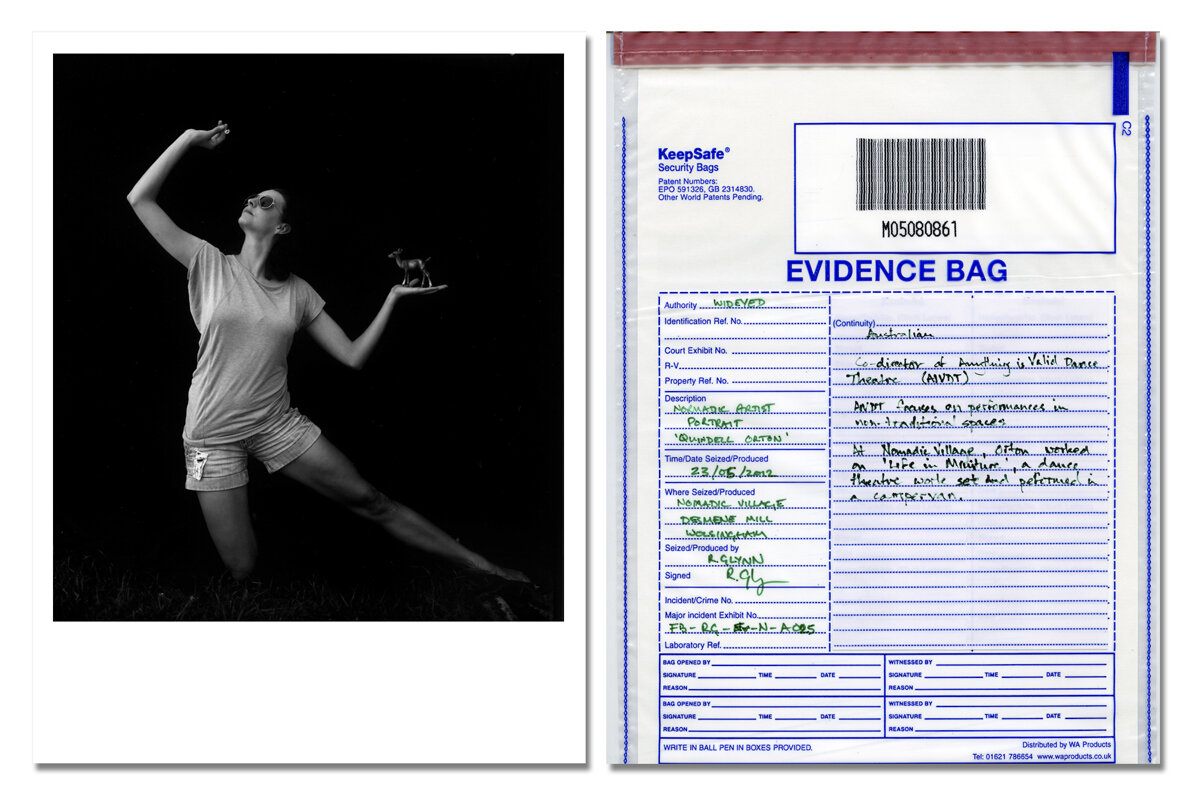
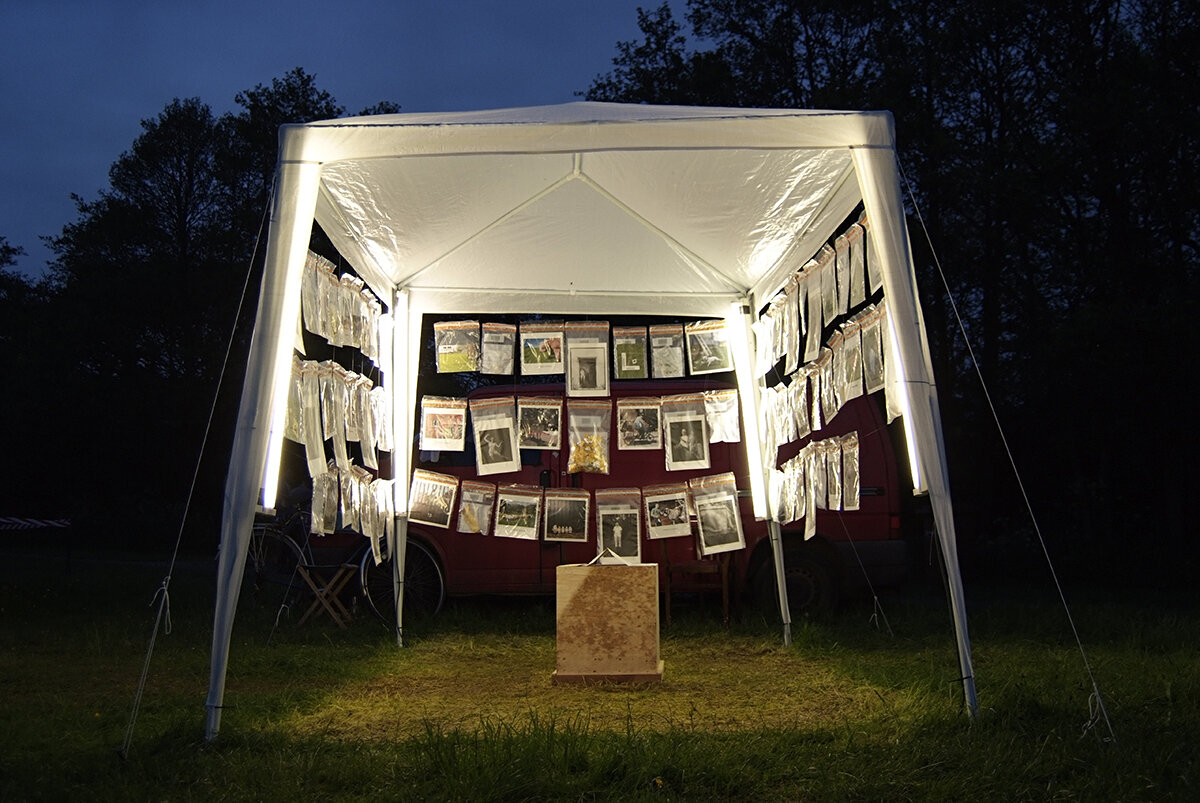
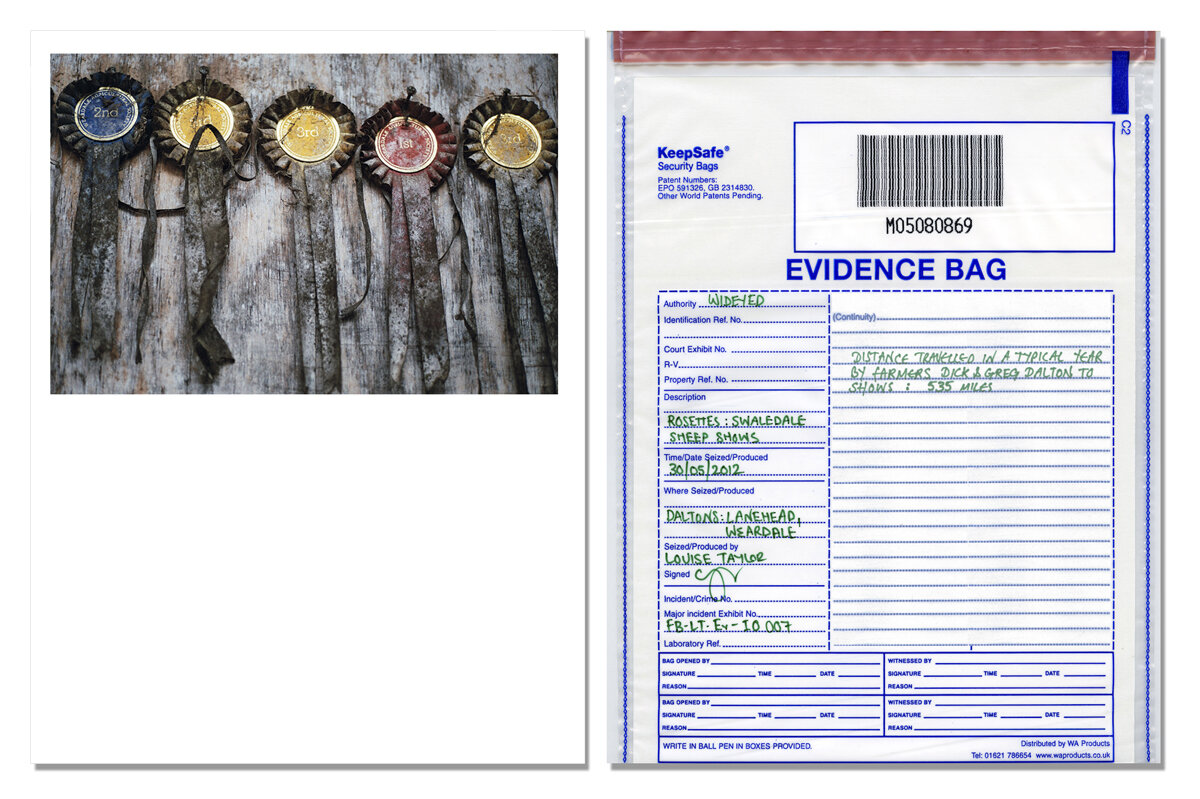
We have collaborated with each other and with other photographers across the UK and beyond, but Nomadic Village, an international arts residency was a great opportunity to network with artists from other disciplines. We developed FOREIGN BODIES (2012) and partnered with NPIA, a forensic training centre resulting in 20 students from the local school and a journalist dressing up as CSI’s and combing the residency site for evidence of travel to feed into our final installation. The project allowed us to work on the same theme -  investigating evidence of travel around the residency site - but to develop our own responses to it. Foreign Bodies was exhibited in a public outdoor exhibition at the end of the residency before being reworked into a one off artists book that toured Europe before heading to its own personal gallery space at FORMAT15.
You have a creative and unusual approach to exhibiting your work, can you tell us about some of your past exhibitions? 

Our approach has evolved over the years, not from a desire for any particular unique trait, but from a belief that the work should be presented in the best manner achievable for the audience and whilst working within the limitations presented - financial, spatial and temporal. We have discovered that there can be a synergy between the work and the place and the manner in which it is exhibited. 

The following (very) detailed description of one exhibition hopefully demonstrates that the means of display has been thought about and is as much a part of the work as the subject matter. 

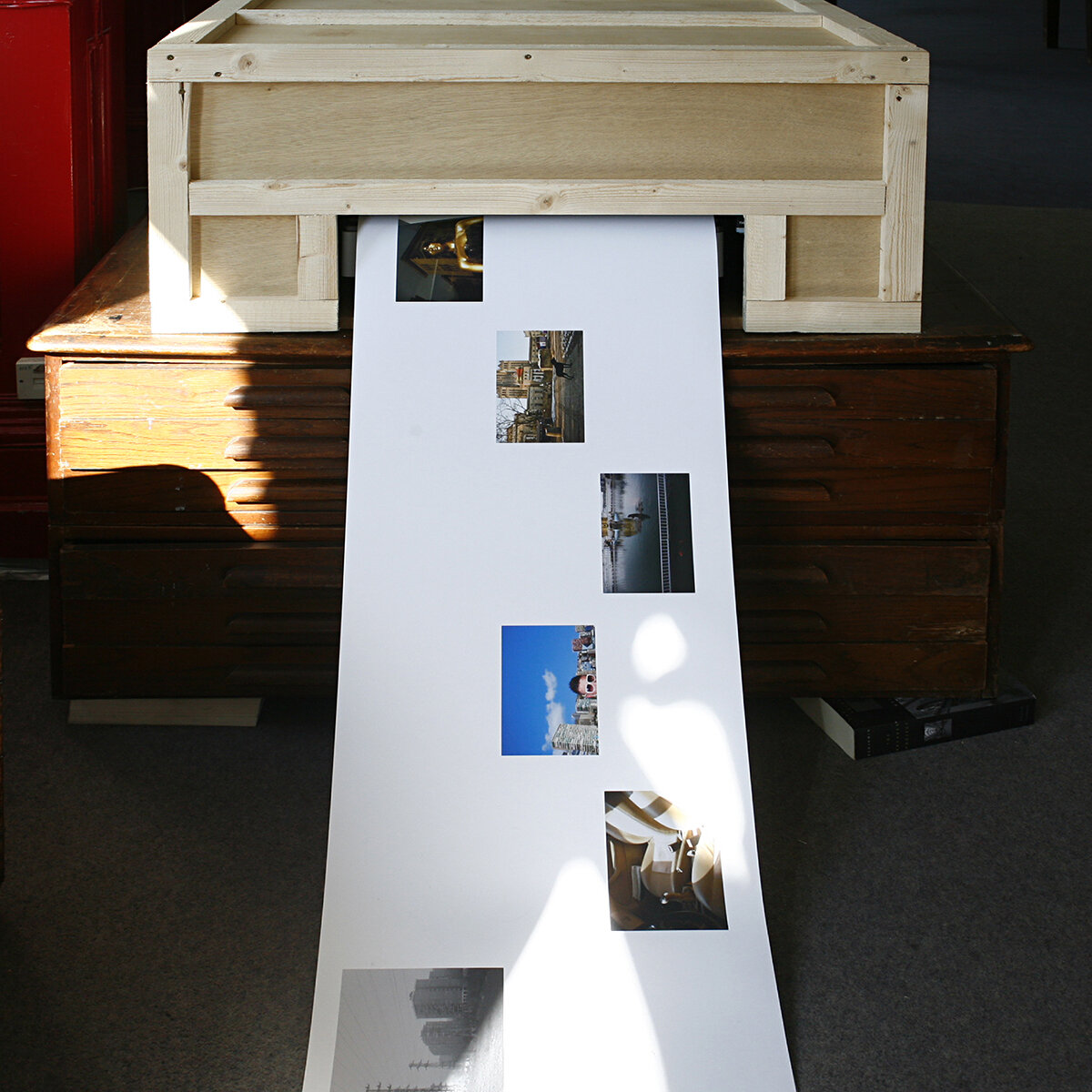
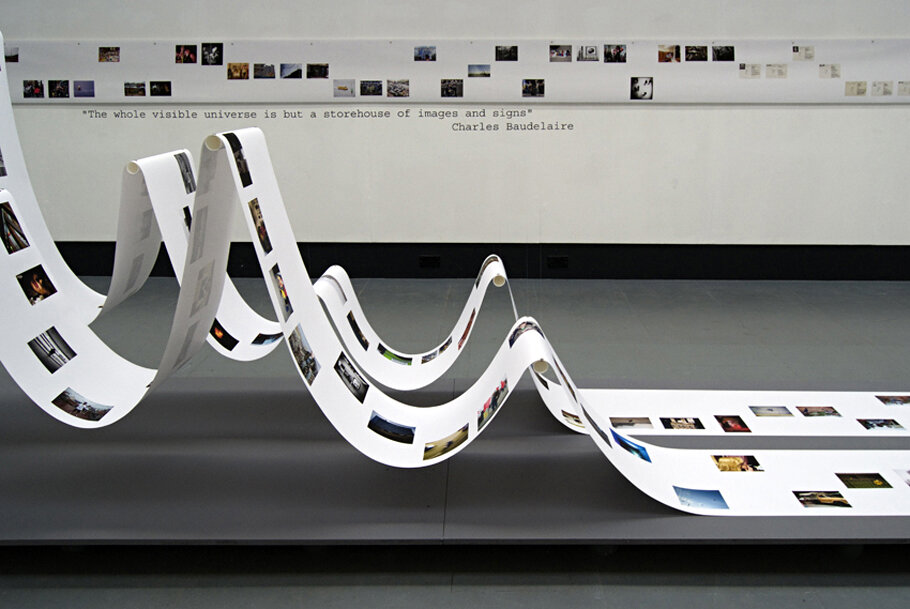
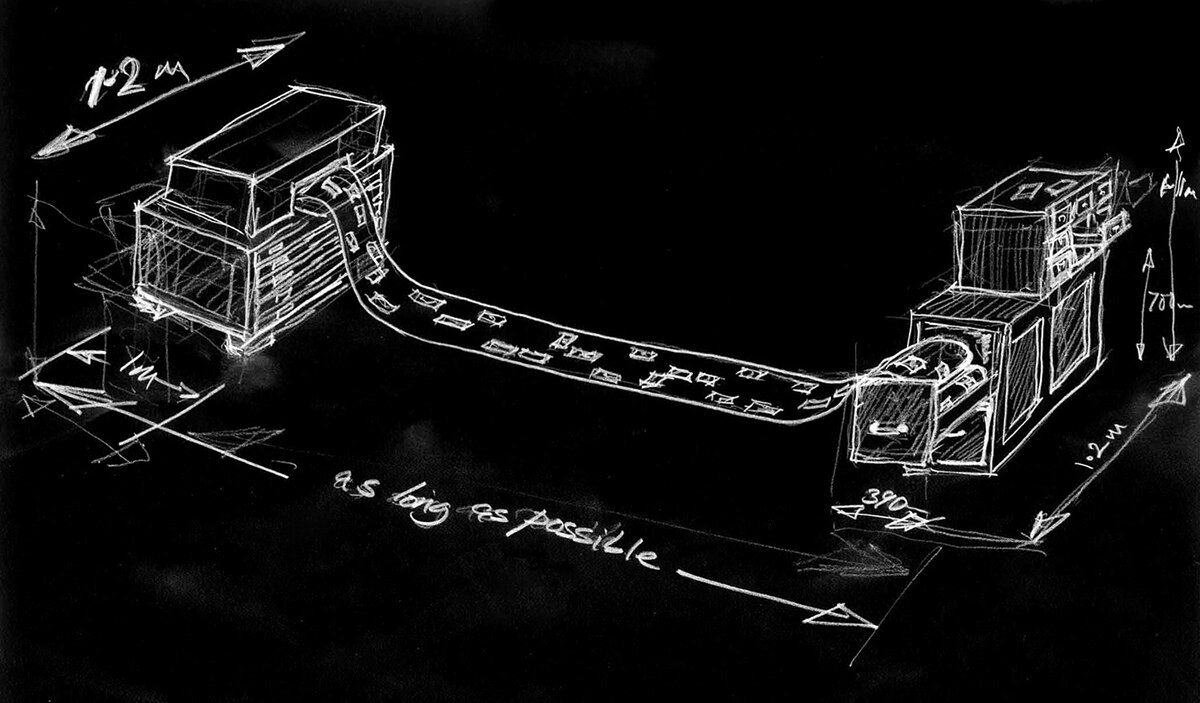
MAPPING THE FLANEUR (2011) was a collaboration between Wideyed and ASA Collective (since folded) for The Collectives Encounter, FORMAT11. It was a dynamic photographic installation inspired by Walter Benjamin’s Arcades Project and the advent of cloud printing. It was designed to provide an overview of the global collective movement, of contemporary photographic practices, and the complexity of urban life worldwide. Over the course of the festival we received 700 images, by 97 photographers, from 20 collectives based in 15 countries. Benjamin collected notes on Parisian life in the early 20th Century on various topics through spending his time as a flaneur; a walker and observer of society. The exhibition comprised several elements. Our modern day photographer flâneurs were asked to focus on three of Benjamin’s topics: Consuming, Urbanising and Transporting and to send their images to us. To reflect the random nature of observations, we printed those images in the strict order in which they arrived. To reflect the categorisation, each image was printed at the top, middle or bottom of the page according to the topic. The effect was to print three lines of images, like notes on a musical notation, with the exact location only determined by the order received and the topic chosen. The controlling computer was hidden in an old travel chest; the printer was hidden within a packing crate so all the viewer could see was the paper laid along the floor to a timber filing cabinet containing a reel. Only about thirty images were visible at any one time. This changed every day as more images were printed and the roll was wound into the filing cabinet and archived.

The images were also printed on individual cards and placed within an old timber index card cabinet referencing Benjamin’s collation of notes. As well as the three drawers dedicated to each theme, this also included others including a drawer of cards indexing the details of every contributing collective, blank cards for visitor observations and feedback and our own contact details. The installation utilised objects we had to hand. The computer was an old mac G4 with remote log-in software on a months trial. A cheap webcam was positioned to see the images coming from the printer. The printer box and the wooden reel were made from scrap timber. And a copy of the Arcades project book was used to prop up one corner of the drawing chest. Much of the thought that went into the installation won’t have been noticed, but the process of consideration of the design enables smoother, quicker installation times, economy with materials and a means of complementing the subject matter.  
In recent years you have been working on a project called Agri[culture], what is the project about? 

AGRI[CULTURE] (2018-2019) was a collective project that focussed on the annual agricultural shows taking place in and around the North Pennines. It was devised in 2017 in response to Nat joining the collective, an uncertain Brexit, and a desire to work on something collectively. Between us we visited ten agricultural shows through the 2018 show season ranging from the oldest recorded in Britain to small sheep shows. We gave ourselves the visual freedom to document the shows as we found them. For some of us it was a first time experience attending these events, for others they were always an important part of the annual social calendar.

Louise Taylor, from the Wideyed project Agri[culture]

Louise Taylor, from the Wideyed project Agri[culture]

Lucy Carolan, from the Wideyed project Agri[culture]

Lucy Carolan, from the Wideyed project Agri[culture]

As we embarked on Agri[culture] we were aware that there were question marks about where the country was heading politically. Worst case scenario involved the UK crashing out of the EU and with that the end of EU subsidy payments to farmers. Upland agriculture is heavily dependent on subsidy payments so if this were to happen then upland sheep farming - the foundation to all the shows we documented - could disappear within a few years, closely followed by the smaller dales shows. This worst case scenario was unlikely, but our research into the shows’ archives proved that shows do disappear. Horse Fairs for example would have been important dates in the annual calendar but since the mechanisation of farming this historical tradition vanished within a few decades. Evidence that a stalwart of a cultural calendar for centuries can disappear under the right conditions. Given the political situation of the time we thought we were at an ideal juncture to start a conversation with the show going public using our images as a catalyst for reflection.

Richard Glynn, from the Wideyed project Agri[culture]

Richard Glynn, from the Wideyed project Agri[culture]

Nat Wilkins, from the Wideyed project Agri[culture]

Nat Wilkins, from the Wideyed project Agri[culture]

The work toured to six agricultural shows, was sent over to Wyoming, US for two exhibitions and had its last exhibition in Sunderland, down river of where all the shows took place. With each exhibition reflective conversations sprouted about these long standing british rural traditions. In rural Wyoming we began a visual conversation with art students creating work in response to our images, and in Sunderland we had the urban view. Through the tour back to the shows we had the views from the culture that seeded the project to begin with. The project journey also gathered creative writing responses to the work from a group of local writers in addition to the donation of loads of amazing archive materials from old show schedules to photos of local legends and their owners. This was a really eye opening experience for us and an interesting way to use our documentary work to share a cultural tradition in an urban setting, but also to hold up a mirror to a community and offer a reflective pause. All this has informed our new Wideyed publication.

Most recently you have been organising SHOWSTOPPERS!, a new participatory photography competition. Can you tell us more. 

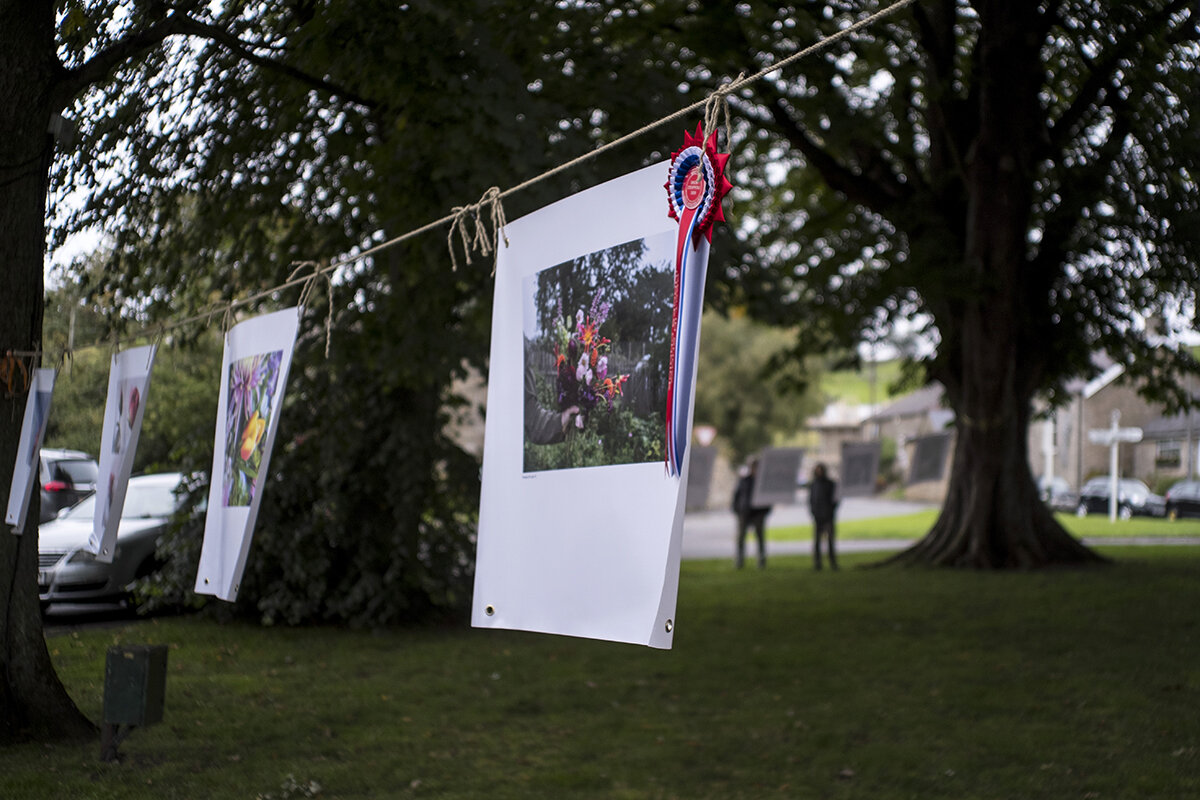
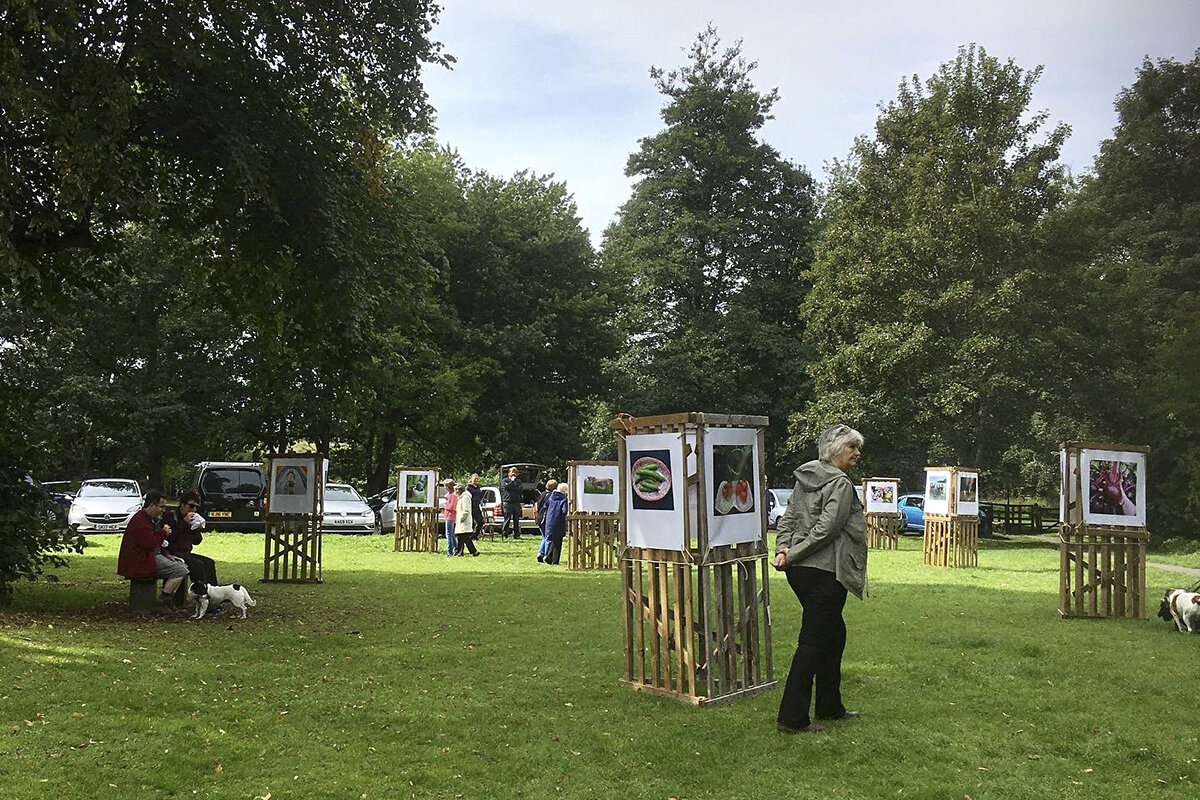
SHOWSTOPPERS (2020) was a photography competition and outdoor ‘winners’ exhibition developed in response to COVID-19 and the cancelled agricultural shows that we had been working on for the previous two years. Showstoppers kept the spirit of the shows alive and offered an opportunity to engage show people in photography and photography people in agricultural shows. We invited those who would have normally attended the shows to send us show-stopping photographs of their entries instead. 

The project attracted 370 entries from exhibitors aged three upwards. Our outdoor ‘winners’ exhibitions coincided with the cancelled shows and featured work made by children, florists, horse breeders, farmers, photographers and allotmenteers. All ‘winners’ received a rosette with our three judges choice ‘best in show’ awards winning a fancy rosette and a copy of of recently published book Agri[culture].
You also produce publications under the name Wideyed Editions, can you share some of the publications?

We started Wideyed Editions in 2012, the same year as our ambitious one off artist book for Foreign Bodies. Agri[Culture] is our most recent collective publication. Created to celebrate the project of the same name, this 148pg book features the work by all four of us involved in the project including archive material donated through the touring exhibition, creative writing by NorthPens Writers and essays by John Darwell and Jill Cole. The design reflects the size and style of the show catalogues and comprises 5 separate books in a sleeve. (£19.50 + p&p)

Agri[culture] Wideyed Publication.jpg

Other books we have published include CHAIN REACTION (LUCY CAROLAN), SHOOT! (LOUISE TAYLOR) and Park (MkII) (LUCY CAROLAN & RICHARD GLYNN) which is a mutascope developed as an analogue interpretation of Google Street View for Superdream, a creative exchange between artists in Gateshead UK, and Johannesburg SA.

You can find out more and purchase books on the Wideyed website.

wideyed.org

Raoul Ries - New Publication

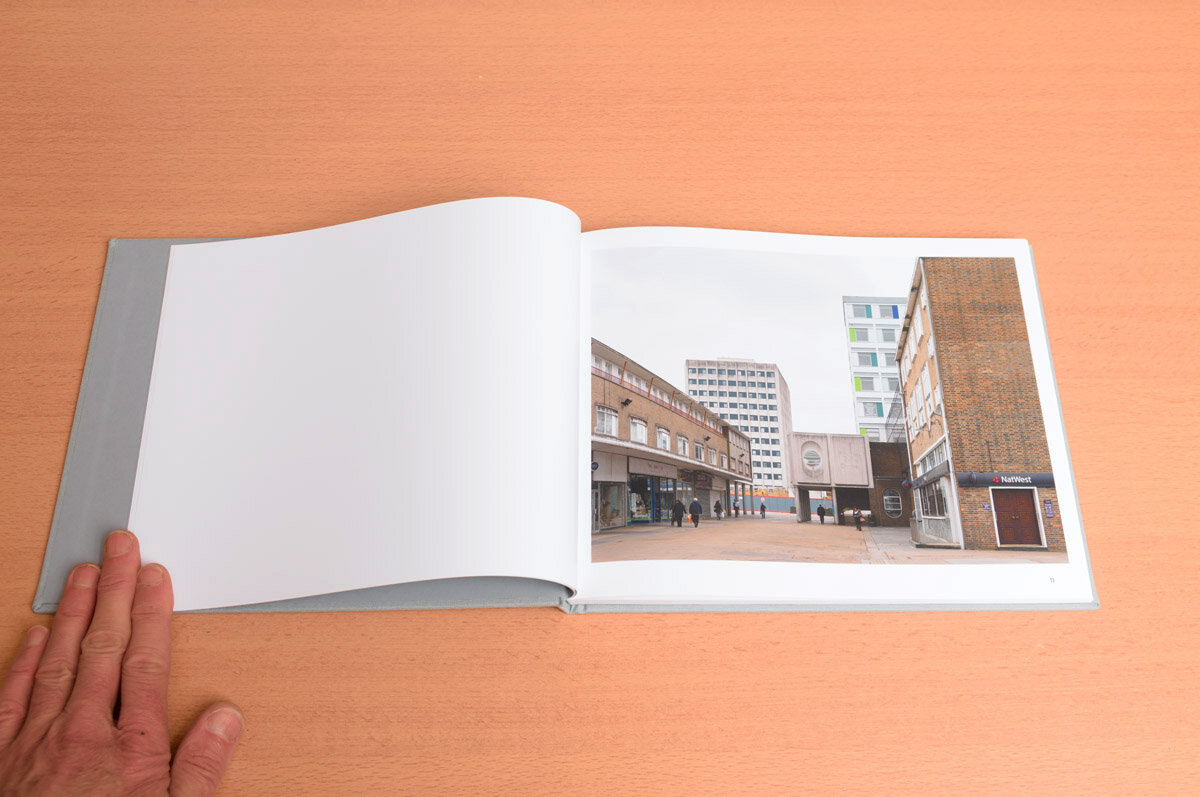
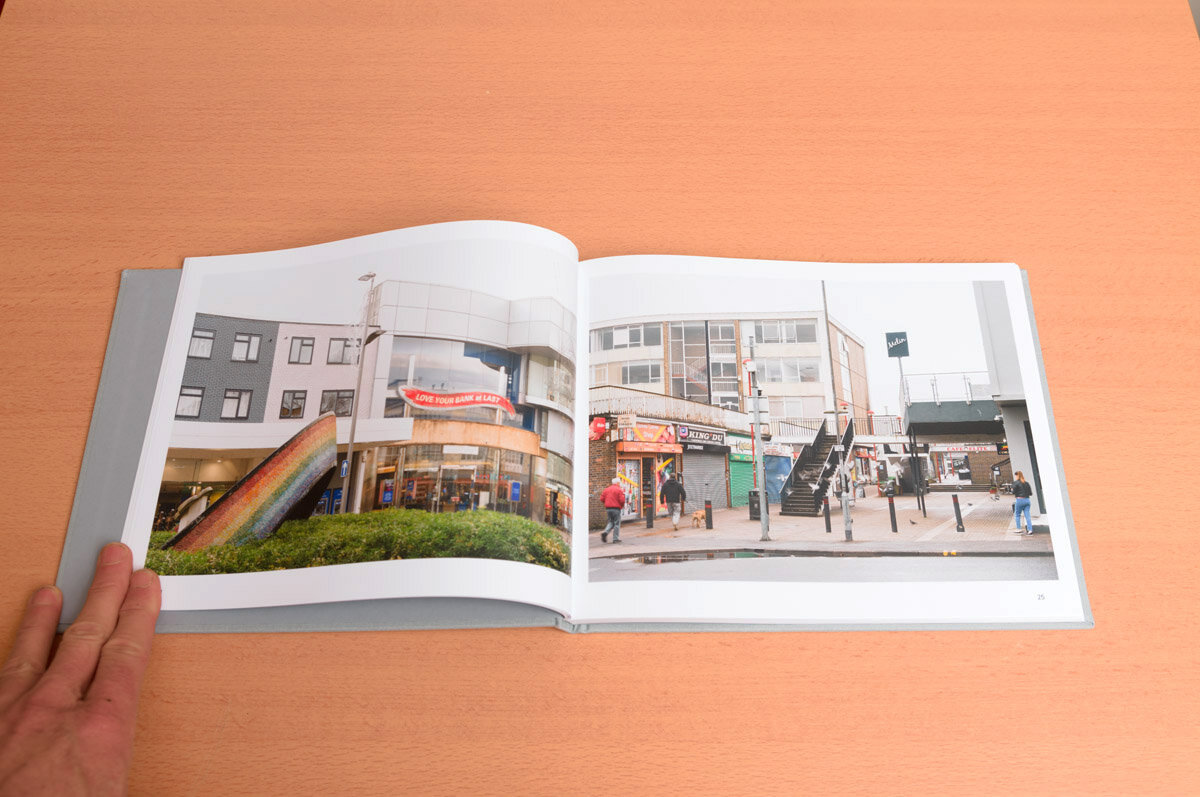
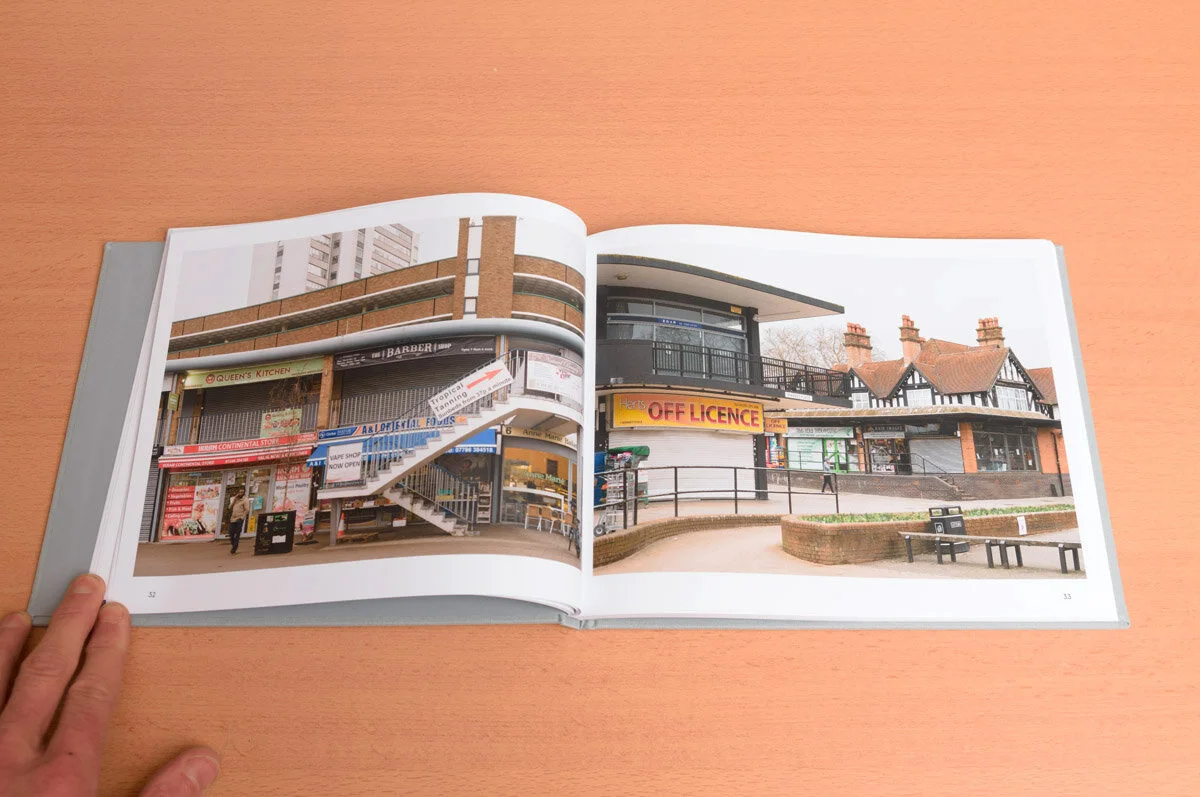
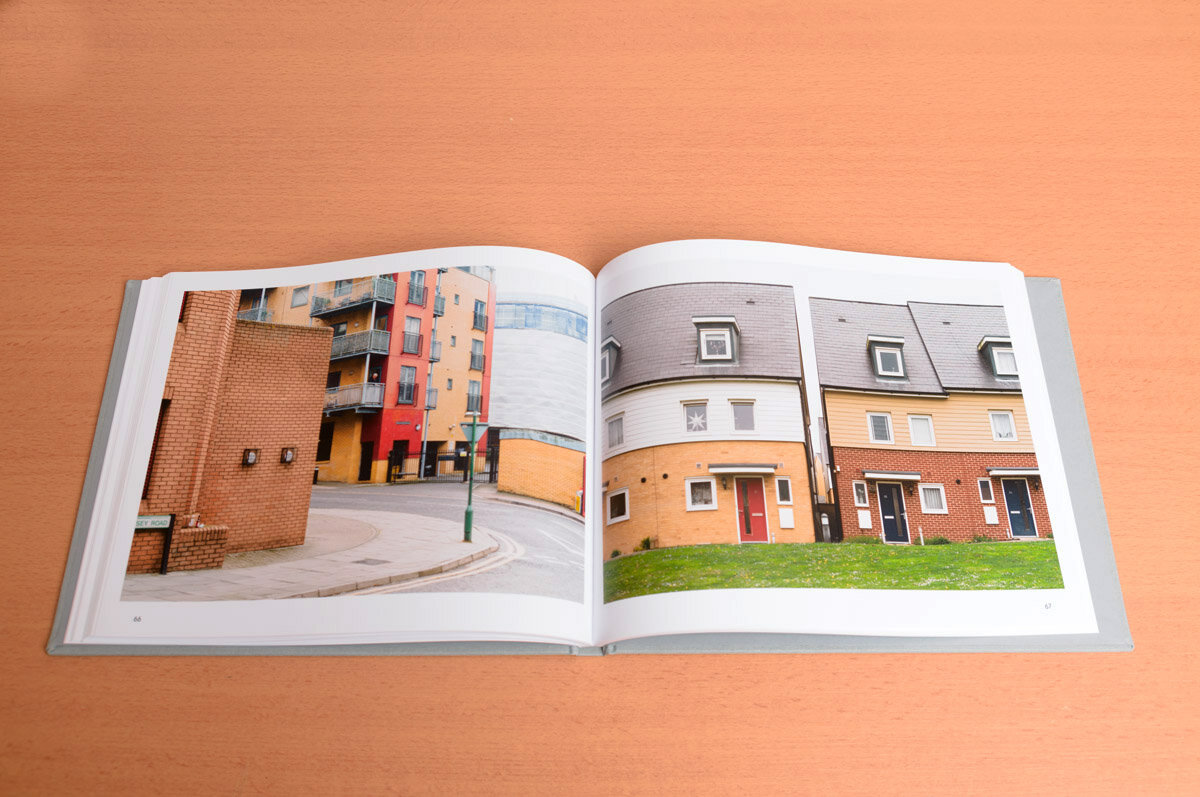
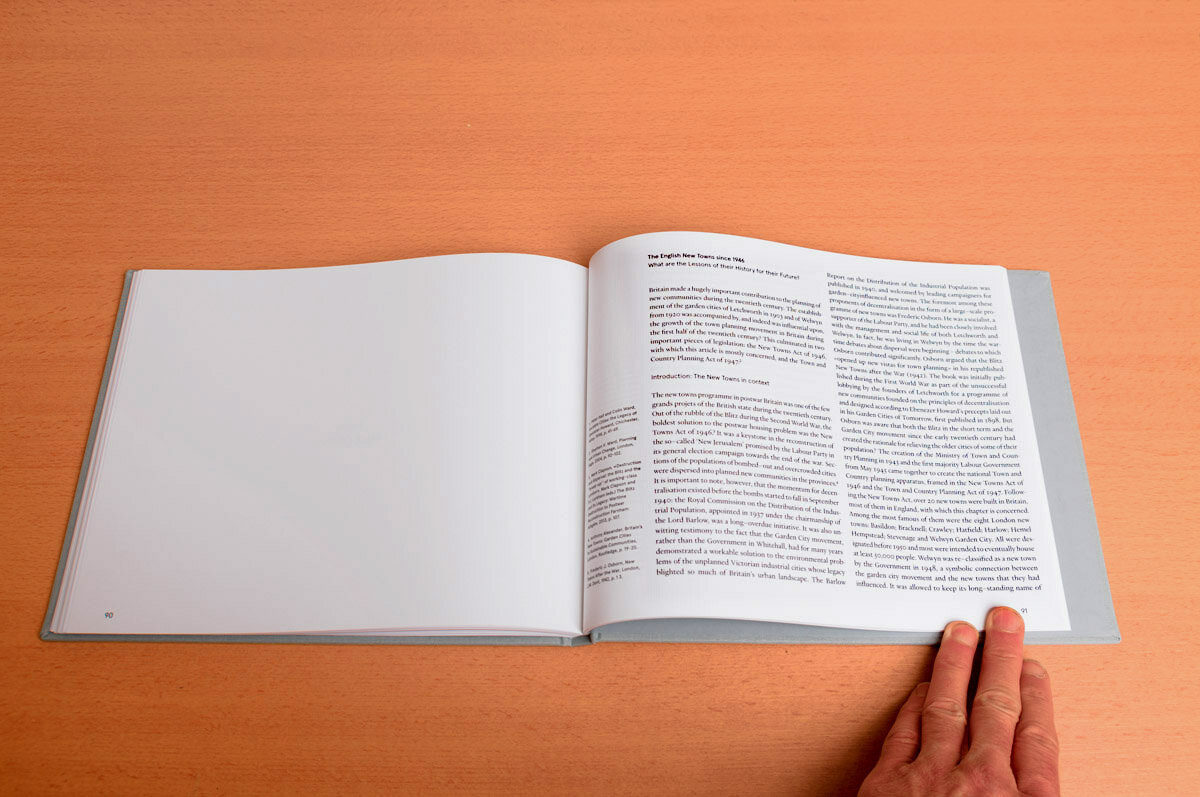
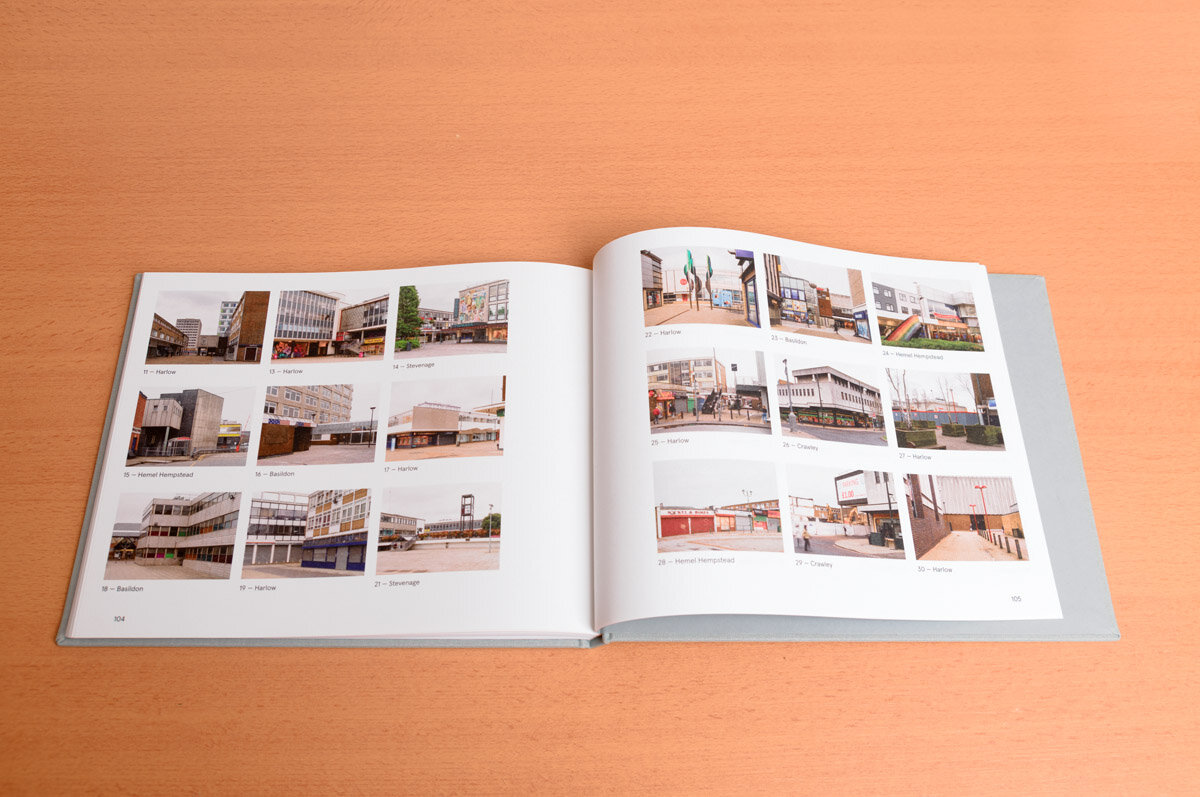
Raoul Ries is delighted to announce the release of his book The New Towns published by The Velvet Cell. The work explores the first wave of New Towns near London. These towns were built in England immediately after the Second World War to relocate populations who lost their homes. They aimed to create a welcoming space, with walkable distances between homes, work, shops, cultural offerings and green spaces. Construction had to progress quickly and needed to stay affordable.

TheNewTownsBook01.jpg

The book starts with scenes from traditional city centres. While the original architecture is mostly preserved here, contemporary chains and smaller independent shops feature widely throughout. In the traditional residential neighbourhoods contemporary elements are rarer. The houses show the marks of their history. Raoul enjoyed seeing the DIY home improvements that pop up in several pictures. The series then transitions to the more recent residential developments and finally over to newly-built city centres. Over seven decades the economic climate has fluctuated, political ideas have changed and new social aspirations have superseded the dreams of previous generations. Today, while the New Towns preserve some of their initial character, their identity is nonetheless shifting in favour of more national and international elements.

96 pages, 21 x 26 cm,
Hardcover, Sewn Binding,
Limited Edition of 500,
978-1-908889-74-4

With an essay by Social and Urban History Professor Mark Clapson.

You can purchase the book directly from Raoul here.

Guest Feature - Iain Sarjeant

Out of the Ordinary developed from wandering, exploring, discovering, and observing – slowing down and spending time in everyday places. It reflects my interest in human landscapes and the way we interact with our surroundings - through it I have developed a passion for documenting the overlooked, for finding visual interest in seemingly ordinary locations. The series contains work from across the country, city centres to remote communities - it’s been a fascinating journey through everyday Scotland, documenting the social landscapes of the country at a time of great change.

OutOfTheOrdinary2©IainSarjeant.jpg
OutOfTheOrdinary1©IainSarjeant.jpg
OutOfTheOrdinary4©IainSarjeant.jpg
OutOfTheOrdinary8©IainSarjeant.jpg
OutOfTheOrdinary10©IainSarjeant.jpg
OutOfTheOrdinary12©IainSarjeant.jpg

My interest has always been in landscape or ‘place’ in the widest sense, and how people interact with their surroundings. This can be anything from remote communities in the Highlands to the centre of major cities. But of course any photograph is a combination of document and personal response, and my work also explores my own relationship with the landscape.

OutOfTheOrdinary13©IainSarjeant.jpg
OutOfTheOrdinary15©IainSarjeant.jpg
OutOfTheOrdinary16©IainSarjeant.jpg
OutOfTheOrdinary18©IainSarjeant.jpg
OutOfTheOrdinary20©IainSarjeant.jpg
OutOfTheOrdinary21©IainSarjeant.jpg

On previous projects I had tended to work in a slower, more reflective way, but Out of the Ordinary has seen me adopt a more spontaneous, instinctive approach, often moving through places reacting quickly to elements within the landscape – in many ways more like street photography than landscape photography.

OutOfTheOrdinary11©IainSarjeant.jpg
OutOfTheOrdinary22©IainSarjeant.jpg
OutOfTheOrdinary23©IainSarjeant.jpg
OutOfTheOrdinary25©IainSarjeant.jpg
OutOfTheOrdinary26©IainSarjeant.jpg
Iain Sarjeant - Out Of The Ordinary.jpg
Iain Sarjeant Alopes Maritimes.jpg

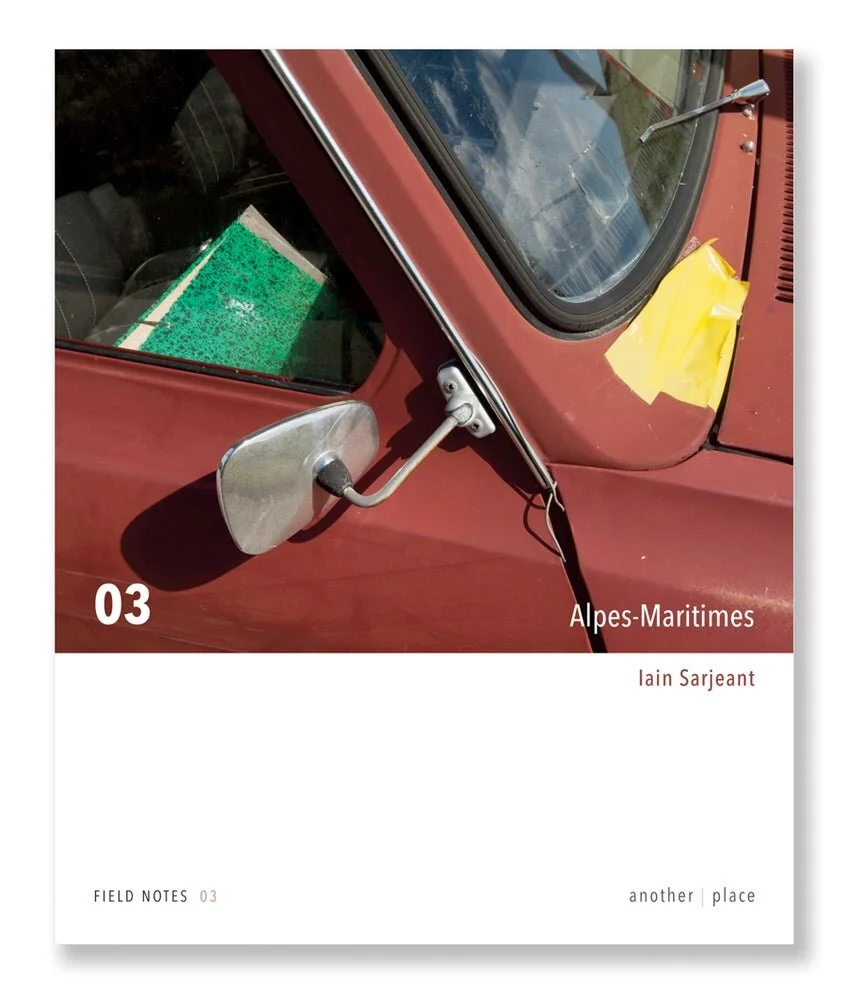
Iain Sarjeant is a photographer and publisher based in the Scottish Highlands. His photography explores both natural and human environments, and often the interaction between the two. Iain is the founder and editor of Another Place and Another Place Press. He has published numerous books of his work, including most recently his 2021 Out of the Ordinary calendar, and his Alpes-Maritimes zine, which are available to purchase at Another Place Press.

iainsarjeant.co.uk

Guest Feature - Claudia Bigongiari

The series 20 Minutes is about waiting, a personal testimony of suspension. The images are of a non-defined space and time, an ‘in between lands’. This project became the documentation of these lands, a collection of waitings in places of passage. The pills (collected every morning) are a measurement of time. They do not relate to a medical discourse, but question the repetition and the suspension of time.

Claudia-Bigongiari-01.jpg
Claudia-Bigongiari-04.jpg
Claudia-Bigongiari-02.jpg
Claudia-Bigongiari-03.jpg
Claudia-Bigongiari-06.jpg

I kept collecting my pills for a few years, starting without any particular purpose. Then I made 20 Minutes, which I see as being a container of time. The project collects the time waited over a couple of months, describing this period amongst the images of pills and the places I had to pass through such as passage ways, airports, train stations, waiting rooms and the hospital. They are depictions of different dimensions of time and space, a subject in which I have always been inspired with my photography.

Claudia-Bigongiari-08.jpg
Claudia-Bigongiari-09.jpg
Claudia-Bigongiari-10.jpg
Claudia-Bigongiari-05.jpg

Claudia Bigongiari is an Italian photographer who focuses on silent spaces and suspended moments. She is driven to take pictures by a personal need to make her visions and memories come to life. Static objects, non defined conditions of space and time and in-between moments fascinate her. She recently attended the Master's in Photography at the University of Brighton, and graduated from the Fine Arts Academy of Florence in Exhibition Design. She now lives in Italy.

claudiabigongiari.com

Guest Feature - Nina B

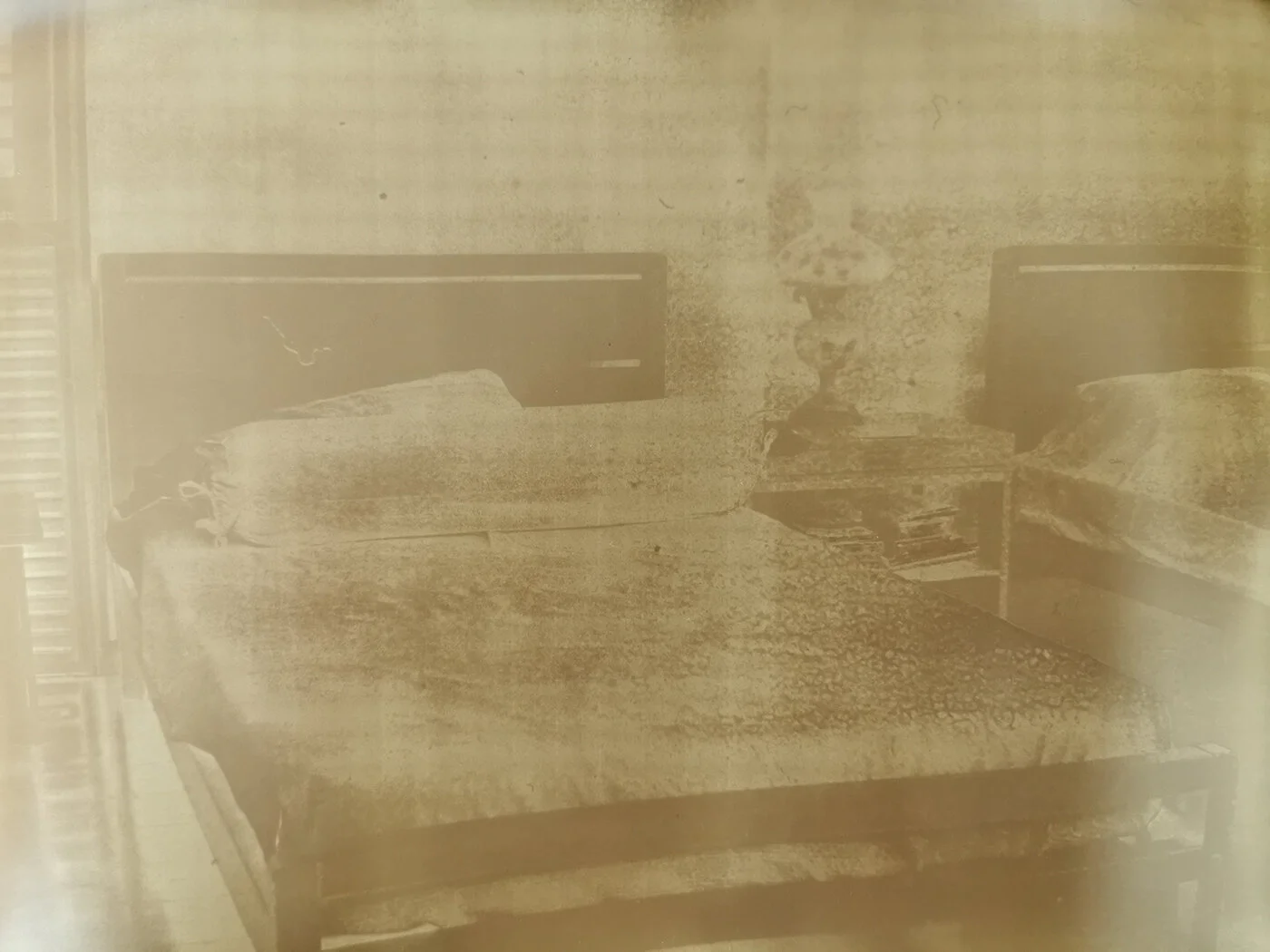
Loops and Echos merges together two projects that I have been working on for some time. They come under the working titles of Portrait of London (portraying London's less known spots) and Still Life of Moving (beautifying London city's squats). Both of these have been exhibited separately, but with time they grew into each other. To me they reveal what I would call a home. The two ideas began when I first moved to London a decade ago. The theme of home was very much at hand and I started living my way through London's squats.

Nina_b_2.jpg
Nina_b_1.jpg
Nina_b_3.jpg
Nina_b_4.jpg
NinaB_13.jpg

I was charmed by the character and variety of the spaces and how they have been DIY beautified. I was looking for quiet and intimate moments, which means that I have a huge collection of pictures of beds. As the buildings are often boarded up I realised the repetition of artificial light and a sense of claustrophobia, so I began to look at the surrounding areas as well as the interiors. I photographed areas in which I lived, mainly in North London, capturing the things that I've seen a hundred times on the way home, everyday things that I saw over and over.

Nina_b_7.jpg
Nina_b_9.jpg
Nina_b_8.jpg
Nina_b_11.jpg
Nina_b_12.jpg

Nina B was born in Prague in 1987. She works in photography, film and video, focusing on documentary topics, mostly social and housing related. Her work has been exhibited in Prague, London and New York, and she won an award for young creatives from the Czech Ministry of Culture in 2011. In 2017 her documentary film Men in a Box got selected for the Doc Outlook at Visions du Reel. She currently resides in London.

photoninab.org

Behind the Image - Paul Walsh

Paul Walsh shares how he captured a moment of stillness amidst the hustle and bustle of the Russian capital.

Paul-Walsh-Moscow-Circular-1.jpg

Briefly describe the photograph

A man emerges from an underground subway station in the centre of Moscow.

Where was the photograph made?

I was making photographs around Red Square, the area was busy with tourists and street vendors. Most of the people were there because of St. Basil's Cathedral, and I was making street photography images of people passing through the area.

Why was the photograph made?

My series Moscow Circular looks at everyday events that occur amidst the streets of Moscow, more specifically around subway entrances. I decided to walk the Koltsevaya metro line above ground, which is the circular line that orbits central Moscow. The project idea was really about finding a route into the city that enabled me to make photographs, however the repetitive cyclical journey of the metro train also seemed to underline the monotonous everyday events that take place in cities. It took me five days to walk the route using my map, which led me through many different areas that I otherwise would not have discovered.

What was happening outside of the frame?

Directly behind me when I made the image was St. Basils Cathedral, where a myriad of tourists were taking photographs. I wasnt so interested in photographing the Cathedral and upon turning around I saw this view of the city, which looked like layers stretching out towards the horizon. I stood there composing an image when a man emerged out of the subway station holding his bag. He stood for just a few seconds and I managed to snatch two frames before he was gone.

Tell us a key fact about this photograph?

Instinctively I tried to compose the figure in the picture to be aligned with the tall white building in the background. The building is actually one of the Seven Sisters which surround central Moscow. They were erected in Moscow in the 1940s and 1950s and have come to symbolise the new Moscow in the aftermath of WWII.

Why is this photograph important to you?

I made this image In 2013, when five photographers from MAP6 traveled to Moscow for their first time working abroad together. The trip went on to define the way that we now collaborate and make work. That first trip really changed the way I approach picture making and editing, allowing others to openly influence my ideas and edit my work was something I had never done before. For me this photograph represents the start of my collaborative journey with MAP6.

Guest Feature - Sapphire Stewart

In January 2018, my sister became paralysed from the waist down by multiple sclerosis. As time passed, she began losing her sight, and the loss of feeling was spreading up her body. 

1.jpg
2.jpg
3.jpg
4.jpg
5.jpg

After 8 months in a wheelchair, she underwent a revolutionary, trial treatment. Following a stem cell transplant and chemotherapy, she stood up unaided after just one week.

6.jpg
7.jpg
8.jpg
9.jpg

My project When Life Gives You Lemons documents her return from hospital to our family home in Farnham. It signposts the beginning of her new life.

10.jpg
11.jpg
12.jpg
13.jpg
14.jpg

Sapphire Stewart is a photographer based in the South East. Her key interests lie in the role of narrative, specialising in documentary, fine art, and portrait photography. Her recent projects have explored areas that are emotive and delved into self-exploration, seeking to examine and disrupt the conventional. Sapphire has a BA Hons in Photography from Bath Spa University.

sapphirewstewart.co.uk

Guest Feature - Ruth Phng Keng Hwa

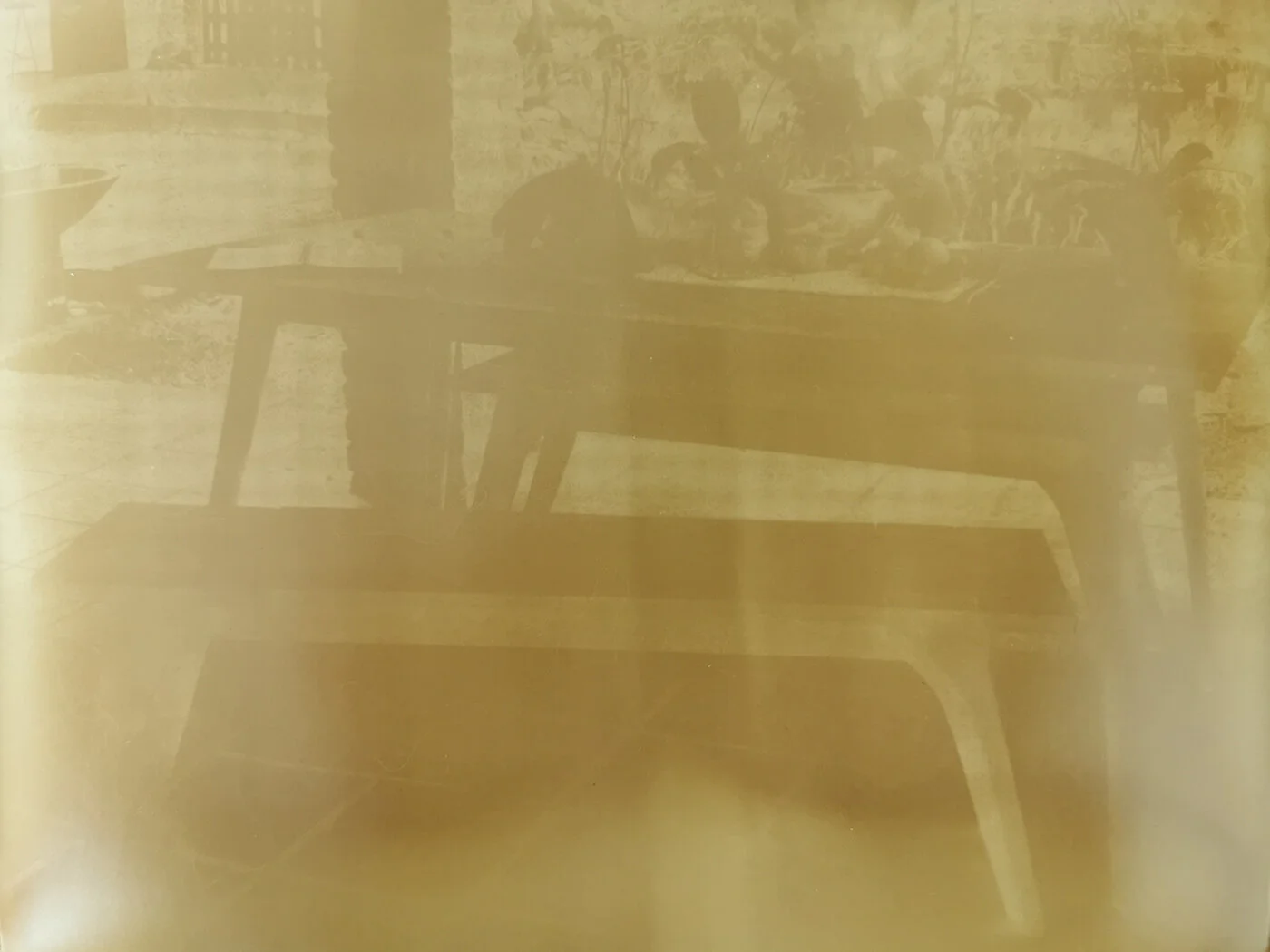
For my series Temporary Residents I photographed the spaces where my grandparents occupy in their home. Their house in Malaysia is a renovated and a present space, where they will stay temporarily until they move on again. It is this ephemeral and temporal space that I wanted to explore with photography. One day when I’m not able to return to this space; when it has been lost to time; I'll know that it once existed and that my grandparents existed within it; and I captured it.

IMG_20201025_115728.jpg
IMG_20201025_115901.jpg
IMG_20201025_120032.jpg

The alternative analogue process I used for this project is called Lumen printing. It's similar to making Cyanotypes, where you print out a digital negative and lay it on top of a light-sensitive coated paper. In this case, it's just laying the digital-negative on top of a normal photo paper, and leave it out in the sunlight to expose, hence the name Lumen, meaning light. You can leave the image to expose for however long you like, from a few hours to a week, depending on how strong the sunlight is. Once the paper has been exposed you take off the digi-neg and place the paper into the fix. I then selenium and sepia tone the paper to bring out the image, and adjust the overall tone to give it a brownish finish.

IMG_20201025_120118.jpg
IMG_20201025_120330.jpg
IMG_20201025_120430.jpg

I use two analogue cameras to capture that element of time and memory in the images by taking long-exposures. For each image I left the shutter open for five minutes to allow the sunlight and space to seep in and embed itself onto the film. The process is almost meditative, to fully appreciate the spaces where my grandparents live, knowing that they are still alive but that it won't last forever. 

IMG_20201025_120517.jpg
IMG_20201025_120621.jpg
IMG_20201025_120853.jpg

Born in Malaysia and a recent graduate of London College of Communication, Ruth Phng Keng Hwa delves into Buddhist notions of impermanence and temporality in her work. She is interested in exploring and visualising the spirituality of Eastern Philosophy, through analogue and alternative photographic techniques.

phngkenghwa.com

Guest Feature - Jacob Middleburgh

My new photo essay looks into walking, photographing and writing as anthropological tools. As I walked the same path over a month period, restricted in space due to the Covid-19 crisis, I forced myself to draw my focus on how I understood limited space. I explored the same 1 Kilometre path countless times, observing my environment and talking to people that I was drawn to. These photographs tell a story of this period in time; facemasks, cordoned off exercise equipment, solemn expressions, and markings on trees. Each photo is contributing to a wider story of confusion and coming to terms with a new normality; those photographed all used the same word in common – ‘unprecedented’. The chosen space is undergoing constant change amongst its urban landscape. It is a thin strip of land that to me, before the lockdown, felt like some form of escape from the city. Throughout the past few months it has become a backdrop to reflect new social norms. Newly arising semiotics within this space reveals this new normality.

White and tall with a big hugging stretch, standing up away from the retirement bench. Taking the light from the lime short figure below, But leaving enough for their branches, that are liked so much, to grow.

White and tall with a big hugging stretch, standing up away from the retirement bench. Taking the light from the lime short figure below, But leaving enough for their branches, that are liked so much, to grow.

Scan 5.jpg
Scan 8.jpg

The segments of poetry were written co-operatively (along with Freddie Watkins) with the subjects, incorporating parts of my field notes. Accompanying the work is an essay which is an attempt to unpack the role of walking and talking within anthropology. I use notions of psycho-geography and scizocartography as entry points into understanding the importance of these anthropological tools. Psychogeography can be used to explain the ways we interact with our built environment in nuanced forms. Alterations to our surrounding urban environment can mark interventions into our relationship with space.

A game to be played between humans and moles, one side to dig on and the other to score a goal. On one side of the pitch a rising mound of earth, on the other a white football frame bent from crossbar shots. The bird whistle blows and an airplane ch…

A game to be played between humans and moles, one side to dig on and the other to score a goal. On one side of the pitch a rising mound of earth, on the other a white football frame bent from crossbar shots. The bird whistle blows and an airplane cheers, no one is there, but we are here.

Scan 12.jpg
Scan 13.jpg

Surrey Canal Walk was the essential means by which to create narrative; it was a portal into story telling. This walk sits on top of an old canal site, now a place for gathering; it is a route that joins up Peckham to the docks. It has an atmosphere of liminality as it sits between two key areas. It’s a commuter’s route for some, a meeting space for others. It serves people in different ways. For me it feels like an escape from the urban. However, the space underwent visual alterations each time I visited, impacting the way in which myself and others interacted with the environment. In order to reconcile with these changes in a personal and collective sense walking and talking is essential.

Scan 17.jpg
The camera tripod stood watch on over the flowers like a mechanical hen, the shutter chattering with a baby blue tit on a branch, the photo couldn’t show you this thankfully writing is it’s own way of seeing, and without it you couldn’t see him stan…

The camera tripod stood watch on over the flowers like a mechanical hen, the shutter chattering with a baby blue tit on a branch, the photo couldn’t show you this thankfully writing is it’s own way of seeing, and without it you couldn’t see him standing, hear him say ‘I think it’s a nice way to do a walk

Scan 19.jpg

As I walked with my subjects I would ask which aspects of our environment excite them and we would then co-produce images with the camera and tripod. Using ‘mobile methods’ allows the anthropologist to talk to different people in a single place as a shared activity. I chose to use a medium format film camera, and all the photographs are scans of silver gelatine prints. I chose an analogue medium as it offered me the ability to reflect deeply on my chosen subject – it provided me with a heightened sensorial experience as my relationship with the photographs were nurtured and grew in the time I spent with them in the darkroom. This, I believe, is something not offered by a digital medium. I think that the roughness of the accompanying words complemented the imperfections of the silver-gelatine prints I have made.

Scan 22.jpg
A clay coloured circle of metal has replaced a window. All of the construction barriers have fallen over and a most of saplings feels inferior to the fence.

A clay coloured circle of metal has replaced a window. All of the construction barriers have fallen over and a most of saplings feels inferior to the fence.

My walks were an opportunity to connect and form relationships with my neighbours. Writing was used as a tool of automatic documentation, scribbling down ideas with other participants and forming them into poetics. The result is non-narrative and quotidian, documenting the mundane aspects of a strip of land that I view as a middle ground sandwiched between two dense parts of the city; a place for meeting. I learnt the power of walking as an ethnographic tool as something that offers an opportunity to delve into everyday aspects of others people’s lives. Walking is a powerful ethnographic tool which should not be overlooked in future ethnographies I engage with, something which usually is seen as a means to access other tools. 

www.kubalazarus.com

Heather Shuker - New Series

Sierra Leone is one of the poorest countries in the world. A long and cruel civil war, marked by barbarism such as machete amputations of civilians, ravaged Sierra Leone for a decade, from 1991 to 2002. Traditional beliefs in Sierra Leone have had, and continue to have, a negative impact on people with physical disabilities, and are a cause of discrimination. The level of discrimination against Sierra Leoneans with disabilities is such that many of those affected prefer living in segregation. One of these segregated communities is the House of Jesus in Freetown. Heather Shuker’s connection to Sierra Leone began in 2002/3. Not long after peace was declared she took a career break to spend 10 months working in Freetown as a volunteer. It was during this time she started taking photographs.

Sierra-Leone-House-of-Jesus-Heather-shuker-3.jpg
Sierra-Leone-House-of-Jesus-Heather-shuker-4.jpg
Sierra-Leone-House-of-Jesus-Heather-shuker-2.jpg
Sierra-Leone-House-of-Jesus-Heather-shuker-6.jpg
Sierra-Leone-House-of-Jesus-Heather-shuker-8.jpg
Sierra-Leone-House-of-Jesus-Heather-shuker-9.jpg

Several years later, after embarking on her career as a photographer, Heather felt a desire to return, to reconnect with where it all began for her. However, this was hampered by the Ebola crisis in 2014 but she was eventually able to return in 2018. Returning 15 years later, Heather wanted to make work about the lives of the people she had helped nearly two decades earlier, she wanted to see how their lives had changed. One of her trails led her back to Patrick (who had previously been in the amputee football team). Patrick – disabled from polio – was living in Freetown’s House of Jesus.

Sierra-Leone-House-of-Jesus-Heather-shuker-11.jpg
Sierra-Leone-House-of-Jesus-Heather-shuker-13.jpg
Sierra-Leone-House-of-Jesus-Heather-shuker-14.jpg
Sierra-Leone-House-of-Jesus-Heather-shuker-15.jpg
Sierra-Leone-House-of-Jesus-Heather-shuker-17.jpg
Sierra-Leone-House-of-Jesus-Heather-shuker-22.jpg

She became fascinated with this community and the openness and willingness of the people there to let her into their close-knit lives. Each member and their family have as their home a single, tiny room, less than 2 metres square. The community itself has over 200 people with around 100 children. Corruption is endemic in Sierra Leone, and despite government enacting positive changes in policy, there is little evidence of these being implemented. Heather’s photographs include images of daily life within the confined spaces in this compound, alongside portraits of the community members.

Sierra-Leone-House-of-Jesus-Heather-shuker-12.jpg
Sierra-Leone-House-of-Jesus-Heather-shuker-23.jpg
Sierra-Leone-House-of-Jesus-Heather-shuker-25.jpg
Sierra-Leone-House-of-Jesus-Heather-shuker-26.jpg
Sierra-Leone-House-of-Jesus-Heather-shuker-28.jpg
Sierra-Leone-House-of-Jesus-Heather-shuker.jpg

This series of photographs is only the first chapter in their story. Heather is continuing to work with the House of Jesus, helping them to secure land to build a self-sufficient community. It is her intention to go back as soon as she is able to: “when I return, I want to explore more about the connection and strength of the community and how they live together in such a confined space. The next chapter will be about their frustrations – and their strong sense of humour: despite their living conditions, they have an amazing spirit and joy for life.”

Guest Feature - Luciano D'Inverno

When I was a child I often said to myself: this country has nothing, I'm talking about the province north of Naples, where there was actually very little and one had to find satisfaction with the help of their imagination. The areas between the north and east were all quite similar, at least where the urban fabric was concerned, but what has stuck with me over time was that term "nothing", which to me indicates a void full of imagination. Recently I became attracted to these places again, in the province of Naples east; where that bleak nothingness often comes back to my memory.

1.jpg
2.jpg
6.jpg
9.jpg
big_b609cf0a4271c86b5c7864a2c179dc39.jpg

In the province of Naples there are many areas that are left abandoned to their fate, formed by the ghettos where I spent my childhood. I am fascinated by the idea of ​​desolation, of the emptiness that is reflected inside of those places, otherwise know as the "land of fires" which has a high rate of pollution decay and abandonment. What still interests me is being able to convey the emptiness that envelops these places, and perhaps even me.

8.jpg
3.jpg
B99993 00.jpg
B9999820.jpg
napoli nord 2.jpg

Luciano D’Inverno is from Acerra in Naples, Italy. His photographic research investigates how the human gaze perceives space. Previously working in advertising photography, he attended the Academy of Fine Arts of Naples where he met Ennery Taramelli, a historian and photography and art critic. Together they published the books Vesevo, IntraMoeniaed, Campi Flegrei and Qui i piedi non si posano per terra.

www.lucianodinverno.com

MAP6 - New Publication

MAP6 are absolutely thrilled to announce our new photobook! Featuring work by Richard Chivers, Rich Cutler, Barry Falk, Raoul Ries and Paul Walsh, The Isolation Project is now available to purchase from our shop.

The Isolation Project Photobook - MAP6.jpg

Barry Falk - New Series

The island of Gozo, known locally as Għawdex, is part of the Maltese archipelago and part of the Republic of Malta. Gozo has been inhabited for thousands of years and you feel it’s age as you enter from the harbour: its architecture of low, limestone buildings built on top of a rocky landscape is reminiscent of north Africa and the guttural spoken language sounds more Arabic than European. Gozo, like Malta, is predominantly Catholic and religious figurines proliferate, from large statues in the streets to small figurines in the toilets. But it’s history goes back much further than this: it is etched into the stone and evident in the archaeological evidence of Neolithic temple ruins. Gozo, as part of Malta, has been ruled by Phoenicians, Romans, Arabs, Sicilians, French and British. Malta itself was part of the British Empire for 160 years, gained its independence from Britain in 1964 and became a Republic in 1974, and there are indications of this on the island, the odd English folk with UK passports still form the largest group of foreign residents living on Malta and Gozo.

415A6915.jpg
415A9970.jpg
415A6959.jpg
415A7179-2.jpg
415A6467.jpg
415A6879.jpg

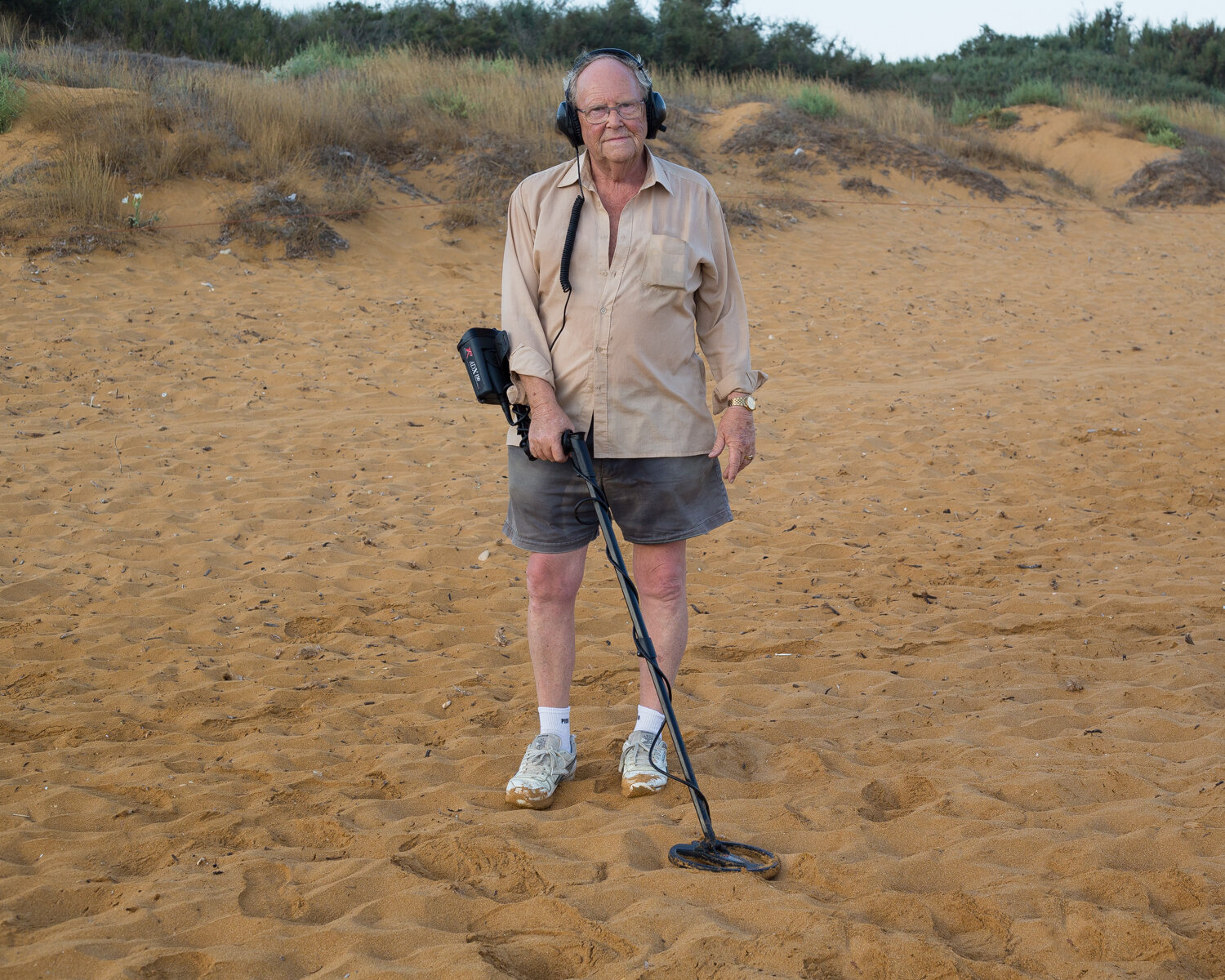
For Calypso’s Cave I set myself the task of exploring the 26 sq mi to patch together a picture of its culture and landscape. The Gozitans are a hardy people, as busy harvesting salt as catering to the tourists, and the interior harsh, its coastline cliffs reminding one that this is as much a potential prison as a paradise. The island is linked to both fact and fiction: it has a fabled history linked to the Greek myths: Calypso’s Cave is apparently located on the island and believed to be the same cave that Homer refers to in The Odyssey. And this myth, that tells the tale of Odysseus marooned upon the island of Ogygia, trapped by Calypso, the Goddess Nymph, links in strange ways to a wider narrative of today. The locals sell their trinkets to the tourists; the retired Brits scour the beach with metal detectors and buy their retirement homes, the legacy of 160 years of the British Empire, but what is less talked about is that Gozo lies en route for immigrants making the treacherous transit from North Africa, seeking sanctuary in Europe. This is an island of secrets and myths and harsh realities.

415A7257.jpg
415A6576.jpg
415A9917.jpg
415A7013.jpg
415A9976.jpg
415A0139.jpg

Having lost his ship and his army to the monsters of Italy and Sicily Odysseus washed up on the island of Ogygia after drifting for nine days on the open sea. He was returning home to Ithaca, from the war in Troy, eager to be reunited with his wife Penelope. When he reached the island he was greeted by Calypso, the Goddess Nymph, daughter of the Titan god Atlas and Tethys, who promised him immortality and eternal youth if he would stay with her. She led him to her cave, which was surrounded by a luxuriant wood of alder and poplar and sweet-smelling cypress and a trailing vine. However, despite his initial thoughts that he had reached safe sanctuary, Odysseus soon realised that he could not escape the island. He fell into sorrow and sat on the shores, looking out at the restless sea, shedding tears of grief. He longed only to escape, to return home. Calypso kept him captive on the island for seven years until she was obliged by the Greek gods to allow him to leave. She gave him an axe that well fitted his hands, led him to the borders of the island where he could cut down alders and firs and fashion a boat, and gave him cloth for a sail. The name Calypso is linked with the Greek word καλύπτω, meaning: to conceal.

Guest Feature - Jonathan Turner

Commissioned by community arts company Transitions17, Seeing Southbank was shot over the long hot summer of 2017 in Southbank, Middlesborough. Comprising of a series of photographic workshops and popup street based portrait studios, the project aimed to provide a point of cultural exchange in an area of very little arts provision. Southbank has suffered high unemployment, crime rates and substance abuse, alongside poor life expectancy and lack of opportunity. The photographs include images of place, alongside portraits of community members who, against this dark background, are still proud of where they come from, and who still greet strangers with a characteristic warmth.

001Jonathan Turner_Seeing Southbank.jpg
006Jonathan Turner_Seeing Southbank.jpg
002Jonathan Turner_Seeing Southbank.jpg

The piece was a community engagement commission in an area of low arts provision. Much of my work has, over the years, been this kind of thing; working with communities, and finding ways to engage people (often described as 'hard to reach') in arts activities. I was given the use of some space in a local community gallery (known as Saabat Gallery), where Transitions17 was based. I used that as a base to run photography workshops, and where the work was eventually shown after the project ended. 

009Jonathan Turner_Seeing Southbank.jpg
003Jonathan Turner_Seeing Southbank.jpg
008Jonathan Turner_Seeing Southbank.jpg

Over a period of about two months I ran a drop-in workshop every week, which was attended by a variety of people; some from a local arts group, some from a local addiction centre I approached, and some just came as they heard about it through posters and flyers I distributed. When we exhibited the project the workshop participants all had their photography included in the show as well. 

004Jonathan Turner_Seeing Southbank.jpg
007Jonathan Turner_Seeing Southbank.jpg

I set up a series of street based popup photo studios using a portable flash system with an Octobox, on a boom arm, with my camera mounted on a tripod. I had a small sign on an A-board advertising 'Free Portraits', with some details about the project. Anyone who wanted to get involved could have a free portrait. On some occasions I gave people a remote trigger and let them take their own portrait, I called these 'Posh Selfies'. I liked the idea of playing with the notion of the 'selfie'; I was curious about how people would present themselves when creating a self-portrait without using a mobile phone.

005Jonathan Turner_Seeing Southbank.jpg
010Jonathan Turner_Seeing Southbank.jpg

Jonathan Turner is a documentary photographer working in the North of England. Focusing on themes of community and identity, Jonathan is interested in how people belong to, and identify with, people and place. Jonathan’s work consists of publicly funded projects and commissioned pieces, often with a focus on community engagement. 

www.jonathan-turner.com

Finntopia - MAP6 Photo Talk

In 2018, 2019 and 2020, the UN’s World Happiness Report ranked Finland the world's happiest country. What is it about Finland that makes the country so successful and seemingly such a great place to live?

In their new book Finntopia, Danny Dorling and Annika Koljonen explore what we might learn from Finnish success. The world’s happiest country was also the subject of a recent project by the UK based photography collective MAP6. Nine photographers visited Finland focusing on themes around happiness.

The Finnish Institute and Embassy of Finland in London invited Danny Dorling (of University of Oxford) and Rich Cutler and Paul Walsh (of MAP6) to discuss their findings on Finnish happiness. The London correspondent Annamari Sipilä (of HS – Helsingin Sanomat) will comment from the perspective of a UK-based Finn. The discussion will be moderated by Press Counsellor Heli Suominen from the Embassy of Finland in London. Tickets available are free and available here

present_28_okt+(1).jpg
Present.jpg

Richard Chivers - New Publication

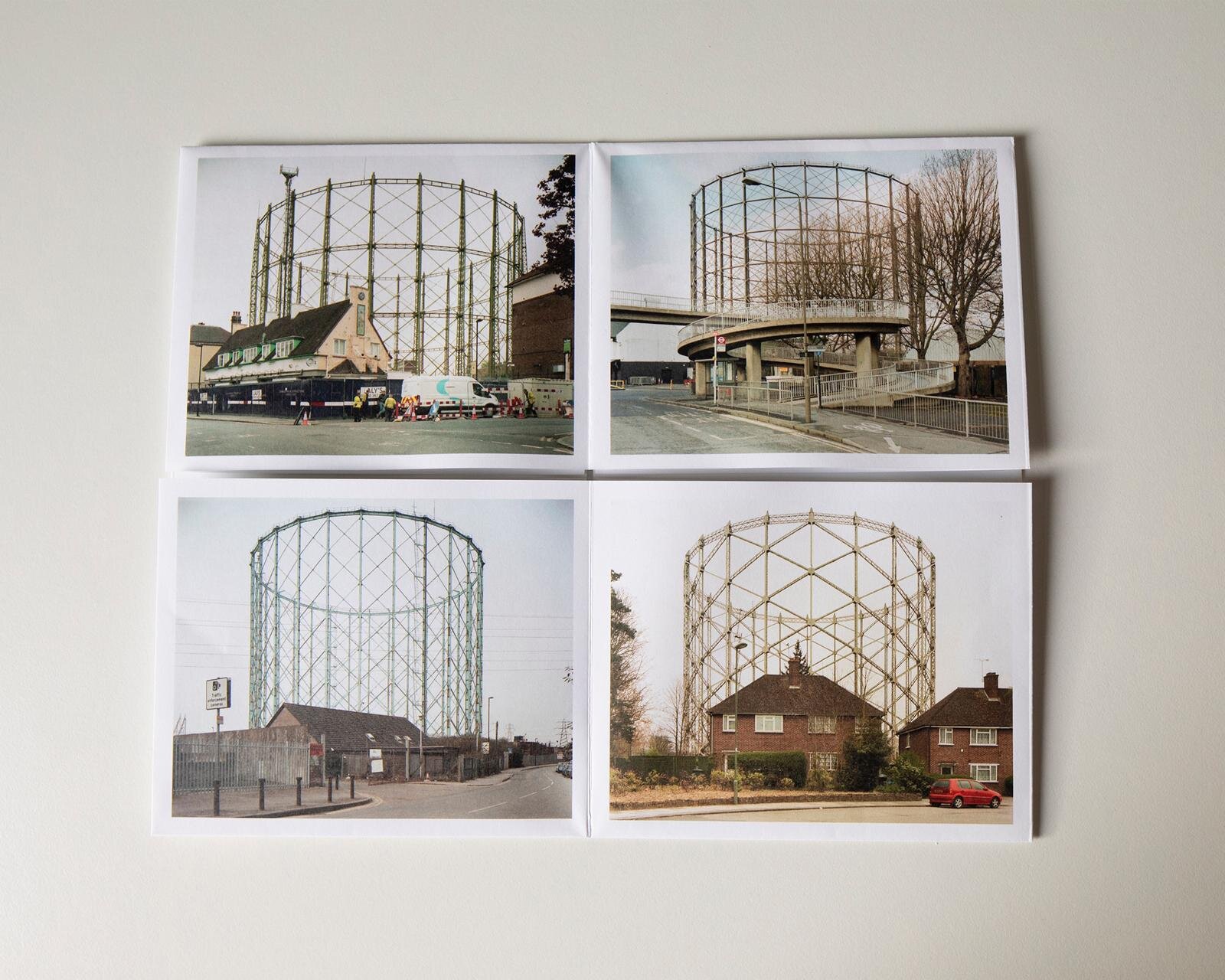
Richard Chivers has a new limited edition publication available to purchase. It is a fold out publication of his project OFF - Grid, edited with new images and designed by the super talented Stanley James Press. The series captures some of the UK’s Gas holders before they disappear forever.

image4.jpeg
image3.jpeg
image2.jpeg
image1.jpeg
image0.jpeg

£12.00 plus £2.00 P&P

Edition of 100.

You can purchase the publication here

Guest Feature - Ian Hughes

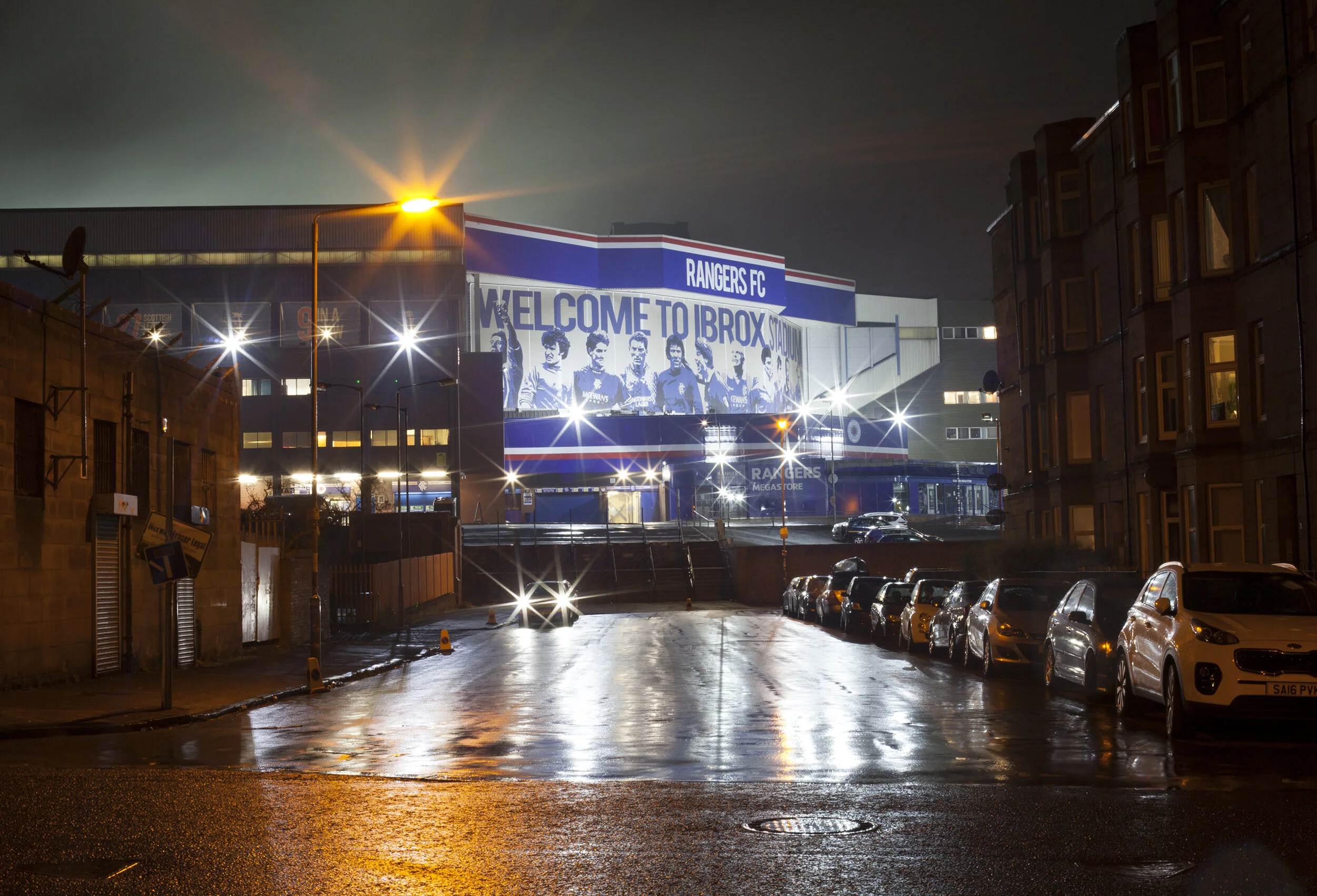
As a child, I loved walking from my Grandad’s house to night football matches at Goodison Park, home of Everton FC. The floodlit stadium looked like a distant beacon drawing us in towards it, lighting the surrounding streets like a Hollywood film set. I still get excited now when I see distant floodlights – from Premier League stadiums to local village club grounds. Over the last 15 years I have been photographing the landscapes surrounding floodlit football club grounds at night. Instead of going inside to watch the games, I spend the 90 minutes trying to take a picture that captures the visual spectacle outside, before the referee blows the final whistle, the lights go off and the landscapes return to darkness and normality. I’ve photographed well over a hundred grounds - including all fifty floodlit grounds in Sussex

Ian.Hughes_Arundel.jpg
Ian.Hughes_Bexhill_Utd.jpg
Ian.Hughes_Lancing.jpg
Ian.Hughes_Littlehampton_Town.jpg
Ian.Hughes_Pagham.jpg
Ian.Hughes_Aldershot_Town.jpg

in 2004 I was passing Rotherham United FC’s old Millmoor ground while they were playing a local derby against Sheffield United. It was a tatty old ground but because the stands were so small and the floodlight pylons were so tall - the surrounding area was very brightly lit and to me it looked very photogenic. Luckily I had a tripod with me so I took a few pictures from a nearby bridge. I’ve always loved football, and in particular football grounds. The first thing I look for when visiting a new town or city is the local football stadium. When a match is going on inside a ground, I find the atmosphere in the surrounding area fascinating. For example watching an old lady pulling her shopping trolley past a large stadium with absolutely no interest in the spectacle that the crowd is excited about, along with millions watching on TV around the world.

Ian.Hughes_Whitehawk.jpg
Ian.Hughes_Millwall.jpg
Ian.Hughes_Spurs.jpg
Ian.Hughes_Woking.jpg
Ian.Hughes_Rangers.jpg
Ian.Hughes_Highbury.jpg

My aim is to capture the world as it really is - unaffected by me pointing a camera at it. Most of work is made candidly, except for the Love Boat Rejects, which is a collection of pictures taken by me and my fellow photographers onboard American and Italian based cruise-ships throughout the 1990's. That was my first job when I left art college in Merseyside in 1989. I continue to take a camera everywhere I go and photograph the world out of pure interest rather than just with a view to selling my work. In recent years my personal photography has become increasingly nocturnal.

www.ianhughesphotos.com

Richard Chivers - New Series

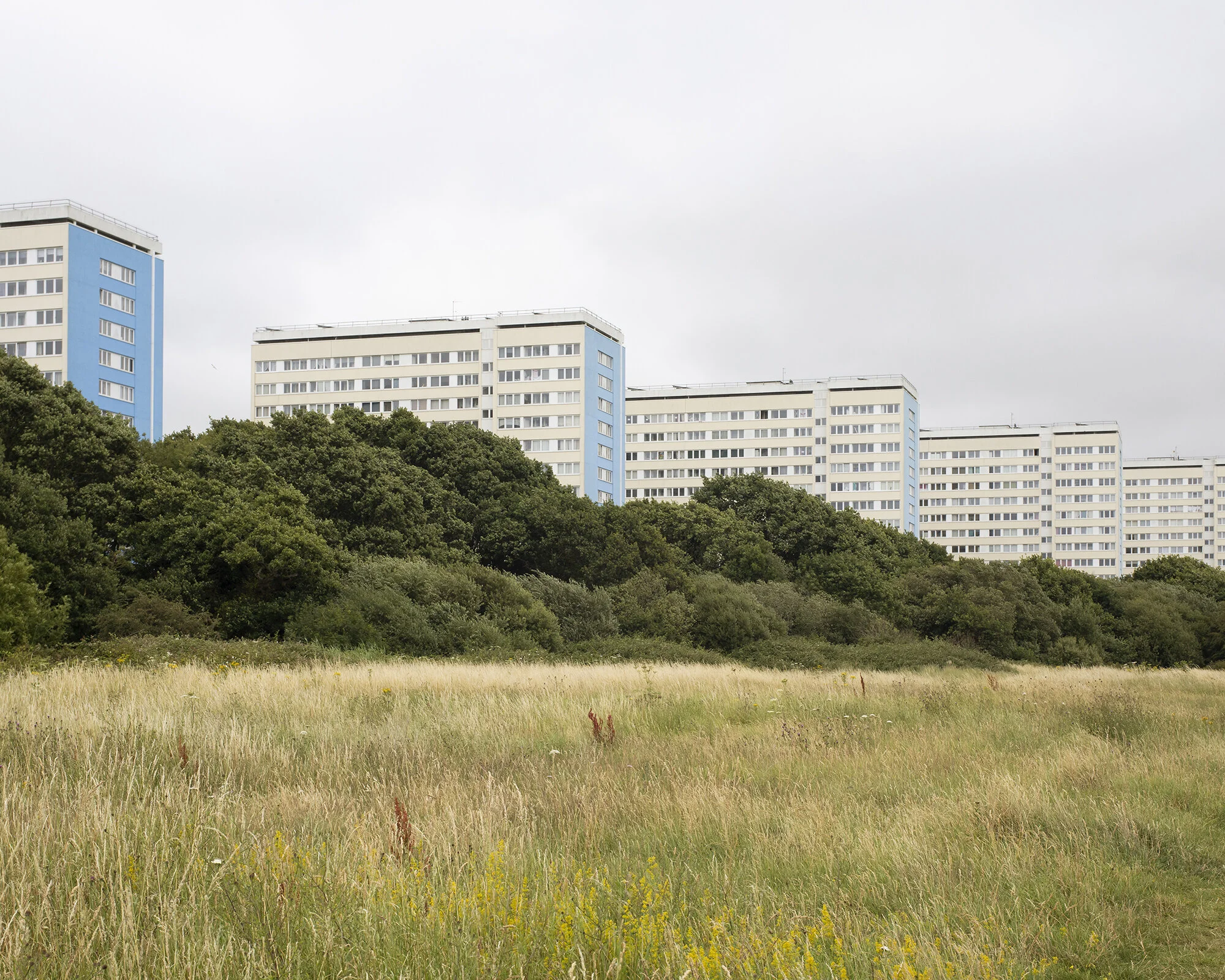
I am currently working on a new project called Where Two Rivers Collide. I grew up in a village called Overton in Hampshire. The River Test runs through the village and its source is only a few miles outside. As a kid I would cross the river on my way to school and would stop to try and spot trout, I would often wonder where I would end up if I floated down it. The Test actually ends up in Southampton where it collides with the river Itchen to create Southampton Water.

1.+Testwood.+River+Test.jpg
3.+Eling.jpg
4. Eling.jpg

Both the Test and Itchen are chalk Rivers. They are typically wide, shallow and crystal clear. Their alkaline waters are pure thanks to the constant purifying and filtering in the chalk. They are an irreplaceable relic of our past, created as the ice sheets retreated from England 10,000 years ago. Geographers say there are only 210 true chalk streams anywhere in the world, and 160 of them are in England. They are England’s unique contribution to global ecology. The rivers pass through picturesque villages and countryside and are famous for their trout fishing.

5. Southampton Port.jpg
6. Totton Bridge.jpg
7. Totton Bridge.jpg
10. Calshott.jpg

As the rivers collide to create Southampton Water, suddenly these gentle pure waters become a hive of activity. Housing and leisure areas become mixed with the industry of Southampton Port and Fawley Oil Refinery and Power Station. My initial thoughts for the project were to follow the River Test from its source to the sea, however at this stage I have become more interested in the last stretch in Southampton Water where they collide.

12. Itchen Bridge.jpg
13 Weston.jpg
9. Marchwood.jpg

At the moment I am just collecting images to see what I end up with, at times moving slightly away from the river to capture things I find interesting. I will head back to these locations during the different seasons over the next year to see where this project takes me.

Guest Feature - Robert Ashby

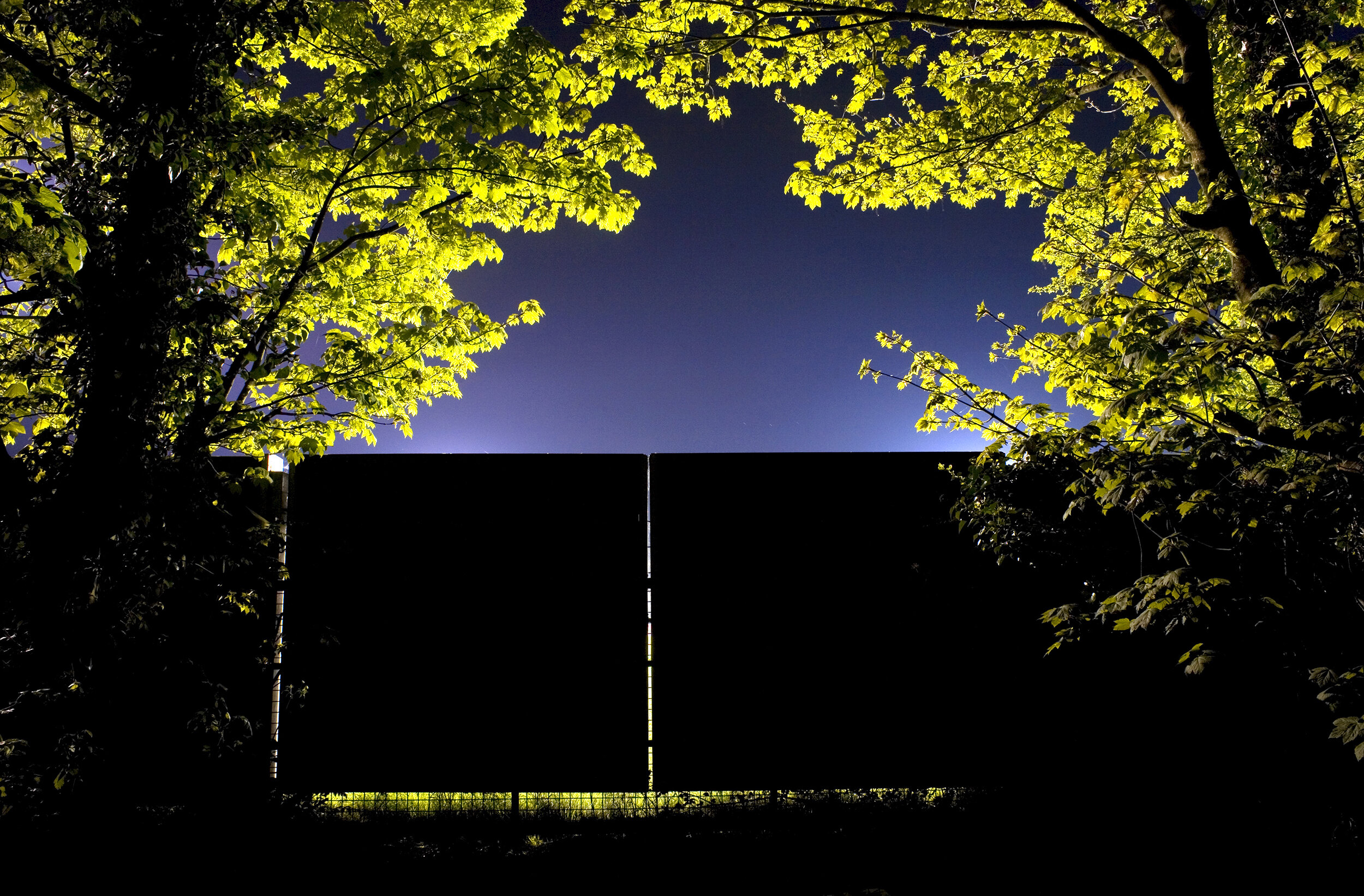
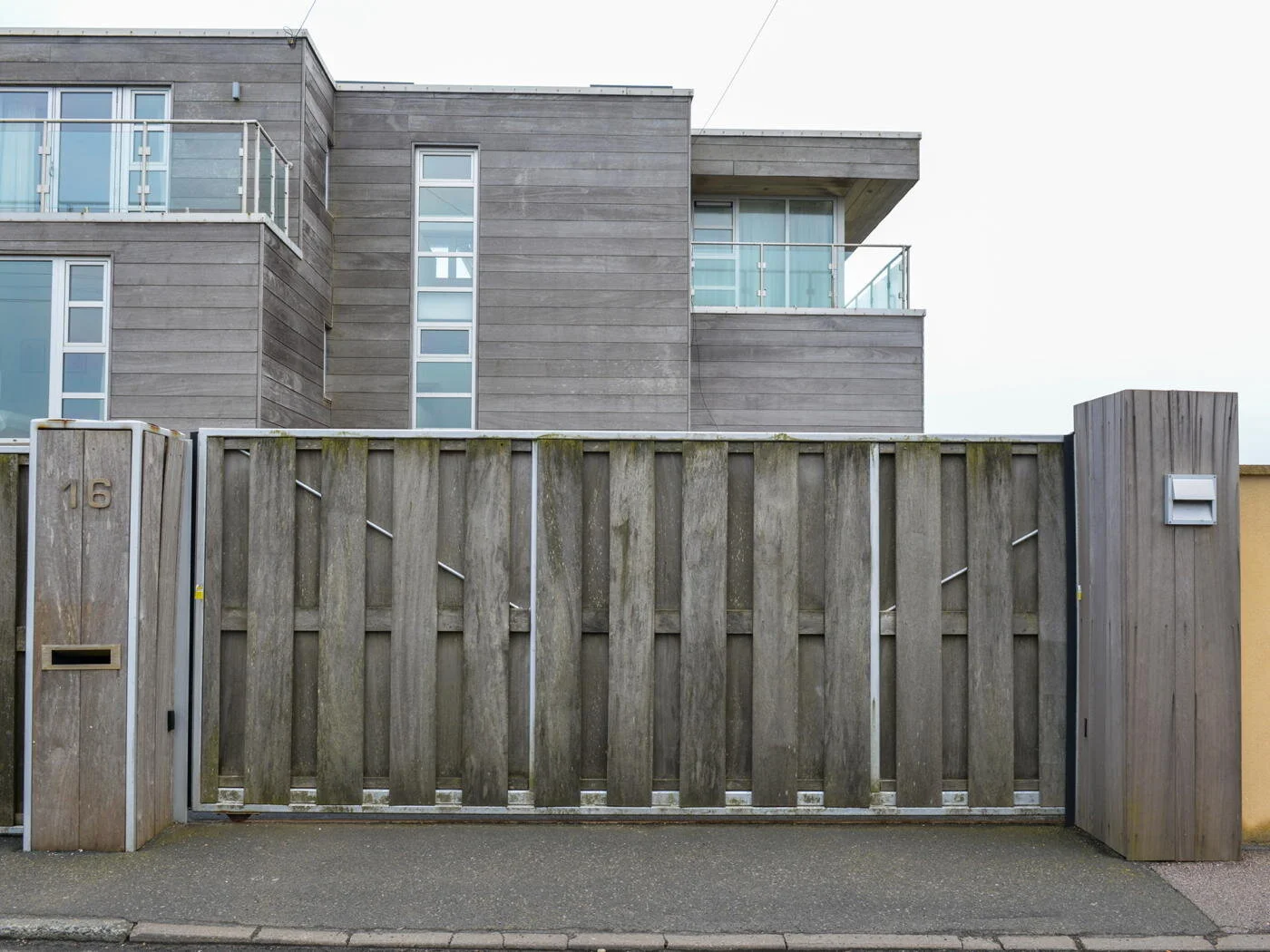
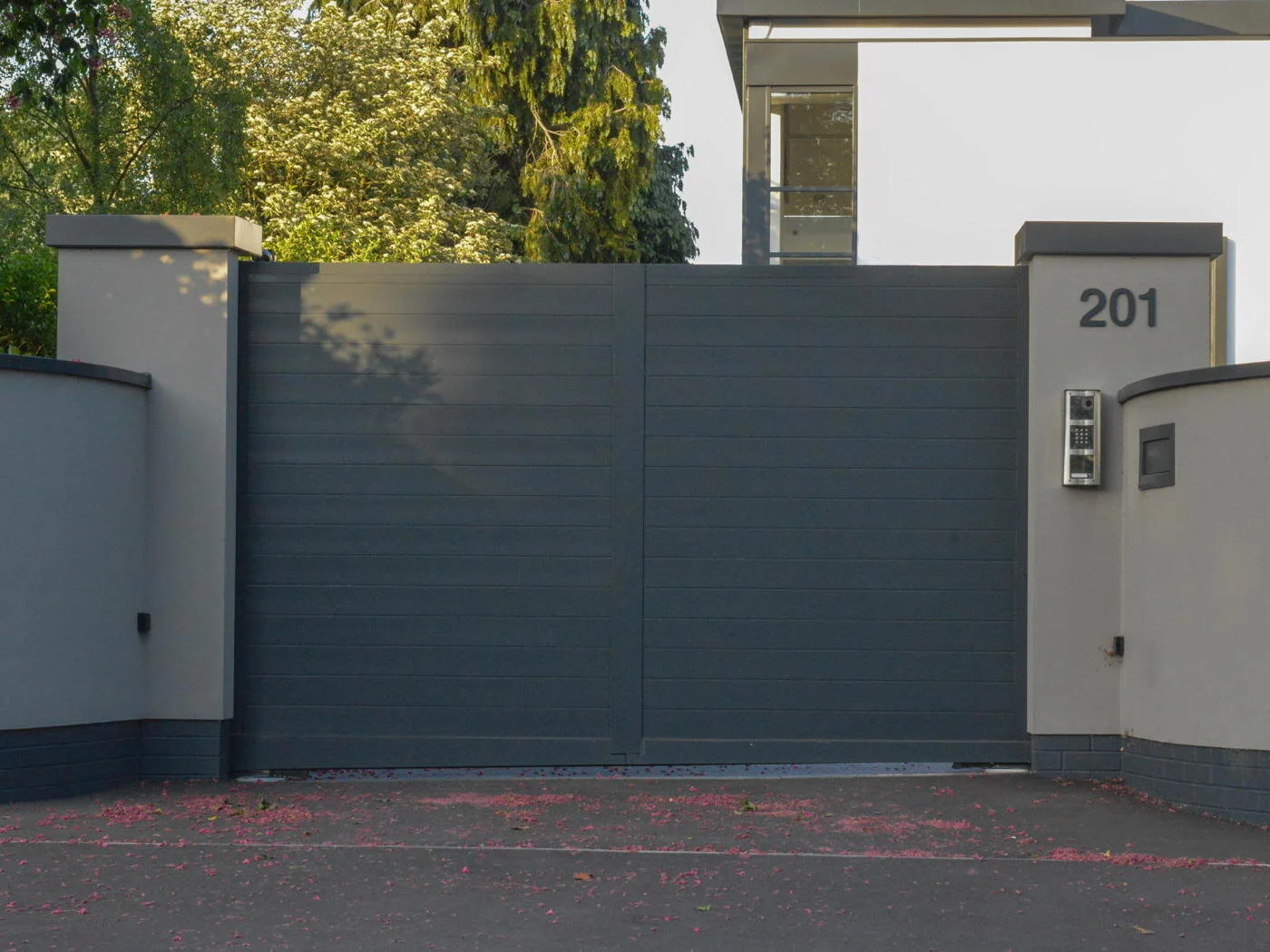
For his series Shut In Shut Out Robert Ashby photographed the large, blank gates that have been installed at high value single-family residential properties, as a powerful visual metaphor for the increasing separation of people in our communities.

R_ASHBY01 web.jpg
R_ASHBY02 web.jpg
R_ASHBY04 web.jpg
R_ASHBY05 web.jpg

Both economically and physically, these large high security gates are a statement of being not just financially successful and having a way of life that needs protection and privacy, but also of not being a part of what is happening elsewhere in our society; independent and unaffected, indeed uninfected, by it. The images featured were made in Nottingham, Brighton and Bexhill and the series has also been made into a limited edition hand bound artist’s photobook, including a poem by Henry Normal entitled “How to Make an Underclass” on the phraseology of separation in society. I shall be continuing to make images in the outer fringes of urban conurbations, where the wealthy get more space beyond the semi-detached suburbs, but within easy reach of the city centre. Generally I find these areas by looking for expensive properties on the Rightmove property sale website, and then looking at the areas identified on Google streetview.

R_ASHBY06 web.jpg
R_ASHBY09 web.jpg
R_ASHBY10 web.jpg

Since 1995 Robert Ashby has combined his work in high-tech startup businesses with the development of his own photographic practice which addresses human, social and cultural issues. He has been director of Hereford Photography Festival for three years, as well as a curator and writer on photography.

robertashby.net

Paul Walsh - New Publication

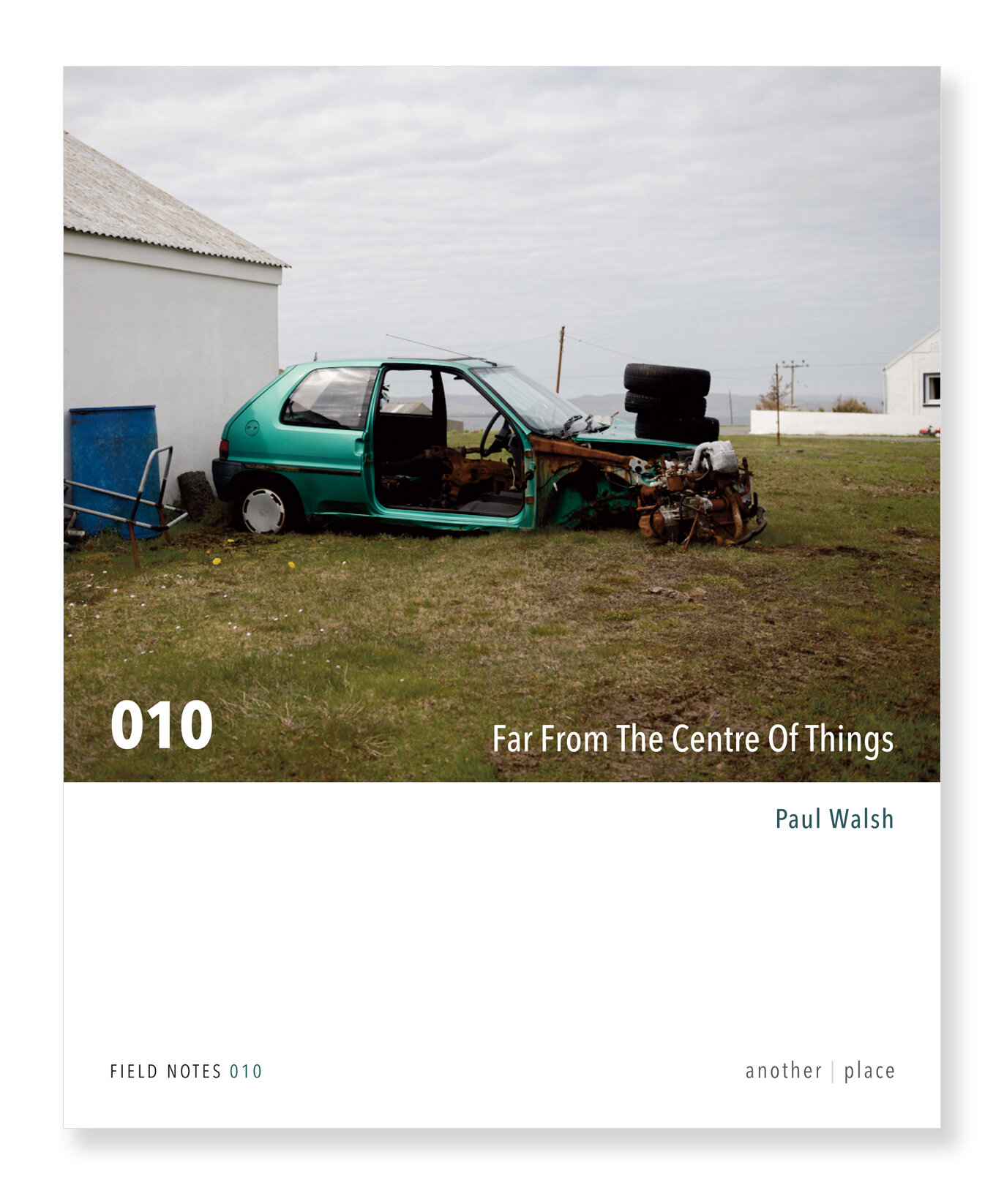
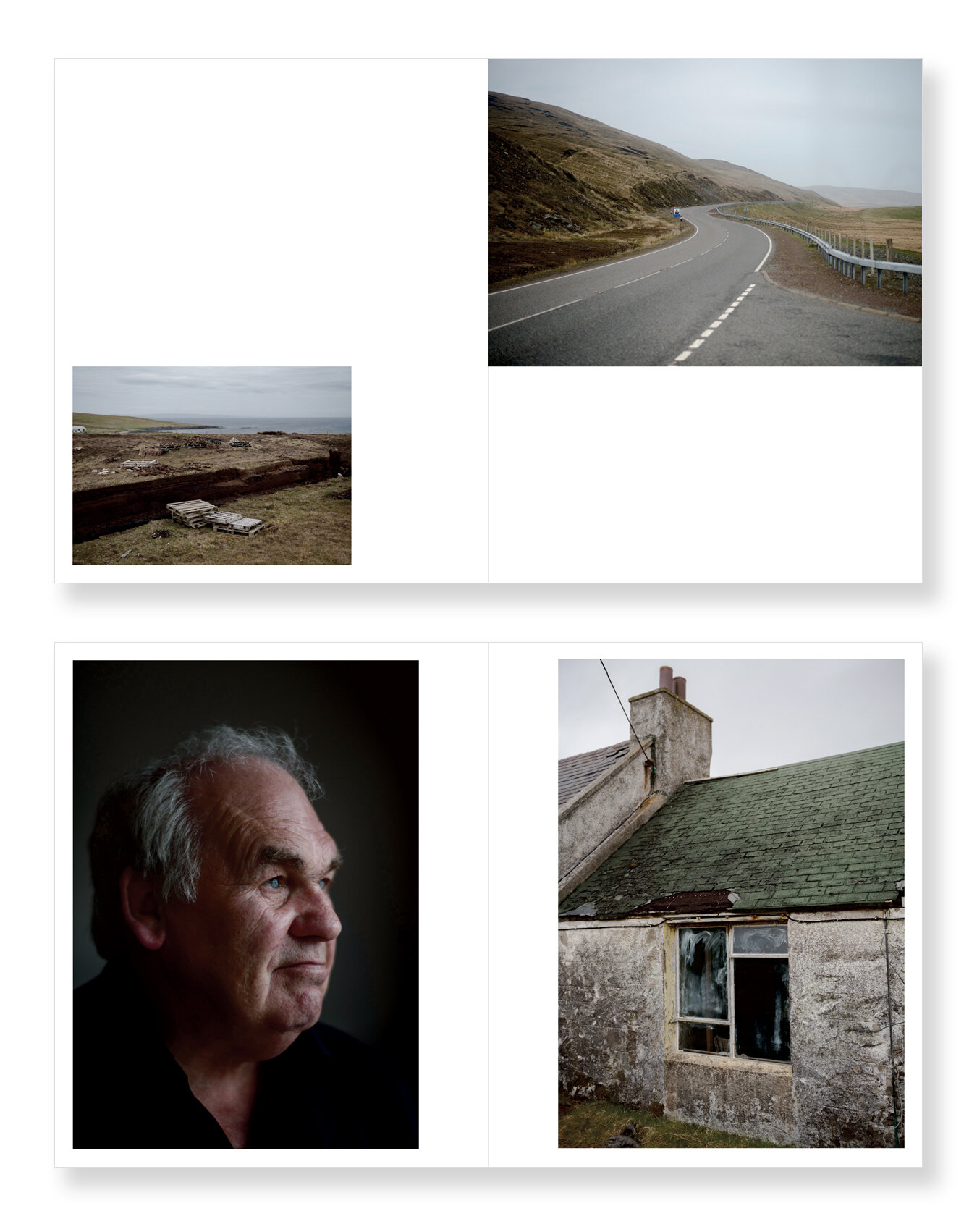
MAP6 photographer Paul Walsh has been working with Another Place Press to publish his series Far From the Centre of Things which he made in Shetland. The project is part of the ‘Field Notes’ collection of zines, which is now available to purchase for just £8 from Another Place here. There are a only a limited number of copies, which are already selling fast, so be sure to order asap!

Paul Walsh Far From the Centre of Things.jpeg
Paul-Walsh-4.jpg
Paul-Walsh-1.jpg