
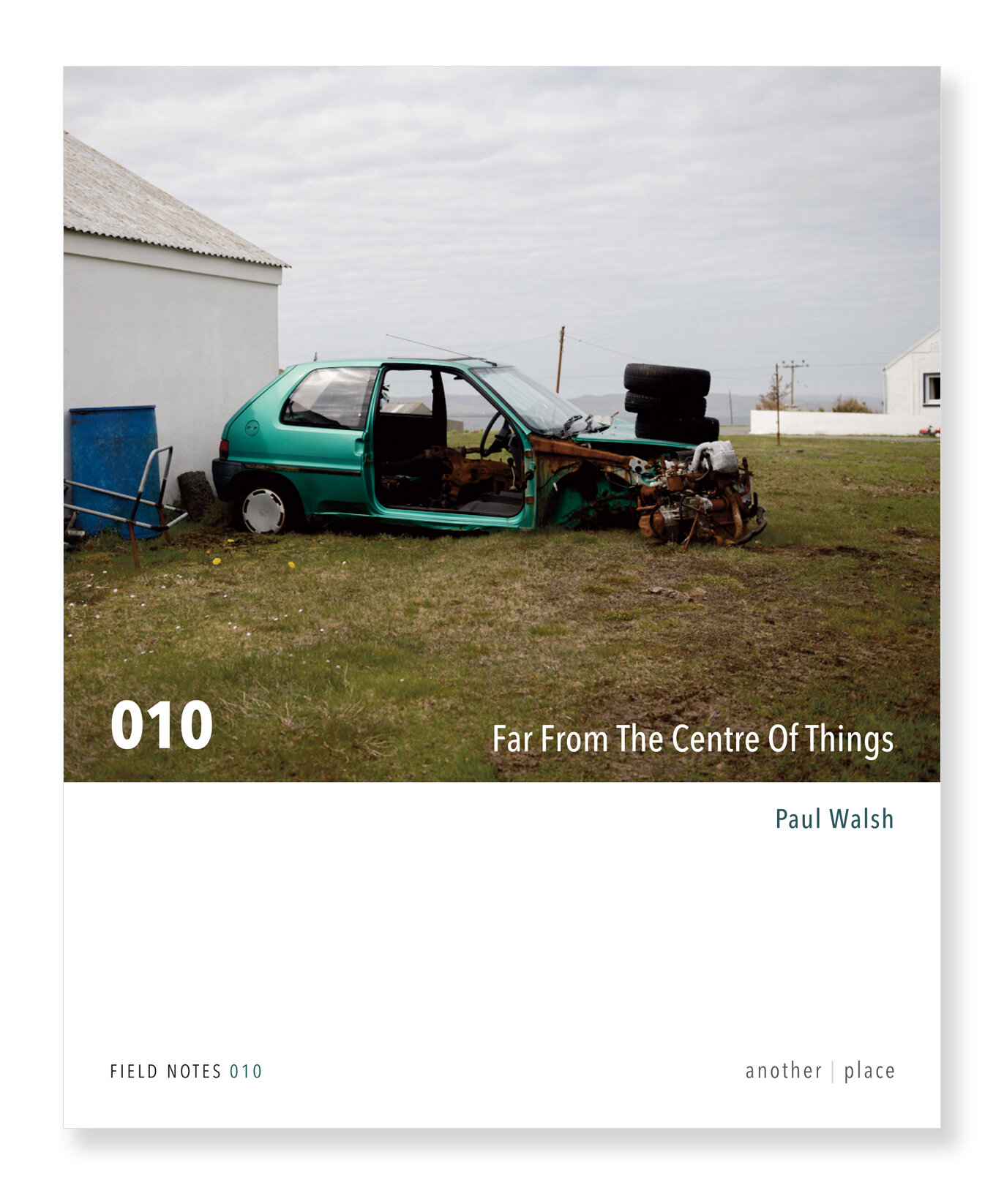
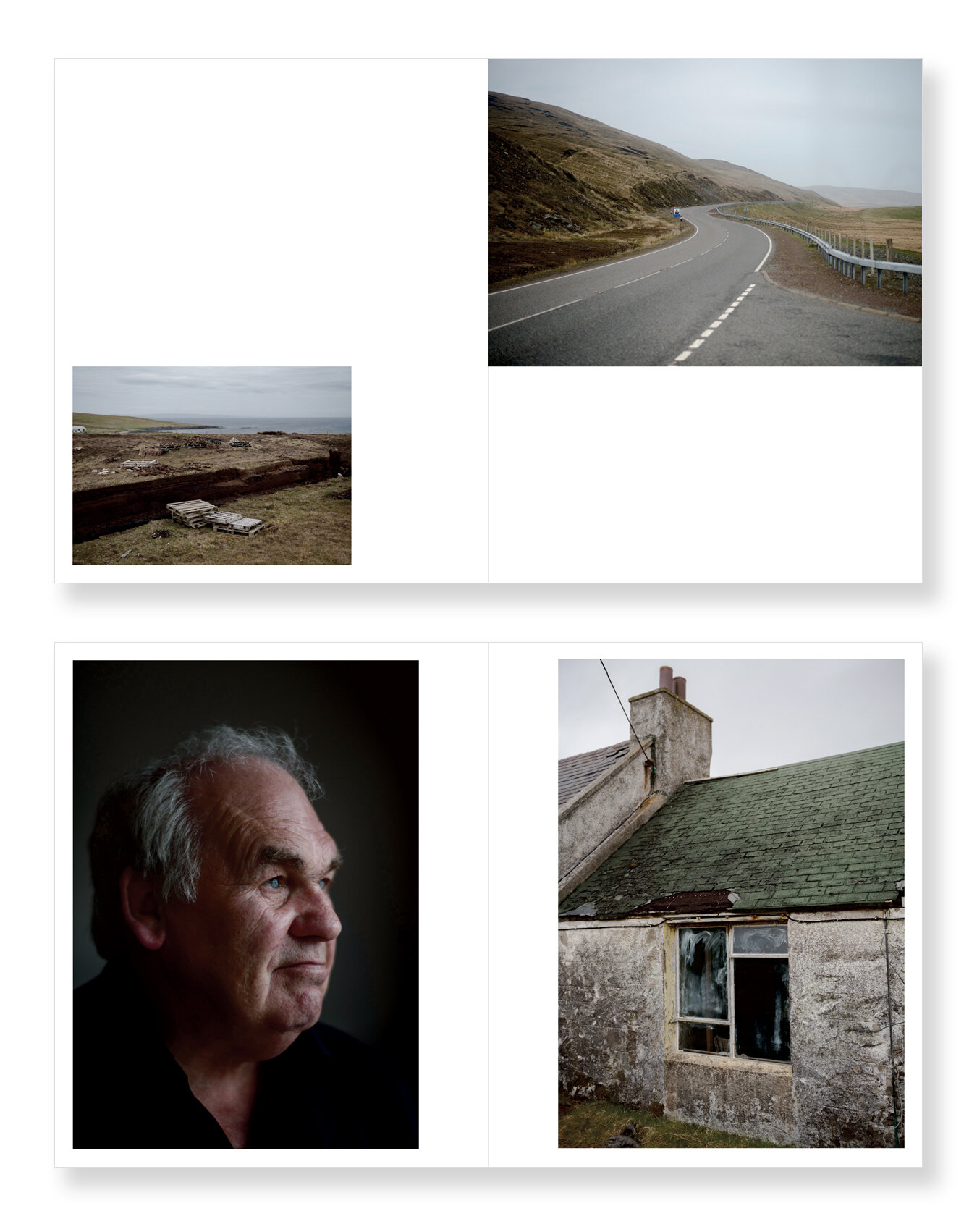
MAP6 photographer Paul Walsh has been working with Another Place Press to publish his series Far From the Centre of Things which he made in Shetland. The project is part of the ‘Field Notes’ collection of zines, which is now available to purchase for just £8 from Another Place here. There are a only a limited number of copies, which are already selling fast, so be sure to order asap!

Raoul Ries - New Series
In 1340, John I of Luxembourg, King of Bohemia and Count of Luxembourg, founded the Schueberfouer as a market in Luxembourg city. Over the next 679 years the event transformed into one of the largest travelling funfairs in Europe, attracting up to two million visitors. The fair has since then been cancelled in 1915, during the First World War. It is one of the cultural highlights in Luxembourg and has been proposed for inclusion on UNESCO’s list of intangible cultural heritage. As a preventive measure against the viral disease COVID-19, Schueberfouer had to be cancelled in 2020. The council of Luxembourg City replaced the festival with decentralised small funfair attractions in nine different neighbourhoods of the city.


The situation ticked several boxes for me: I like to photograph environments in which someone actively tries to pragmatically improve a place while facing pressure. The time factor is important for me as well. The mini-fairs replacing Schueberfouer transformed several suburbs of Luxembourg City for a brief period. I am also attracted to contrasts on several levels in photographs. The pictures in the series The Great Disruption show foreign elements in otherwise plain neighbourhoods. The funfair attractions are meant to entertain people and be fun, yet they are empty and the places feel a bit grey. I had to get up early in the morning to capture that ambience.


Despite staying in Luxembourg for only a brief duration, I decided to photograph all of these sites: Place de la Constitution, Rue de Strasbourg, Merl Park, Place Jeanne d’Arc, Place de Roedgen, Laval Park, Place August Laurent, Place Thorn and Kinnekswiss Park.
New Show - Barry Falk Undiagnosed
For my current exhibition Undiagnosed I was very keen to find an outdoor venue with a lot of space. This was partly because of current circumstances around Covid-19 but also because I wanted a venue large enough to accommodate a long series of images that were repetitive in typology and gained resonance in numbers. When I saw the West Buildings Shelter I realised this was ideal and had huge potential: a central location with very busy footfall, a prominent spot that grabs your attention as you approach, and a rectangular space that meant the exhibition would be a continuous experience as you walk around the circumference.


To utilise this space I needed to tackle a number of technical issues: the exterior space is open to the elements; previous prints on foamboard had twisted in the wind and rain. I wanted a flat unframed image that I could attach directly to the wall. In consultation with Spectrum Photographics we decided upon Blueback prints, the same type of paper used for billboards, applied using basic wallpaper paste. Likewise, the sign for the exhibition needed to be adapted to the space as I wanted large but understated lettering; in discussion with Subway Exhibitions we decided vinyl lettering on a large sheet of hard perspex attached to the wall by screws. The installation was challenging as I'd set aside only two days to measure up the space, paint the walls, attach the sign and paste up the images before the Photo Fringe festival launch. I had no control over the weather and as rains lashed down and the wind blew I wrestled with the images.


The public response has been overwhelmingly uplifting and insightful as well: the portraits of local people in lockdown opens up conversation; for some it has been a very moving experience. There seems to be a lot of resonance for visitors when seeing a series of intimate portraits of people in their doorways, on the thresholds of their homes. For me, the project also continues in another form - as both a public exhibition and an opportunity to share ongoing experiences.
Undiagnosed comprises of 30 portraits of people living within Worthing and is at the West Buildings Shelter, Marine Parade, Worthing. Undiagnosed is on show for the entire month of Photo Fringe 2020.
Guest Feature - Nicholas Priest
My dad used to drive up and down the A46 as a national salesman for different companies, and I still remember the orange lollies from Little Chef that he would bring home, and the small BP albums that we used to collect. My dad is sadly no longer with us, and during my drives along the A46 between work, my moms house and home, I began thinking about our phone conversations and in doing so found the A46 project.


The A46 project is a personal journey through the places where I grew up and where I live now in Broadway. Whilst growing up my family would use the road to get around taking me to football games, to Birmingham or further afield on holiday. I now teach photography at a local college and use the road to drive between work and home. Whilst driving I used to speak to my dad, but since we lost him I found myself not on the phone anymore, but looking and remembering where this road has taken me. Paul Graham’s A1; the great Northern road, and the photography of William Eggleston and Stephen Shore have been a big influence on the project, especially for their use of colour and capturing the sense of a journey.


Whist driving I often stop, put on a high vis jacket and take photographs of the places that I might overlook or miss when driving. All of the images are taken from the side of the A46 and I always keep my camera in the car in case I see something.


Nicholas Priest uses photography to document everyday life as he sees it. He is currently studying an MA at Gloucestershire University and has a BA in photography from Birmingham City University and teaches photography at Stratford college.
MAP6 Interview by Document Scotland
Recently some members of The MAP6 Collective were interviewed by the brilliant Document Scotland, as part of a collaborative exchange between both collectives. The first of these interviews is a portfolio piece that talks about working and functioning collectively, as well as the making of the MAP6 Shetland Project. This has now been featured on the Document Scotland website which you can check out below.

Guest Feature - Carly Clarke
The Downtown Eastside (DTES) in Vancouver is well known for its crime, addiction, poverty, prostitution and homeless people. Having lived near this part of Vancouver, I wanted to get to know some of the residents individually. I saw an opportunity as a photographer to collaborate and have a greater insight into their daily lives. I wanted to capture a different side of Vancouver’s DTES residents.


My approach meant spending many weeks in freezing temperatures during a harsh winter. The street photography aspect allowed a certain freedom, giving a voice to the people I talked to and photographed, and a chance to see what an outsider would not - a more authentic side to their lives. My work came from a compassionate, necessary, and positive approach to the individuals in the community.


It was important to create relationships with people, and spend time with them so that they felt comfortable opening up about their personal lives. My interest stood firmly in treating the people I photographed without judgement, to oppose stereotypes, and to raise awareness of the east side dwellers.. When people view my photographs, I want them to see each individual as a reflection of themselves. Everybody wants to be understood. Nobody wants to have a mental illness or a drug addiction.


Often those that I met in the DTES were people who had fallen on hard times, but they were friendly and willing to participate in my project. Even the most threatening, insensitive people were willing to listen to what I had to say.. For most, if not all of the people I encountered, addiction played a major role in why they were there. The series is called Remember Me: Vancouver’s DTES.


Carly Clarke is a documentary photographer based in England. Her work has led her to explore issues such as homelessness and drug/alcohol addiction, and elder abuse and abandonment in India. She also produced a self-portrait series ‘ Reality Trauma’ about the effects of chemotherapy during a personal battle with cancer, exploring her identity and what it means to face the edge of life. As well as more recently documenting her younger brother who faced the same cancer, 8 years on. Her work has been published by the BBC, British Journal of Photography, POV Magazine, Portrait of Britain, Jornal Contacto, Metal Magazine as well as other online and print publications.
Raoul Ries - New Publication
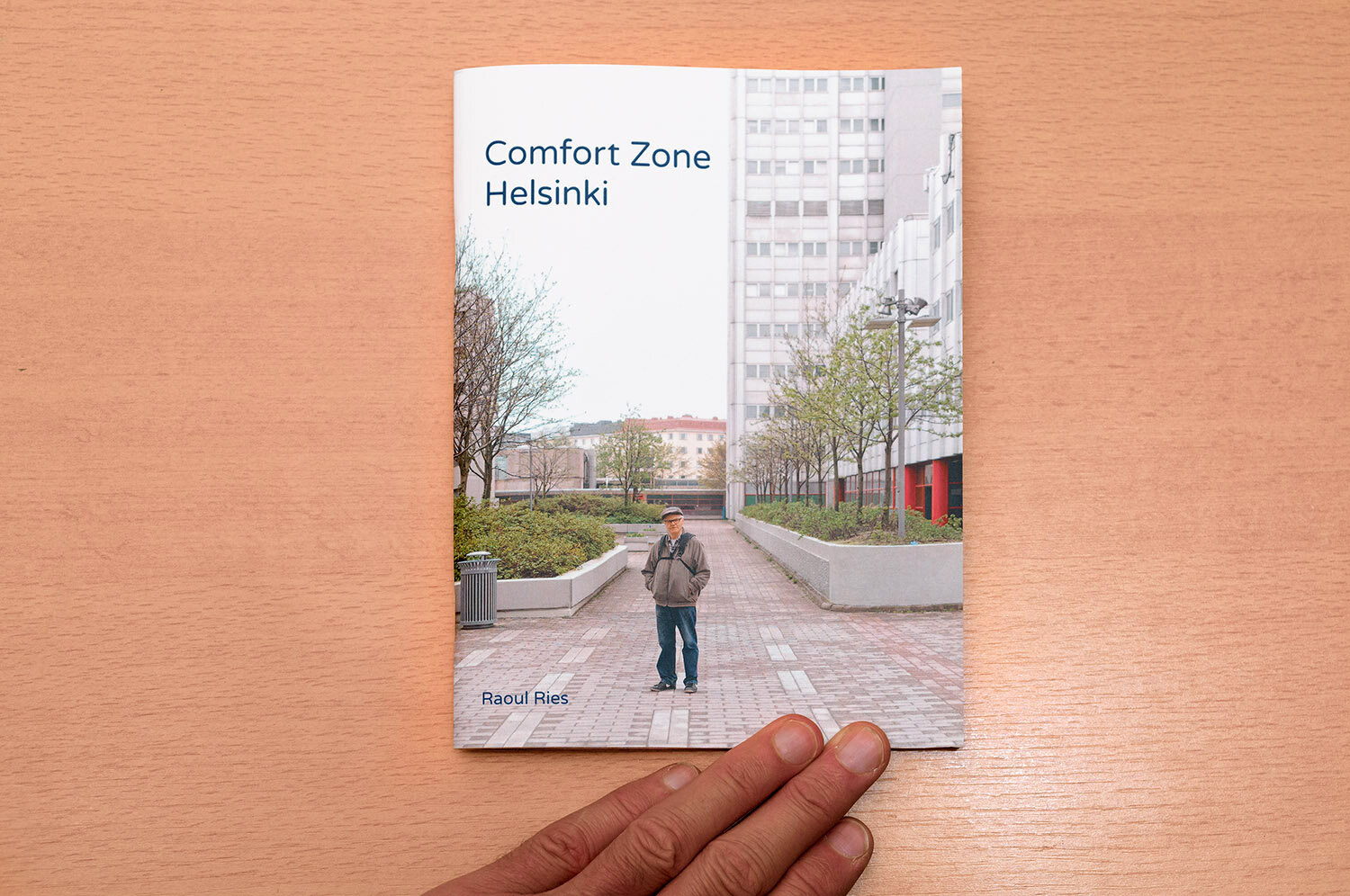
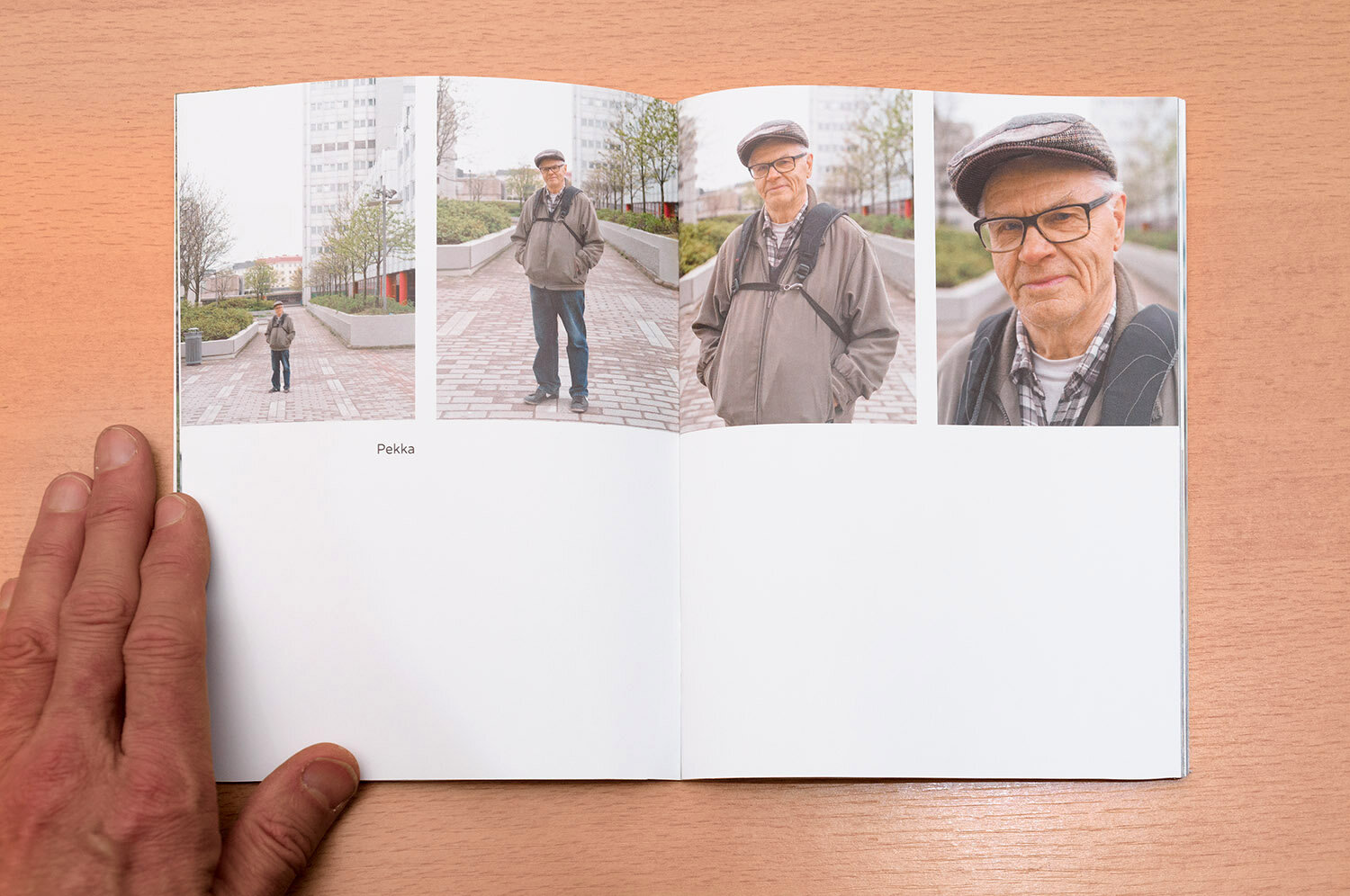
MAP6 Photographer Raoul Ries has a new publication of his series Comfort Zone Helsinki. The work was made as part of the MAP6 Finland: The Happiness Project and explores social behaviour as a main factor in individuals’ happiness. Raoul asked strangers in Helsinki if he could take their picture from various distances ranging from public and social spaces to personal and intimate spaces. As soon as a person indicated he was getting too close, he stopped photographing.


52 pages
148x190mm
Printed on Xerox iGen, 4/4c, 170 g/m² matte paper
Soft-touch cover 300 g/m²
100 numbered copies
Purchase for €10 from Raoul Ries website
Barry Falk: Undiagnosed Exhibition
In response to the Covid-19 Pandemic, MAP6 photographer Barry Falk decided to capture some of the atmosphere of these strange times. His method was to photograph as many of my friends and neighbours as possible within walking distance of where he lives in Worthing. He was restricted by Government Guidelines around public safety; going out was itself a risk, so he limited himself to one or two photoshoots per daily walk. This required careful planning, setting up a system of appointments, maintaining a safe distance, using a long lens for the close-up shots. The response was overwhelmingly affirmative: people wanted to be a part of a collective project, to be noticed in this time of social distancing. As the project developed it began to link people together, forming a collective sense of self during this socially isolated period.


Undiagnosed will be exhibited for the first time as part of the Brighton Photo Fringe 2020. The show will comprise of 30 portraits of people living within Worthing. The exhibition is outdoors and will therefore be open to viewing 24/7. The show opens on the 3rd October at the West Buildings Shelter, Marine Parade, Worthing. You will be able to meet the artist, and appointments will be available to book soon.
Guest Feature - Giuliana Borrelli
Parsellhager is a documentary project looking at the allotment gardens in the city of Oslo and the people that are passionate about city and gardening culture. The series consists of both portraiture, still life images and and landscapes.


I met with both young and older people growing their vegetables amidst urban surroundings. The photographs document the nurtured landscapes and philosophy of what has been called the ‘green lungs’ of the city. It aims to portray the cycle of nature and its transformation, from winter to a more temperate climate. During summer, they dig and plant seeds, during winter they wait until the season begins again.

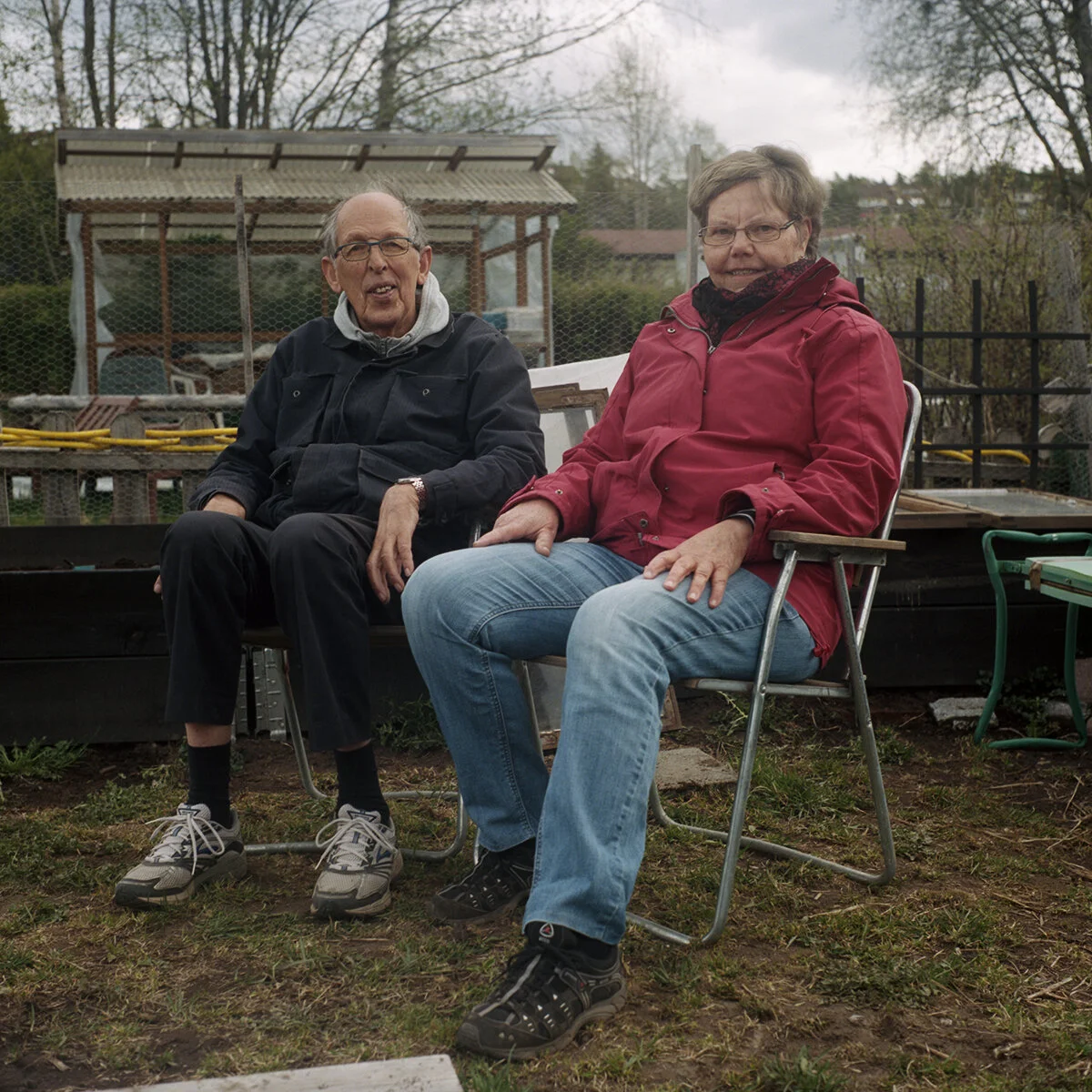


Giuliana Borrelli (b.1990) is an analogue photographer from Italy. She is a recent graduate of BA Photography at the University of Westminster in London. Giuliana currently works and resides in Oslo, Norway. Her main photographic interests are documentary, where she focuses on social and environmental topics.
Guest Feature - Francesco Fantini
I am currently working on a project called 33 which is a journey through the 32+1 Greater London boroughs. The Project is created from a curiosity to observe and understand the vast territory that forms The Greater London perimeter, where I have lived for five years. I enjoy walking, and I walk to try to discover and capture the contrasts of each Borough. I am generally a very curious person and photography is one of the tools that helps me feed this thirst. Daily life in London is fascinating for this type of voyeurism, and the camera is a congenial instrument for me to be able to capture it.


I often have a pre-established route, areas that I know and I never get bored of. For the unknown places I decide on a few focal points and start to walk around following my instinct, waiting for something to happen. I am more attracted to residential areas where I can find ordinary daily life, where as I see Central London as more of a transitional space. I work with film cameras such as a Contax G1 and Mamiya 645 and use Kodak Portra 400 film.

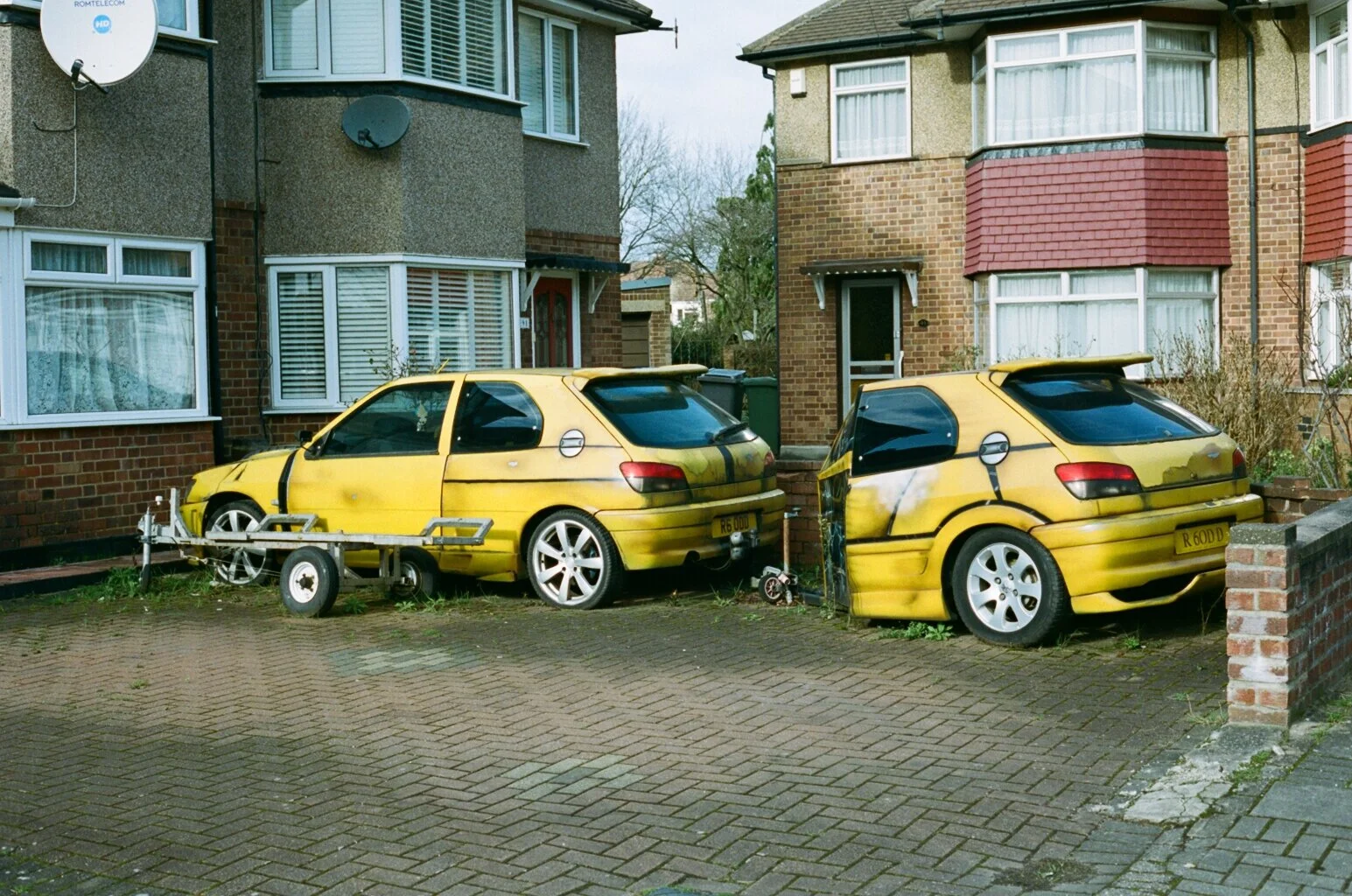


Francesco Fantini is an italian photographer based in London. He graduated from the Academy of Fine Arts in Bologna (MA Photography) and moved to the UK in 2014 he where lives, works and shoots mainly on 35/120 mm films.
Guest Feature - Jenny Nash
Mid March during the lockdown imposed by the government, I retreated into isolation after contacting the virus Covid-19. The stockpiling of medication resulted in a 50% rise in demands for repeat prescriptions. The advice from the National Health Service to order prescriptions no more than ten days before required, was not heeded. The consequent strain on the NHS led to delays in restocking which led to shortages. I could not obtain the medication I take to manage bipolar disorder, resulting in the experience of my own intense withdrawal symptoms over seven days.


It could be said that our personality is made up of our masks. Some we chose to wear, some we wear through a necessity to survive and some are inflicted on us. Caught between the analysis of others that reflects back a sense of their personal worth in which the self finds or seeks affirmation that they are enough. These feelings of depersonalisation that came over me during my week of withdrawal are symbolised as masks. Not the self looking back as an image in a mirror, but reflected upon as if looking into a mirror that might reflect my mind.
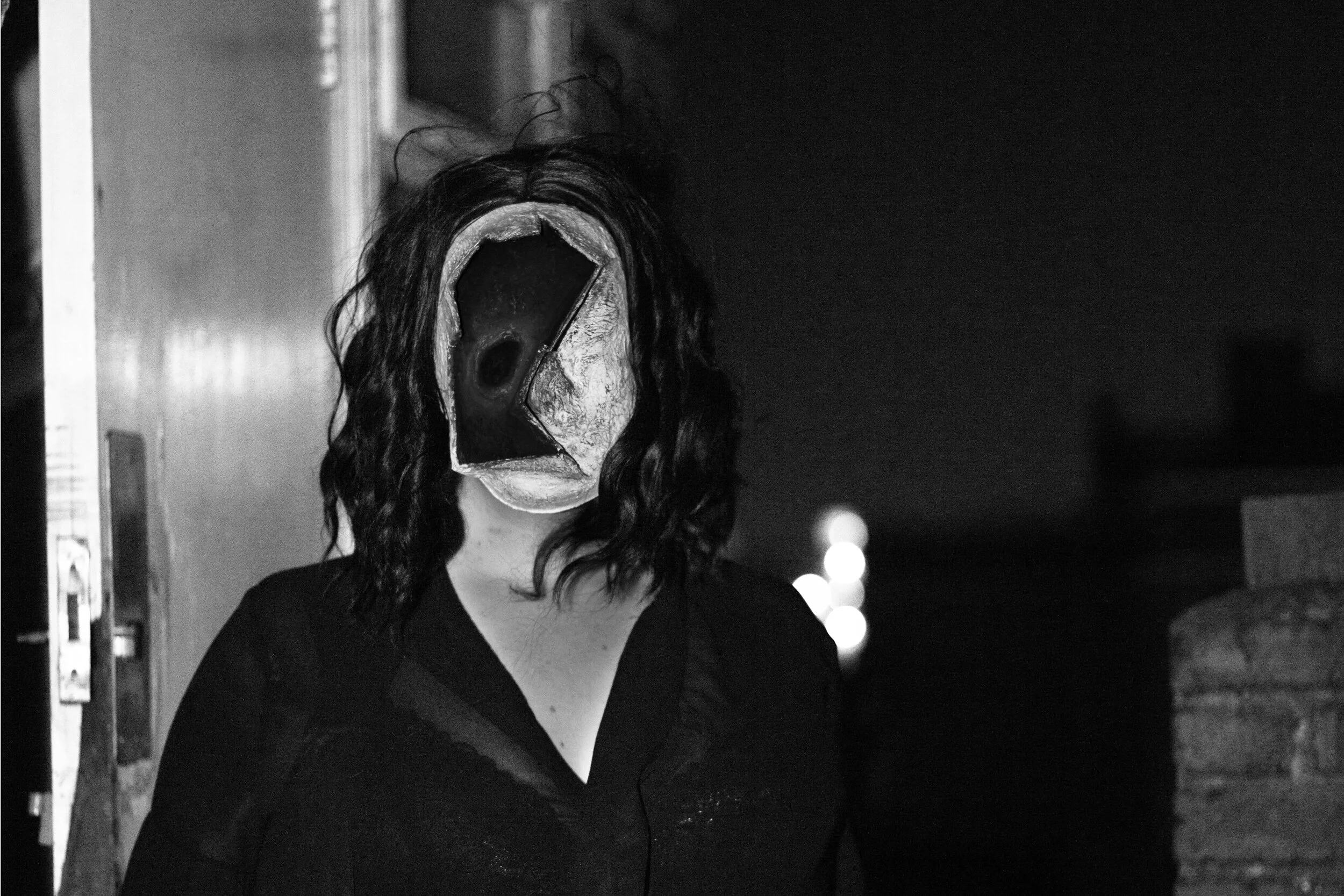
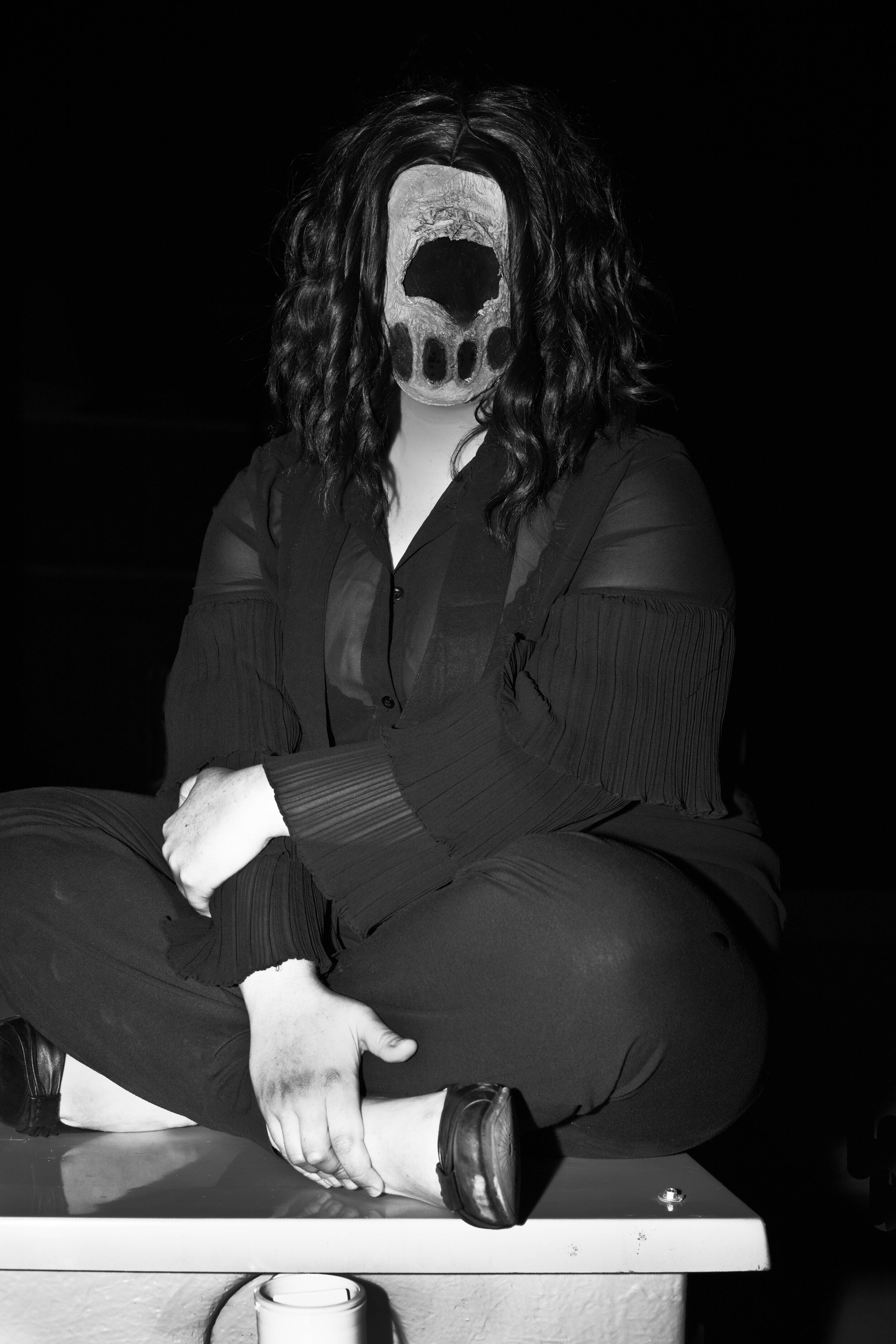
Jenny Nash began as a documentary and protest photographer documenting specifically LGBTQ + Pride and her work with Stand Up To Racism. She documents spaces of memory and appropriates PTSD treatments, such as returning to sites of past trauma. She also confronts past traumas in self portraiture sessions. Jenny Nash has a Distinction in a Masters of Research at The Sir John Cass School of Art, and is currently an intern at the L A Noble Gallery.
Guest Feature - Holly Passmore
Until relatively recently life in rural England would have been very different from how it is today. Full or partial self-sufficiency would have been common, fixing and re-using would have been a necessity, waste would have been minimal. That is, however, a bygone era. Consumerism obliges us to continually modernise instead of adapting what we already possess or purchasing second-hand. People who do not live like this are unusual.


Diary No.30 explores the realm of place, time, and memory through the life of Nanda: an elderly woman living in a small village in England’s rural South West. Utilising a combination of contemporary and archive imagery, with text taken from audio recordings of dialogue between Nanda and myself, this ongoing body of work attempts to lace together Nanda’s past and present.


The decision to photograph Nanda grew out of a personal fascination with her lifestyle and a growing desire to explore and understand the origins, growth and maturing of her identity.


Holly Passmore is a British photographer based in the South West of England. She is fascinated by cultural variation and the ways in which people live. Her photographic practice frequently examines the relationship between humans and nature and other contemporary social issues which are explored through constructed and documentary approaches to photography. She graduated from the University of Plymouth in 2020 achieving a first class honours degree.
Guest Feature - Hannah O' Hara
The Quiet Place is an autobiographical series which explores the absence of my father and grandfather through revisiting physical spaces of embodied memory. The photographs give a physical form to memory and consider how heritage and identity are informed through the temporality of place. The work is durational and is an attempt to piece together a broken and incomplete narrative to represent my own challenge at trying to understand my patrilineality.

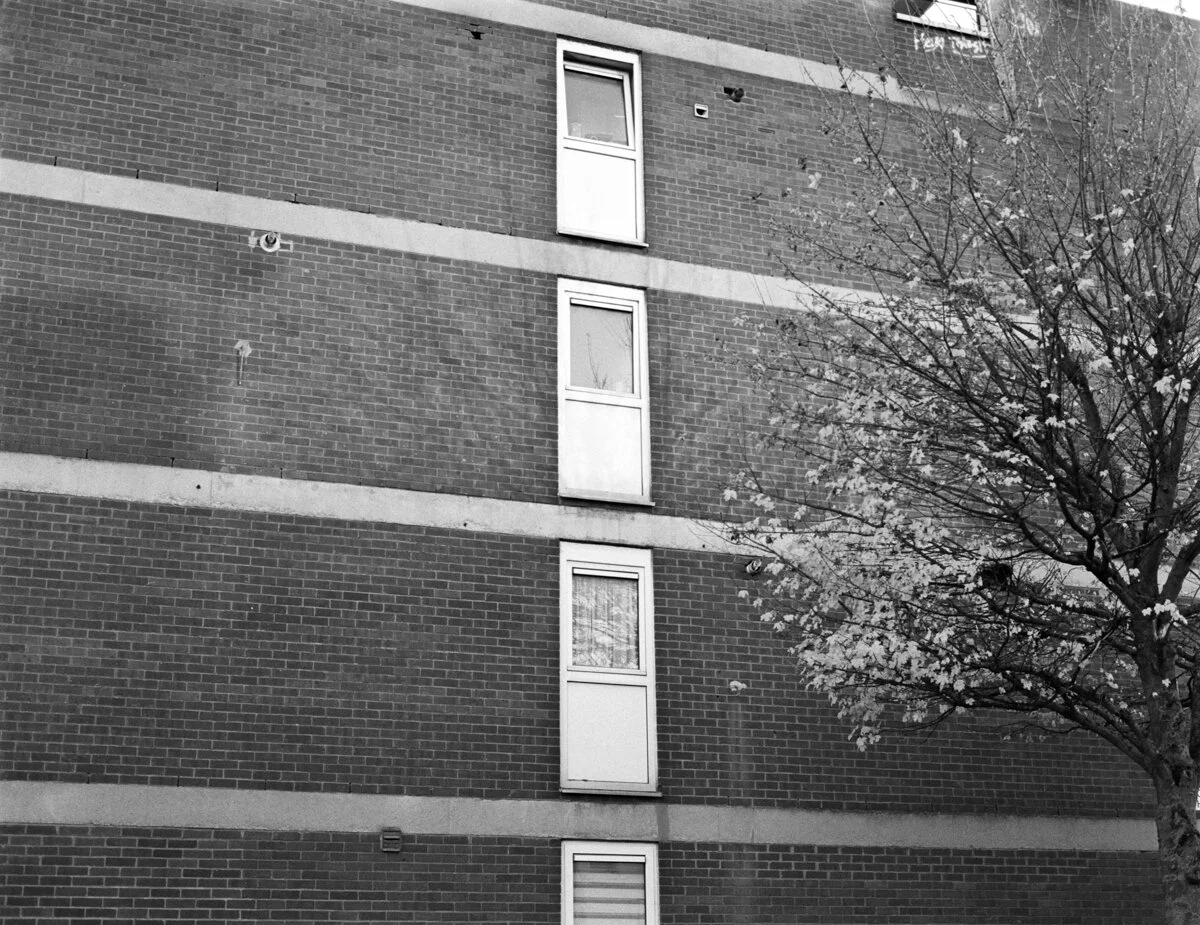
The work is based in specific locations around Sheffield, Rotherham, Blackburn and London relating to my father and grandfather. My father left very suddenly in the middle of the night when I was nine and I never saw him again, and my grandfather became a surrogate father until he passed away when I was in my teens. I had this overwhelming need to return to places which I had shared with them as a child.


I used the same two cameras that I had used when I was seventeen, a 35mm Vivitar and a Mamiya 645, as I wanted to look through the same viewfinder and take these objects back to the spaces where I had learnt to use them. The final image 'The Sportsman Inn' is where my great grandmother lived, and is a pub that has since shut down. I spent a great deal of my childhood there and apparently my dad used to drink in there regularly, so it's a location that we never visited together but that was significant to both of us.


Hana O' Hara's artistic practise explores temporality and place, considering how place operates as a site of experience and memory. She considers how personal narratives and stories reside in the landscape, and the way in which places and objects retain memories and evoke nostalgia. Working with analogue photography and moving image, her work often incorporates and repurposes archived photographs and materials. She graduated with a degree in Photography, Film and Imaging from Edinburgh Napier University and is currently studying an MA in Photography at The University of Brighton. She currently divides her time between personal projects, commissions, mentoring and working with community groups and art organisations in Sussex as a photographer and artist facilitator.
Barry Falk - Portrait of Britain
MAP6 are delighted to announce that Barry Falk has been shortlisted for The British Journal of Photography's Portrait of Britain 2020 with one of his portraits ‘ Sam and Jonty’. The image is from the series Undiagnosed. Barry will also be featured in the third Portrait of Britain book, and be part of the outdoor exhibition at various locations around the country.


Featured Collective - Document Scotland
We are are big fans of Document Scotland and have been following their work since they first began in 2012. For the first of our ‘Featured Collectives’ MAP6 had the opportunity to speak with Document Scotland’s three members to get a further insight into their work.

© Jeremy Sutton-Hibbert, from the Document Scotland Exhibition A Contested Land
Can you tell us a a little about Document Scotland, how you began, and what were your intentions when creating the collective?
Document Scotland began in a bar in Beijing, in 2012, discussed over beers by Jeremy Sutton-Hibbert and Colin McPherson, two Scottish photographers who’d known each other for many years, and were on a photography assignment in China. By the next morning we’d enlisted a third Scottish photographer, Stephen McLaren, and very soon after we got back to Scotland, Sophie Gerrard joined the group. All four of us had been living or working outside of Scotland for some years, and with the 2014 referendum on Scottish independence in our sights we knew it was time to return home, to see our country, and to photograph at this important period. We also wished to highlight the breadth and quality of documentary work being undertaken now, and to try and redress the balance where documentary photography from Scotland seemed to have finished in the 1970s.
Can you tell us more about each member, what are your individual practices and interests?
Jeremy Sutton-Hibbert has been working professionally for 30 years or so, with his work appearing in all the main newspapers and magazines worldwide. As well as editorial work, he photographs for corporate and NGO clients, he was a principal photographer for Greenpeace International for two decades. Through his work he’s travelled extensively, photographing on assignment in over 100 countries, and across many oceans. But in saying that he’s just as happy working on a story or self-initiated project in Scotland, photographing as a way to learn about topics himself. His images have been widely published and exhibited.

© Jeremy Sutton-Hibbert, from the Document Scotland Exhibition A Contested Land

© Jeremy Sutton-Hibbert, from the Document Scotland Exhibition A Contested Land
Sophie Gerrard began her career in environmental sciences before studying photography in her home town at Edinburgh College of Art and completing an MA Photojournalism and Documentary Photography at The London College of Communication in 2006. Working regularly for clients such as The Guardian Weekend Magazine, Financial Times Magazine, The Independent and The Telegraph Saturday Magazine and on long term self initiated projects, she pursues contemporary stories with environmental and social themes. A recipient of a Jerwood Photography Award, Fuji Bursary and several other awards, Sophie’s work has been exhibited and published widely in the UK and overseas and is now held in a number of national and private collections. She is represented by The Photographers’ Gallery in London.

© Sophie Gerrard, from the series Drawn to the Land

© Sophie Gerrard, from the series Drawn to the Land
© Sophie Gerrard, from the series Drawn to the Land
Colin McPherson has been photographing in Scotland and abroad for the last three decades. He undertakes long-term projects alongside commissions and assignments for a number of newspapers and magazines and is represented by Getty Images. Colin’s work is published internationally and held in archives and collections such as the Scottish national photographic archive and the University of St. Andrews University Library’s Special Collections. His photography has been featured in more than 30 solo and group exhibitions and his major Document Scotland projects include A Fine Line, The Fall and Rise of Ravenscraig, When Saturday Comes, and Treasured Island, the last of which was his contribution to the collective’s 2019 touring show entitled A Contested Land.

© Colin McPherson, from the project Catching the Tide

© Colin McPherson, from the project A Fine Line

© Colin McPherson, from the project A Fine Line
You have all been working professionally as photographers for many years before Document Scotland, why did you feel the need to collaborate and create a collective?
We felt that with the Independence referendum coming in 2014 that all eyes would be on Scotland and it would be a great opportunity to promote documentary photography from our country. We were all keen to be back photographing in Scotland, some of us had lived abroad for many years (Jeremy in Tokyo for 10-years, Sophie in India and London, Colin in Liverpool). It would also be a new way of working for us, bringing new challenges and opportunities.

© Sophie Gerrard, from the series Drawn to the Land
How do you work together as a collective, do you have individual roles, and what is your creative process like?
We each bring something different to the table, whether that is networking skills, or organisational skills or bid writing, or website work. We each have our strengths. We talk frequently, we’re in touch most days, that is crucial to keeping it all going, and when busy on projects we have frequent Zoom/Skype chats, we delegate tasks, and keep an eye on how we are progressing with deadlines.
Creatively we work on our own projects, occasionally sharing work to each other for comment. When we have a group show coming up then ideas and work is discussed and viewed more often, but ultimately we trust each other to do our own photography.

© Colin McPherson, from the project A Fine Line
In 2018 you premiered a major new show A Contested Land at the Martin Parr foundation in Bristol, before it went on to tour a number of galleries in Scotland. Can you tell us a little more about the motivations behind the work and how people reacted to the work?
We were invited to have a show at the Martin Parr Foundation in Bristol, and for that we wished to provide a portrait of contemporary Scotland, moving away from images of tartan kilts, Highland shows and cattle. We wished to show the country we know and love, with all that makes it a modern, vibrant country. The show was well received wherever it travelled. After the Martin Parr Foundation, the show was beautifully presented at Perth Museum and Art Gallery, and then at a small arts centre in Dunoon Burgh Hall. As with all shows we do, we work hard to collaborate with the host venue to provide talks and to generate as much publicity as possible around the work and exhibition.

© Document Scotland's exhibition A Contested Land at the Perth Museum and Art Gallery

© Document Scotland's exhibition A Contested Land at the Perth Museum and Art Gallery
Four photographers made individual projects for the show, can you tell us a little about each individual project?
Jeremy Sutton-Hibbert showcased a selection of work from the streets of Glasgow, from the myriad of demonstrations and rallies that had been taking place over recent months and years. Always a politically opinionated city, Jeremy wished to show that there are numerous nuanced political views held over Scottish independence, or Brexit, not just Yes or No, Remain or Leave.

© Jeremy Sutton-Hibbert, from the Document Scotland Exhibition A Contested Land

© Jeremy Sutton-Hibbert, from the Document Scotland Exhibition A Contested Land
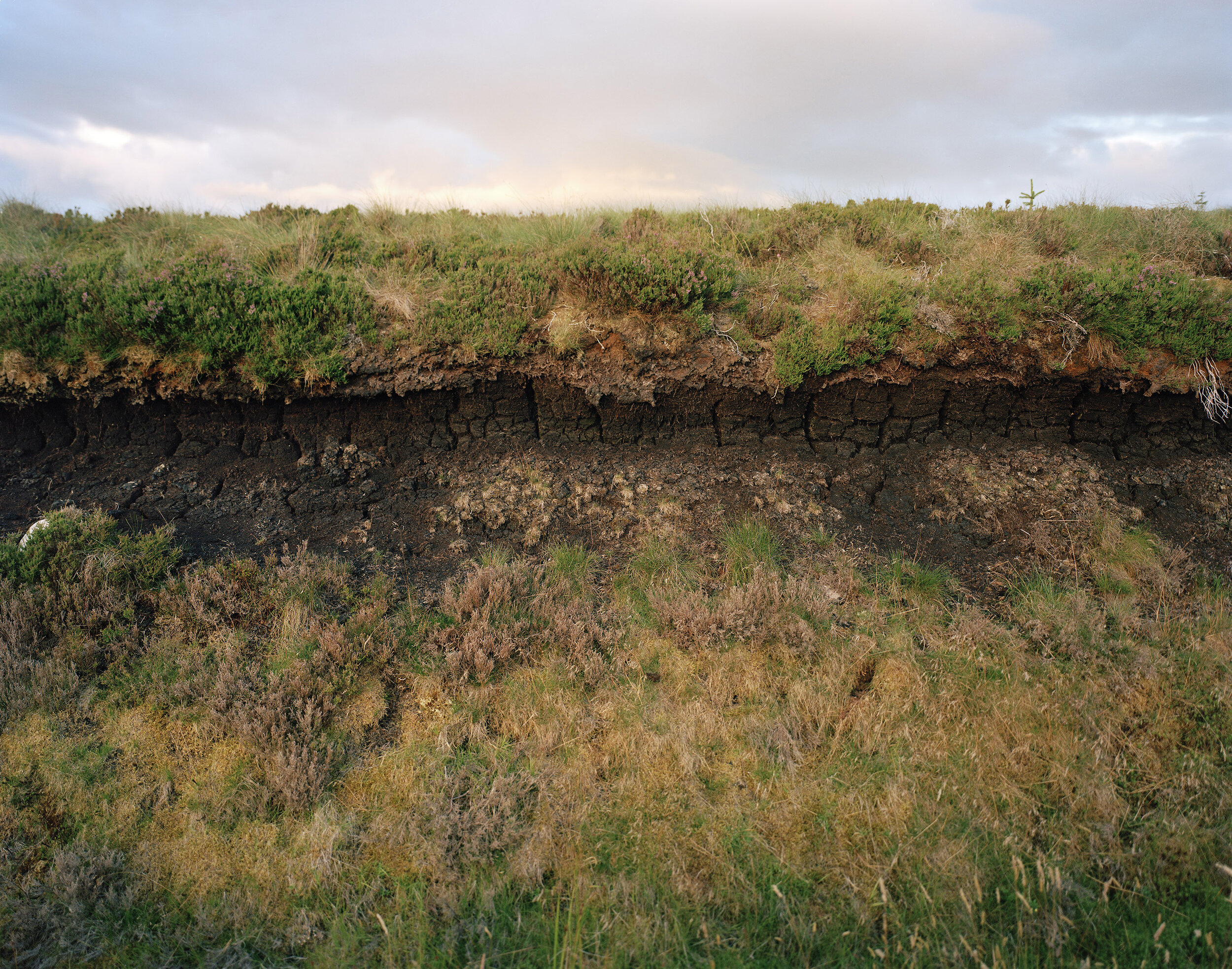
Sophie Gerrard’s work focused on the expansive peat bogs of Scotland’s Flow Country exploring how this precious environmental resource has been desecrated and denuded over generations, and how these almost magical places are being revived and reinvigorated through careful and considered conservation. This is no abstract notion: survival of the peat bogs is a touchstone for the health of the nation. Once seen as ‘fair game’ for industrial-scale exploitation, Sophie poses a metaphorical question, asking us to consider our relationship with local and national areas of outstanding beauty and how these places of natural resources fit into Scotland’s topography and consciousness, linking people to the land, and vice-versa.

© Sophie Gerrard, from the Document Scotland Exhibition A Contested Land
© Sophie Gerrard, from the Document Scotland Exhibition A Contested Land

© Sophie Gerrard, from the Document Scotland Exhibition A Contested Land
History is the starting point for Colin McPherson’s visual exploration of life on Easdale, the smallest permanently-inhabited Hebridean island on Scotland’s long, varied and sparse west coast. Once the epicentre of Scotland’s renowned slate quarrying industry, this fragile parchment of rock, sitting two hundred metres off the adjoining island of Seil, has become a by-word for repopulation and reinvention as its current community continues to battle traditional adversaries: economics and the environment. At its height in the 19th century, Easdale housed four hundred people; the quarrying provided work for the men and the slates they produced roofed the world, from the cathedrals in Glasgow and St. Andrews to the New World. When an epic storm decimated the island in the 1880s, the island went into decline and depopulation, only for a new band of pioneers to resettle and revive Easdale nearly a century later. The photographer’s personal connections with the island date back thirty years, and in this series he offers a contemporary commentary about the parallels with the past and how many of the 65 current residents live their lives.

© Colin McPherson, from the Document Scotland Exhibition A Contested Land
Building on previous work which looked at the historical ties that bind Scotland with slavery through the sugar industry, Stephen McLaren returned to the theme to explore and examine the hidden and almost forgotten link between Edinburgh’s wealth and the slave trade with Jamaica. In the immediate aftermath of this year’s Windrush scandal, it is a timely and forceful reminder that the past, in all its forms, is immediately around us. Behind the front doors of Edinburgh’s New Town lies the legacy of British colonial exploitation. With each pound passed down through the generations, Scotland distanced itself from its inheritance as architects and perpetrators of the widespread and cruel exploitation of many thousands of bonded and chained men, women and children. Stephen’s work does not exist merely to prick our consciousness, but to start a national conversation about acknowledging an historical wrong and discussion about reparations. It should also force Scotland to examine and re-evaluate the relationships with people and communities within and outwith its own borders.
What projects have the members of Document Scotland been working on lately?
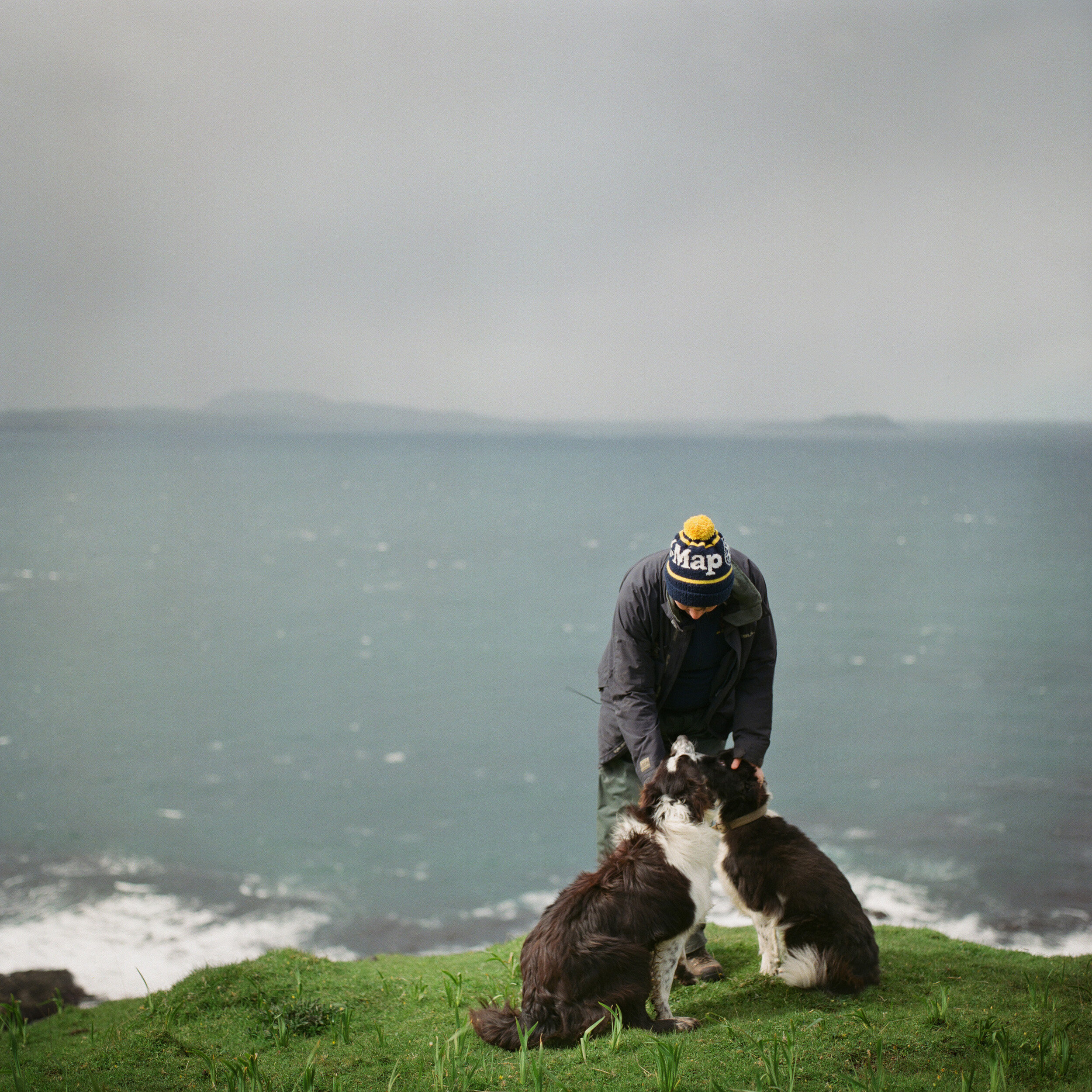
Since A Contested Land we’ve continued working on our own projects and undertaking assignments. In between assignments, Jeremy continues photographing the Roman-era Antonine Wall across Scotland; Colin continues photographing football culture and Easdale Island, and Sophie continues her work photographing female farmers and their landscapes all over Scotland.

© Sophie Gerrard, from the series Drawn to the Land
Can you tell us a little more about your Patreon scheme and any plans for the future?
Since 2012, Document Scotland’s website has grown to be a great resource for those looking for information about documentary photography from our country. We showcase not only our own work but also the work of many photographers. But this website and the work involved to make it happen, and the salon events (evenings of photography and discussion held in galleries that we facilitate and host) take time, and have costs. To continue we needed to make it more sustainable. We also rely on funding for our own projects, one of the important ethos of Document Scotland is that we try to have all that we do externally funded. Thus, during Covid-19 lockdown in early 2020, we decided to launch our Patreon supporter’s platform. We felt that we had earned the trust enough of our supporters that some of them would understand that for Document Scotland to be resilient and sustainable then we have to ask for contributions to enable us to continue. It is early days but already we have seen the benefits, we’ve engaged more with supporters, we’ve been producing exclusive content for them which has leads us to create new work, make new contacts and work slightly differently. It’s exciting for us to build a new platform and community, and for us to further that which we love, showcasing great documentary photography from Scotland. By pledging a monthly donation, to a value they are comfortable with, supporters gain behind-the-scenes access to projects as they develop and the photographers undertaking the work. To show your valuable support and find out more please visit here.
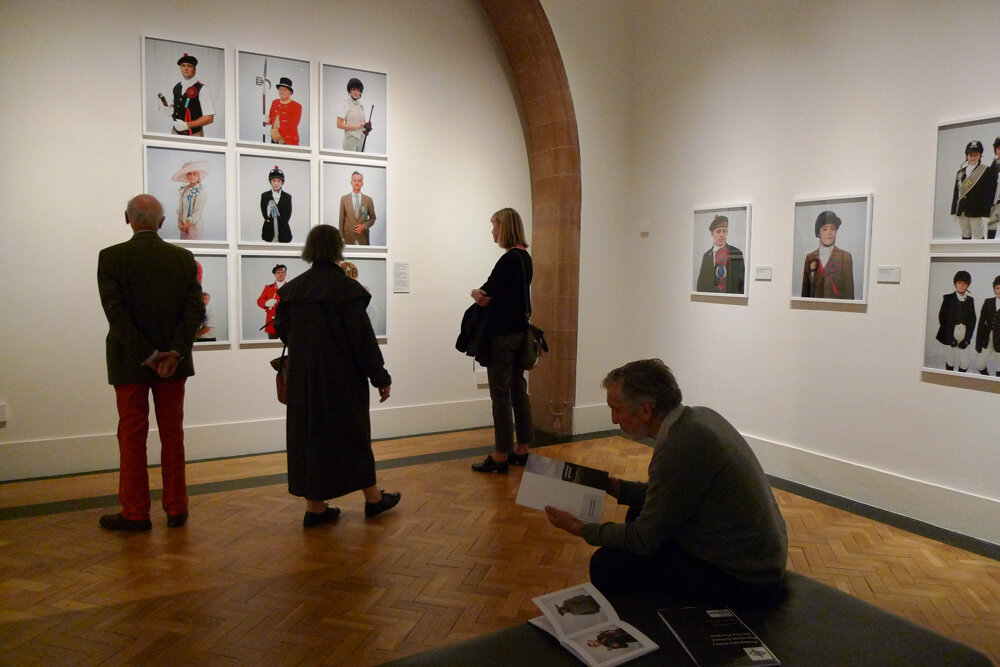
© Document Scotland's The Ties That Bind exhibition, including Unsullied And Untarnished at the Scottish National Portrait Gallery, Edinburgh
You can find out more about Document Scotland on their website below.
Guest Feature - Kai Yokoyama
“The war has begun again.” An anonymous woman from Gaza Strip in Palestine.
For his ongoing series I miss the smell of jasmine in Palestine, Japanese photographer Kai Yokoyama has been photographing the daily life of an anonymous Palestinian woman living in Tokyo.

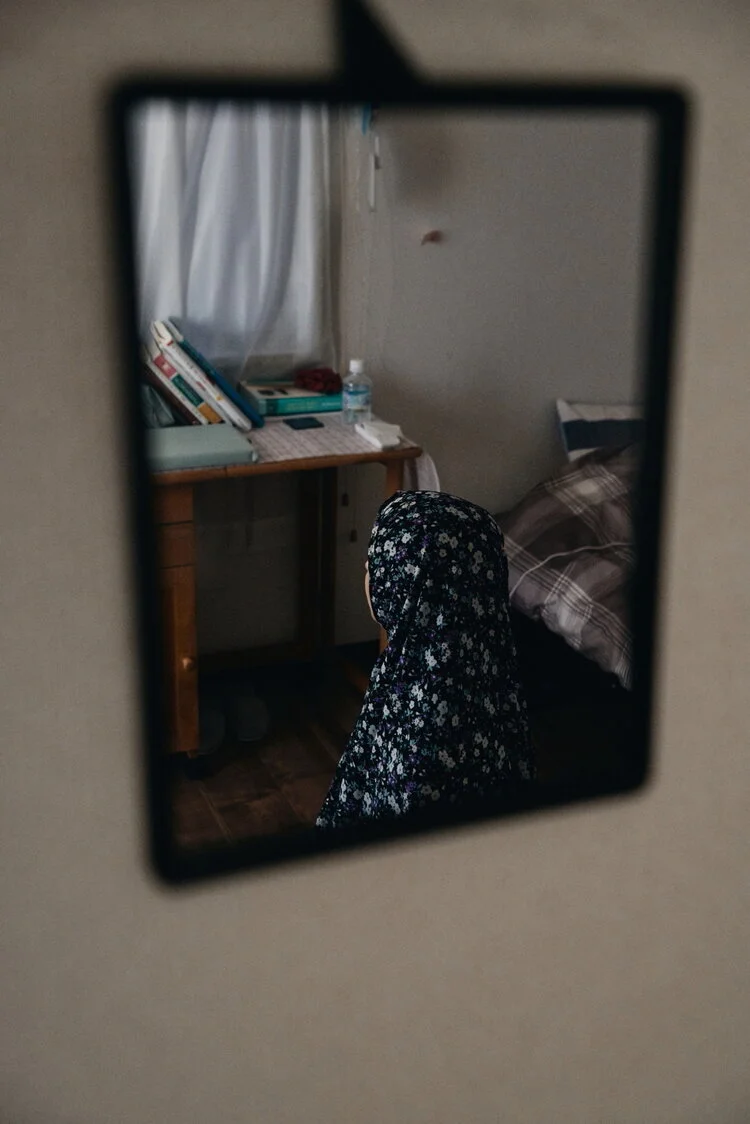
On November 12, 2019, 34 people were killed by Israeli airstrikes in the Gaza Strip. She says that she doesn't want to be connected with being a Palestinian anymore. Two years ago she left her homeland via Israel and Jordan and arrived in Japan to start a new life. Although she told her family that she would return within two months, she intends not to return to Palestine. She hasn't seen her family since the day she left.


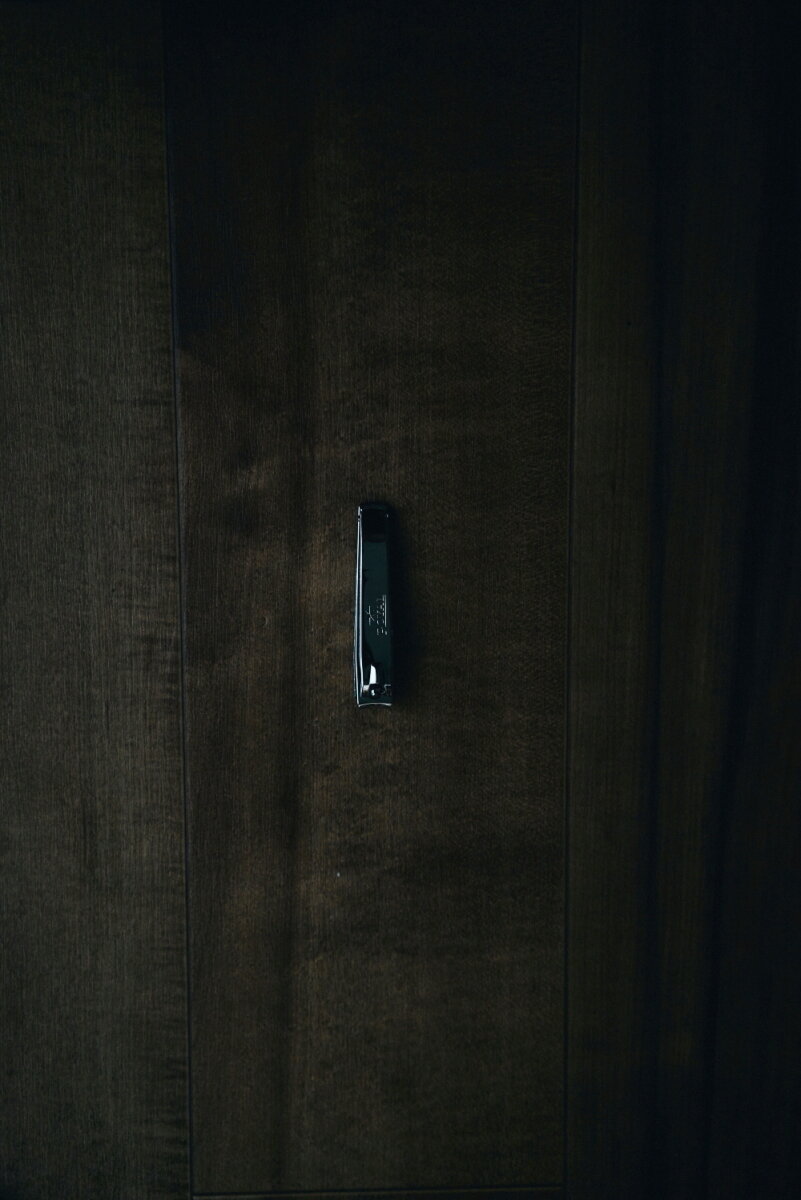
“My father died of cancer due to the banned chemical weapons in Gaza. He asked me to cut his nails, It was just before he died and he found that it was difficult to cut them by himself. I haven't told my family about my life in Japan, as I don't want them to worry. I miss the smell of jasmine in Palestine."


Kai Yokoyama is a Japanese photographer based in Tokyo, Japan. Starting out as an architecture student at Saitama University, he switched his major to photography and completed his studies at Tokyo College of Photography. After working as an assistant to contemporary art photographer Izima Kaoru, he has become a full-time freelance commercial photographer. In 2020, he received the Yumi Goto (RPS’s) one-year mentorship program to make photobooks in Tokyo.
Guest Feature - Aaron Yeandle
Guernsey has an ancient language with a long and distinctive history. Guernésiais, is the name of the Guernsey language; which derives from the ancient Normans. Today, the number of the original native speakers in Guernsey is in fast decline. It is estimated that in 2019 there are possibly fewer than 200 fluent speakers of the language and these are mainly aged over 80. I feel it’s imperative to capture this critical changing situation, as an important part of Guernsey’s social heritage and for the future legacy of the Island. Furthermore, communicating this social issue to the International community. In doing so, I have captured a part of social history, which can be so fleeting.

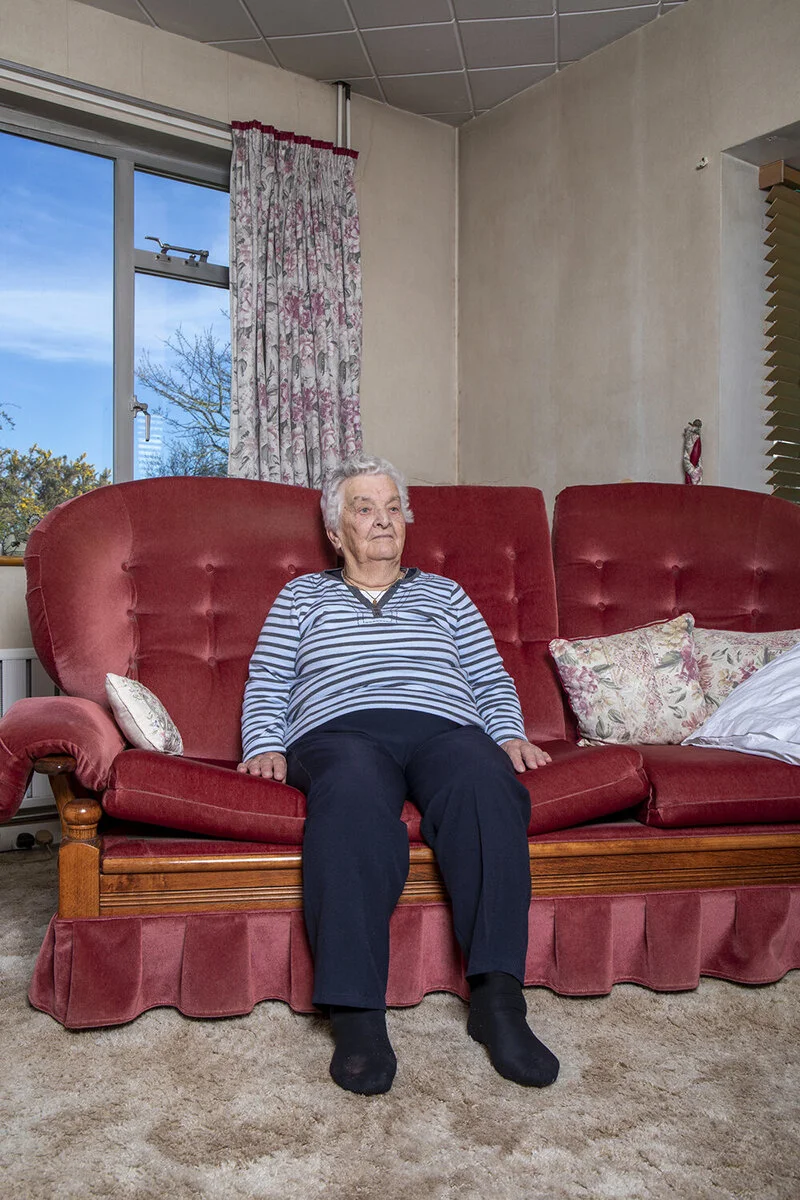

The Voice – Vouaïe comprises off intimate portraits of the Guernsey speakers. All of the portraits have been taken in people’s homes, showing their private and home environments. I have also photographed the Guernsey people’s personal objects, which reminds them, of their heritage, family or of their homeland. I spent over two years working on this project and have photographed over 100 people.


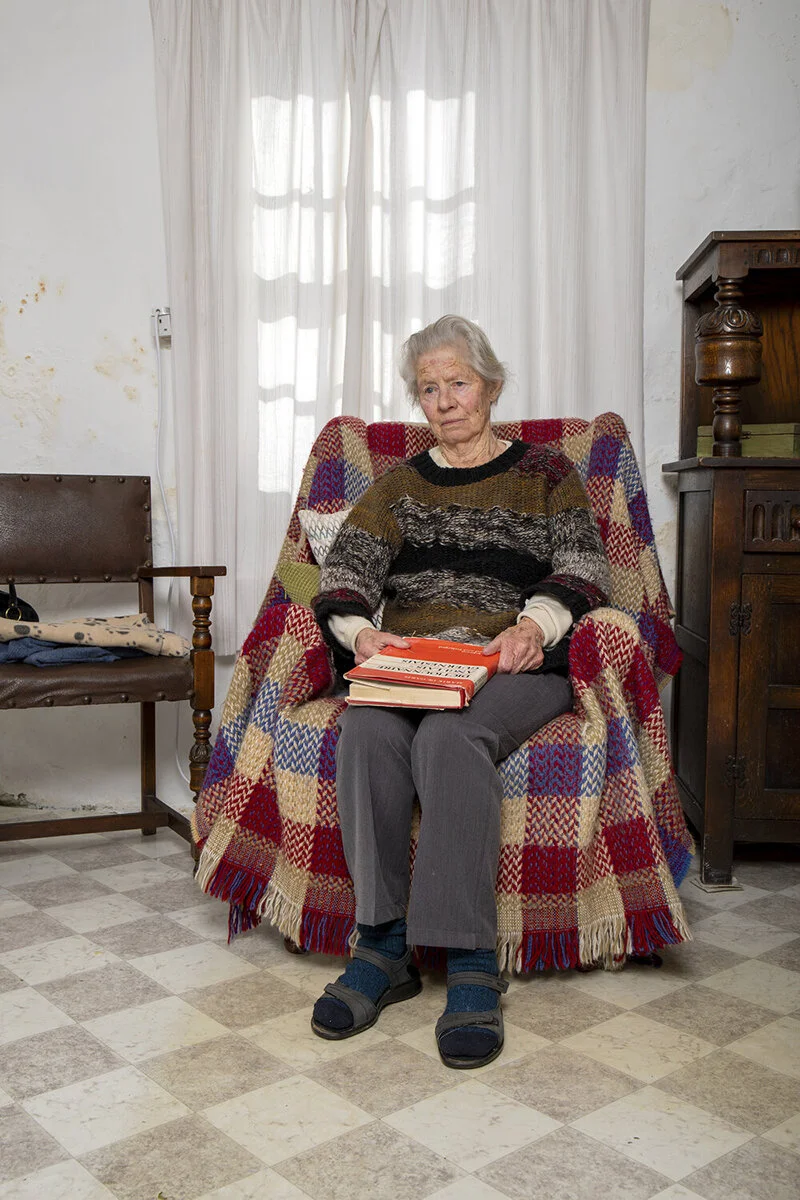
From the outset the Voice – Vouaïe project has reached people who would not normally take part in the arts. Through this project I have worked with the wider island community and developed relationships with people from all over the island. Furthermore, the project has brought strangers and lost relationships together, through group and individual meetings. The majority of people who and will take part in the project, were not evacuated in WW2 and spent their childhood under the Nazi occupation. In 2020 it will be 75 years since the Liberation of Guernsey. This will be a special year for the Guernsey inhabitancies and especially for the Guernsey people who experienced this troubled period of their history.

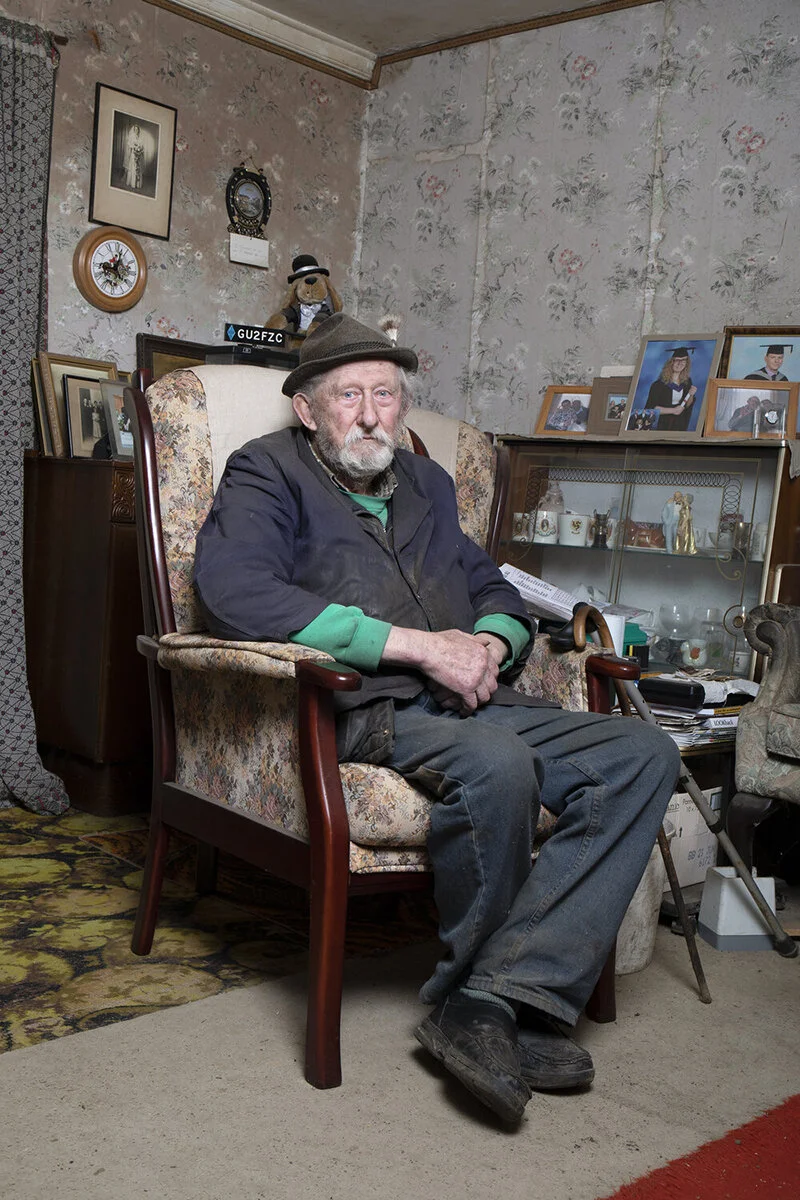


Aaron Yeandle has exhibited nationally and internationally. His education includes a B.A (Hones) in Photography, M.A in Fine Art and a PGCE. He has taught and delivered workshops and masterclasses on photography and on his own photographic practice. Aaron was the winner of The Guardians Britain Is Competition, with the photograph, The Western Ranger. He has completed four Artist-in-Residencies which were all exhibited. For the last two years Aaron has been working with the Guernsey people and photographing the last indigenous speakers of their endangered language named Voice-Vouaie. He has photographed over 100 people for this social and historical project. Aaron works mainly on long term social projects.
Guest Feature - Mark Adams
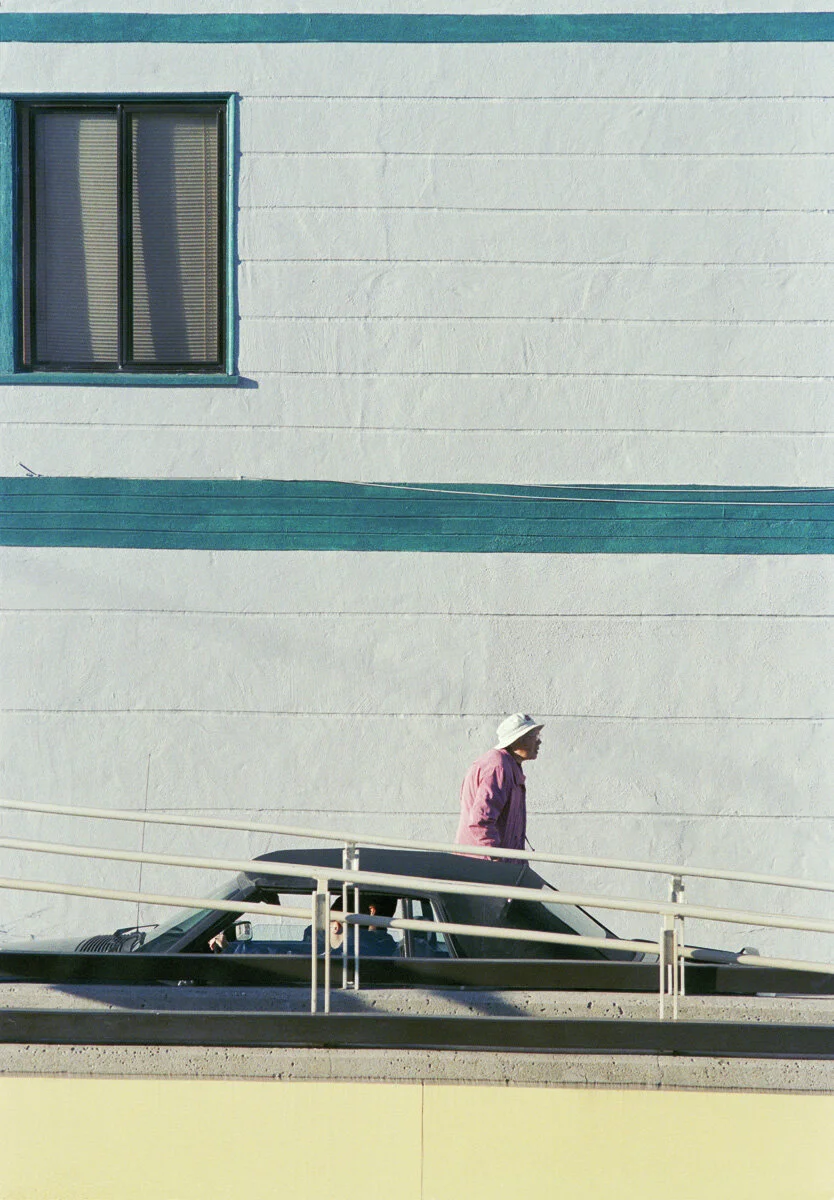
‘Outbound to Sunset’ is a project about the outskirts of a city as seen from a 1st floor apartment window in the Sunset District of San Francisco. The project records observations of the relationships between the rhythms of public life and anonymous individuals that inhabit or pass through a place. The Sunset District is situated on the western edge of the city next to the Pacific Ocean and was originally called ‘The Outside Lands’ in the 19th Century. Before 1900 the sunset consisted of rolling sand dunes, scrubland and sparsely inhabited tract homes. Over the 20th century the Sunset developed into suburban area of stucco housing and quasi-Spanish colonial architecture reflecting the cultural diversity of the inhabitants.


The geographical location of the Sunset is significant to this project; it’s about as far west as you can go until you reach the ocean. On a symbolic level this signifies the edge of the western world, a place where the sun sets. The district has been referred to as a place that embodies ‘the end of America’s Manifest Destiny’ suggesting dialectic tension between closure, finality and Californian optimism. Photography’s ability to capture peripheral views and fleeting observations is employed here as a tool to decode the relationship between the street, the rhythms of public life and the interiority of people passing by. Captured on film, a certain spirit of place or ‘genius loci’ is embodied by strangers who walk or commute to the ocean engaging in the cyclic and repetitive rhythms of sunrises, sunsets and the banal activities of urban life in an American city.


The project reflects on Henri Lefebvre’s reflective writings on the city and like the ‘Critique of Everyday Life’ and his final book ‘Rhythmanalysis’, attempts to capture the innately temporal character of the street and identify the spirit of a place through the arrested movement of people.
“It is to be noted that a deserted street at four o’clock in the afternoon has as strong a significance as the swarming of a square at market or meeting times.”


Mark Adams is a photographer whose practice and research is concerned with landscape representation. His work explores the cultural forces that impact upon landscapes as well as the personal narratives that are woven into everyday places. Over the past 20 years Mark has exhibited in galleries and museums the United States, Europe and the UK. His work appears in Paris Lit Up magazine, Next Level, Der Greif magazine and recently in the American Landscape publication 'Observations in the Ordinary'. He is member of Millennium Photographers Agency and currently lives in North Tyneside.
Guest Feature - Ethan Lo
In the 1980’s the Hong Kong Government began a development plan in the Rennies Hill, moving residents to a nearby area named Tseung Kwan O. Years later, as the Tseung Kwan O development continued to grow, a police station was built on the top of the mountain to watch over the area. Eventually came a water and electricity supply, and an interconnecting road to Kowloon was built. The police station however was left abandoned on top of the mountain.


In 1996 the Po Yin Temple rented the empty police station from the government. For 19 years they were based there until they were forced to move out due to a further development plan by the government, to turn the police station into a Heritage Museum. In an unsuccessful attempt to remain at the temple, the residents protested and Liu Jianguo the owner of the temple, self-immolated setting his arm on fire. The temple has been present throughout the development of the Tseung Kwan O area, but due to the past political incidents connected with the building, the government chose not to include it as part of Tseung Kwan O’s history. This project is about this omission from history, and the series questions how the Hong Kong Government educated the public about its past.


Working with a 4x5 camera, Omission consists of photographs taken in Tseung Kwan O, now one of the fastest growing districts in Hong Kong. The population is increasing, housing developments are booming, and the transportation system is becoming more efficient as highways and bridges connect to other districts. Now there are plans for a Tseung Kwan O Heritage hiking trail, which is designed to educate the public about the history of the Tseung Kwan O area. At the end of the trail there will be a Heritage Information Centre and Museum, which will be housed in the old police station.


Ethan Lo is a visual artist and archivist based in Hong Kong. He is a recent graduate from Savannah College of Art and Design majoring in photography BFA. Much of his long term projects revolve around land use and human-altered landscapes. With his work he hopes to raise questions and draw attention to history and environmental issues.
Guest Feature - Mark Massey
The Collins Concise Dictionary in my local library defines an ‘Essex Girl’ as “a young working-class woman from the Essex area, typically considered as being unintelligent, materialistic, devoid of taste, and sexually promiscuous.” . Other dictionaries there have similar definitions. It’s a stereotype based on a mixed bias of gender, social class, and geography, dating from the early 90s and more recently perpetuated by the TV series ‘The Only Way Is Essex’ (TOWIE).
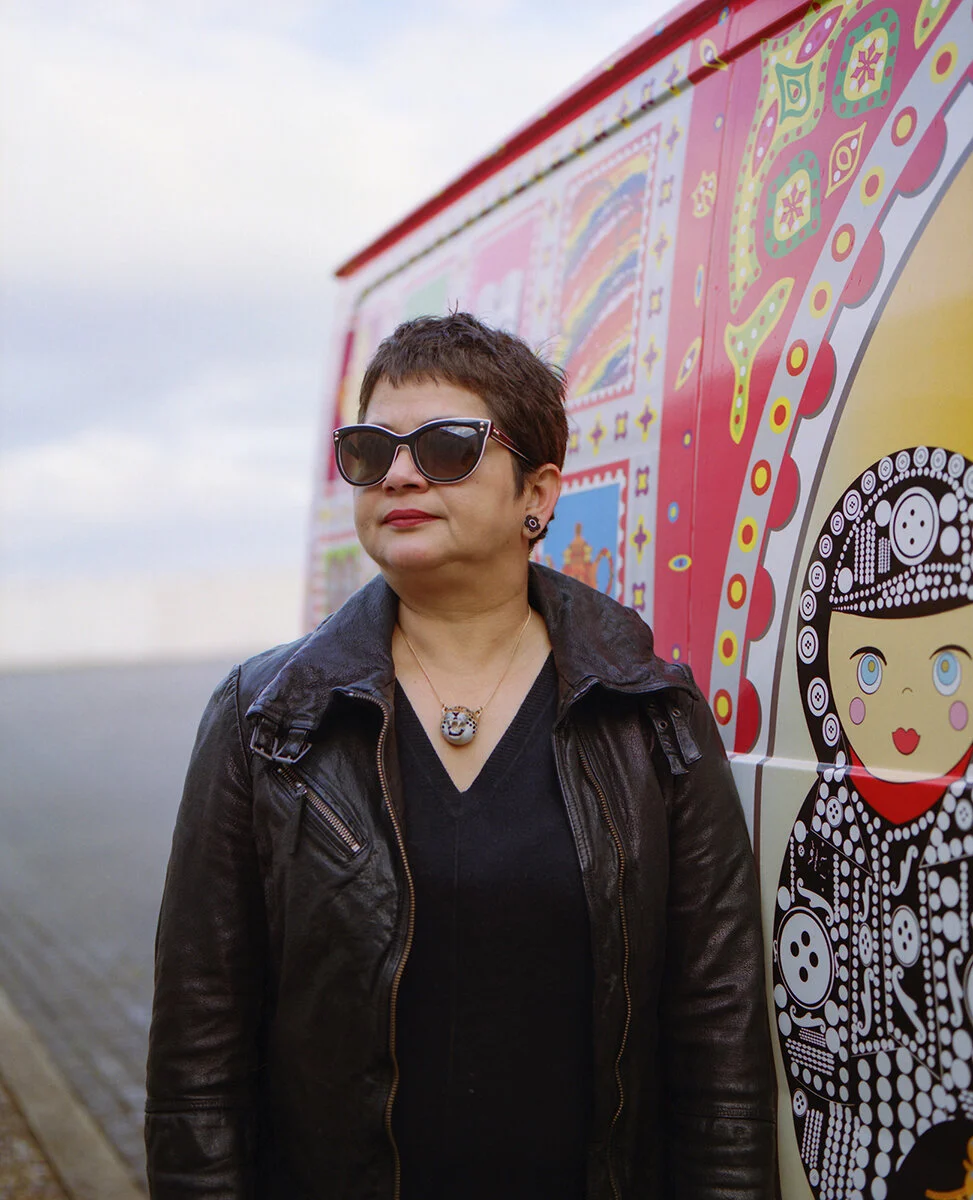
As a lifelong Essex resident with a working-class background, I am challenging this pejorative, stereotypical portrayal with this ongoing series of portraits of real ‘Essex Girls’. I’m a father to two young daughters, and wonder whether the stereotype will still persist by the time they become adults.


Each portrait is a collaboration and I encourage suggestions on location such as poses and dress, so that sitters are projected in the way that they would like to be portrayed. All participants have a connection to Essex, and I aim to include a diverse range of backgrounds, ages, ethnicities, body shapes, sexualities and geographical locations.



Mark Massey is mostly self-taught, focusing on documentary and portraiture with an element of street photography. He is interested in photography as ‘social documentary’ - observing and discovering everyday places, and the interaction between people and the environment. His community is also important to him, so local issues have formed the focus of several personal projects he has worked on or are currently in progress.